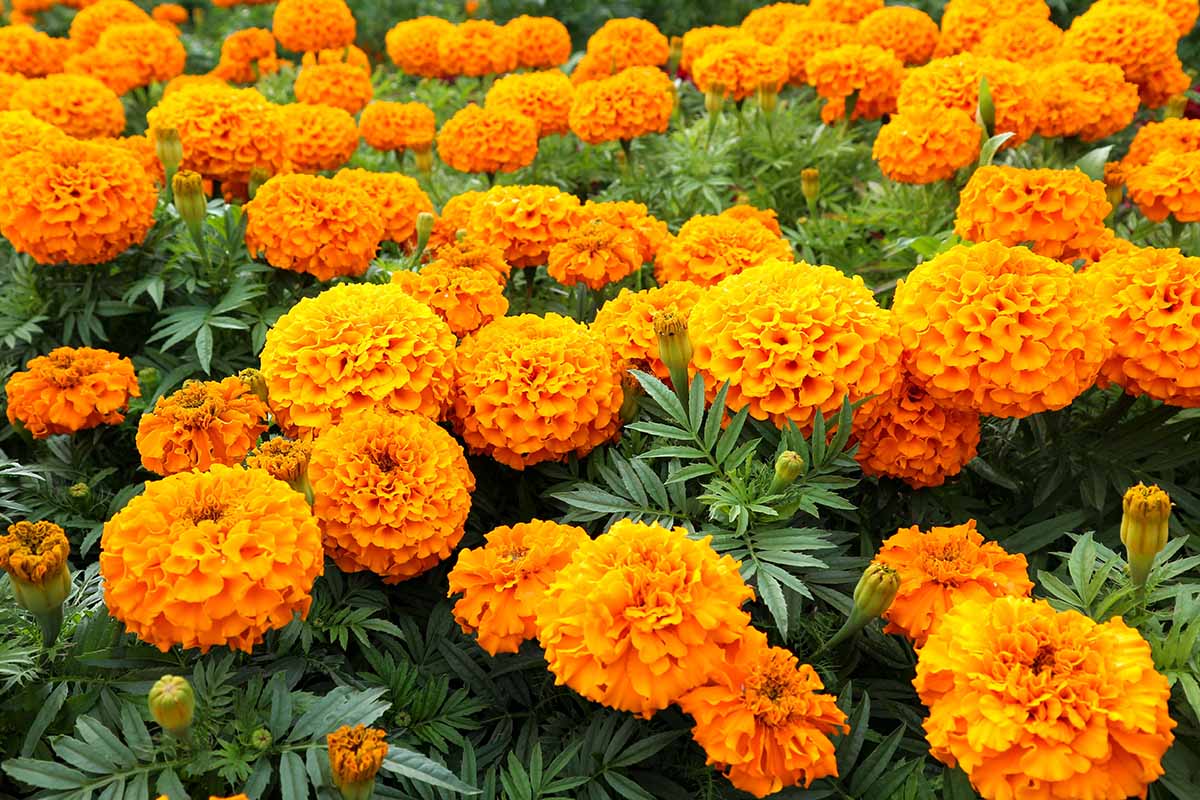
A Complete Beginner’s Guide to Growing Marigold Flowers at Home for a Bright and Colorful Garden All Year Round
Marigolds are among the easiest and most popular flowers to grow in home gardens. Known for their bright yellow, orange, and golden blooms, marigolds add vibrant color and energy to any outdoor space. In addition to their beauty, marigolds are also valued for their ability to repel certain garden pests, making them a practical and decorative choice for gardeners. With simple care and the right growing conditions, marigolds can bloom abundantly throughout the growing season.

1. Choose the Right Marigold Variety
There are several types of marigolds commonly grown in gardens. The most popular varieties include African marigolds, French marigolds, and signet marigolds.
African marigolds produce large, bold flowers and grow taller than other varieties. French marigolds are smaller and bushier, making them ideal for borders and containers. Signet marigolds feature delicate leaves and smaller flowers but are highly fragrant and attractive to pollinators. Choosing the right variety depends on your garden size and design preferences.
2. Select a Sunny Planting Area
Marigolds thrive in full sunlight, so it is best to plant them in areas that receive at least 6 hours of direct sunlight each day. Adequate sunlight helps the plants grow strong stems and produce vibrant flowers.
The soil should be well-drained and moderately fertile. Marigolds are quite adaptable and can grow in different soil types, but they perform best in loose soil enriched with organic compost.
3. Planting Marigold Seeds or Seedlings
Marigolds can be grown easily from seeds or young seedlings. If planting seeds directly in the garden, sow them about 1–2 cm deep and space them 20–30 cm apart to give the plants enough room to spread.
Seeds usually germinate within 5–7 days under warm conditions. Once the seedlings appear, thin them out if necessary to prevent overcrowding.
4. Watering and Fertilizing
Marigolds require moderate watering. Water the plants two to three times per week, depending on the weather and soil moisture. It is important to water at the base of the plant rather than directly on the leaves to prevent fungal problems.
Marigolds do not require heavy fertilization. Adding compost to the soil before planting is often sufficient. Excessive fertilizer may lead to lush foliage but fewer flowers.
5. Deadheading and Plant Care
To keep marigolds blooming continuously, it is helpful to remove faded or dried flowers, a process known as deadheading. This encourages the plant to produce new buds and extend the blooming period.
Regularly check the plants for pests or damaged leaves and remove them when necessary. With proper care, marigolds can bloom from late spring until the first frost.
Conclusion
Growing marigolds at home is a simple and rewarding gardening activity. Their bright colors, easy maintenance, and pest-repelling properties make them a favorite choice for both beginner and experienced gardeners. By providing sunlight, well-drained soil, and basic care, you can enjoy a garden filled with cheerful marigold flowers that brighten your outdoor space throughout the season. 🌼🌿