I Sold the New Horse Trailer… and Bought the Wagon My Mother Died In
I Sold the New Horse Trailer… and Bought the Wagon My Mother Died In
Part 1: The Aluminum Tuning Fork and the Wood of the Past
“You have exactly ten seconds to tell me that isn’t what I think it is,” my father’s voice was dangerously quiet, cutting through the crisp Wyoming morning air like a branding iron.
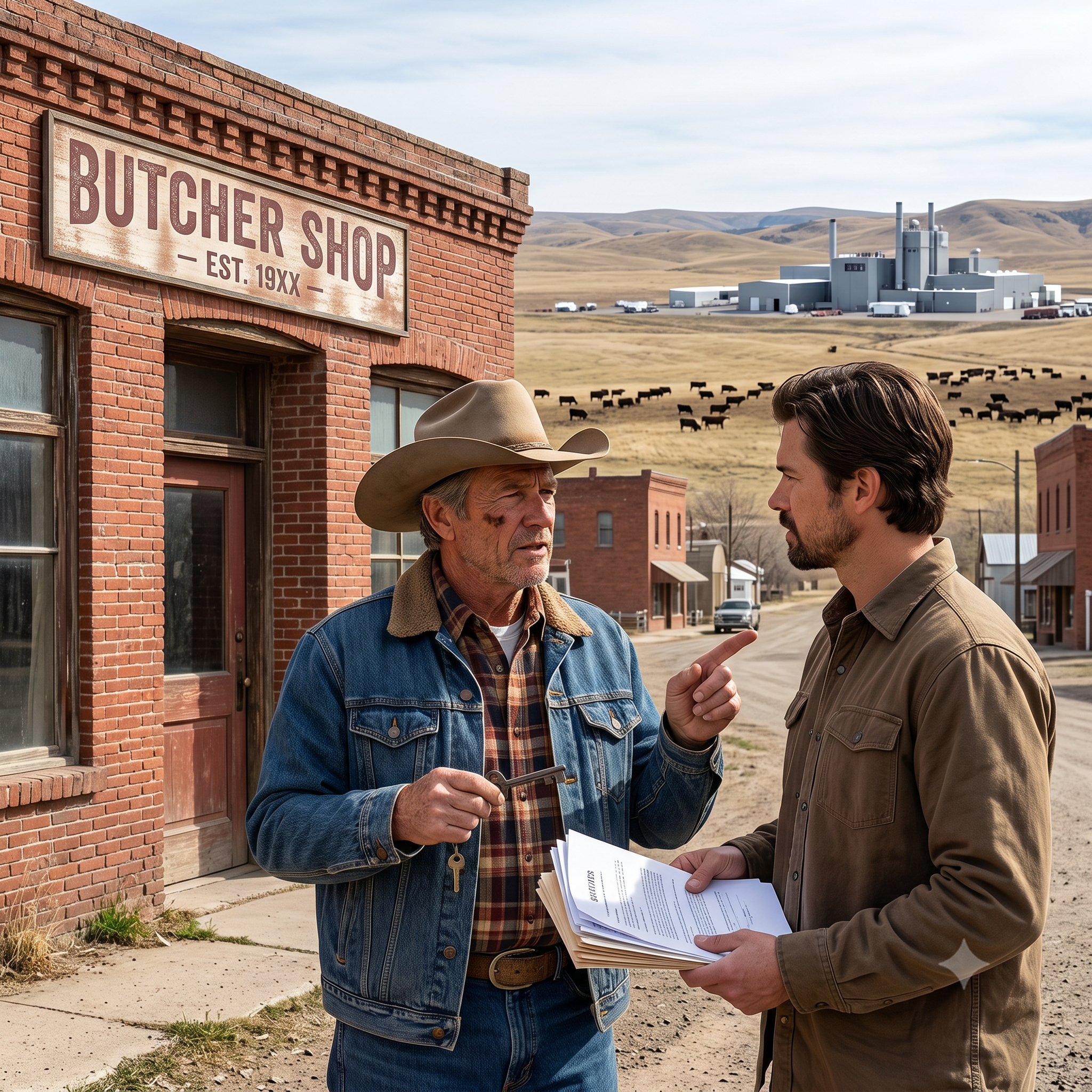
He was standing on the porch of our ranch house, a mug of black coffee trembling in his fist. He was staring past me, past the barn, to the driveway where a heavy-duty pickup had just unhitched a massive, weathered piece of equipment.
Down the county road, the taillights of a sleek, silver transport truck were fading into the dust. They were hauling away the Pegasus Elite—the hundred-and-twenty-thousand-dollar, state-of-the-art aluminum horse trailer my father had purchased just two months prior.
“I sold it, Dad,” I said, wiping a streak of grease from my forehead with the back of my leather work glove. “The Pegasus is gone. I broke the financing contract, took the depreciation hit, and used the leftover cash to buy this back from a private collector in Cheyenne.”
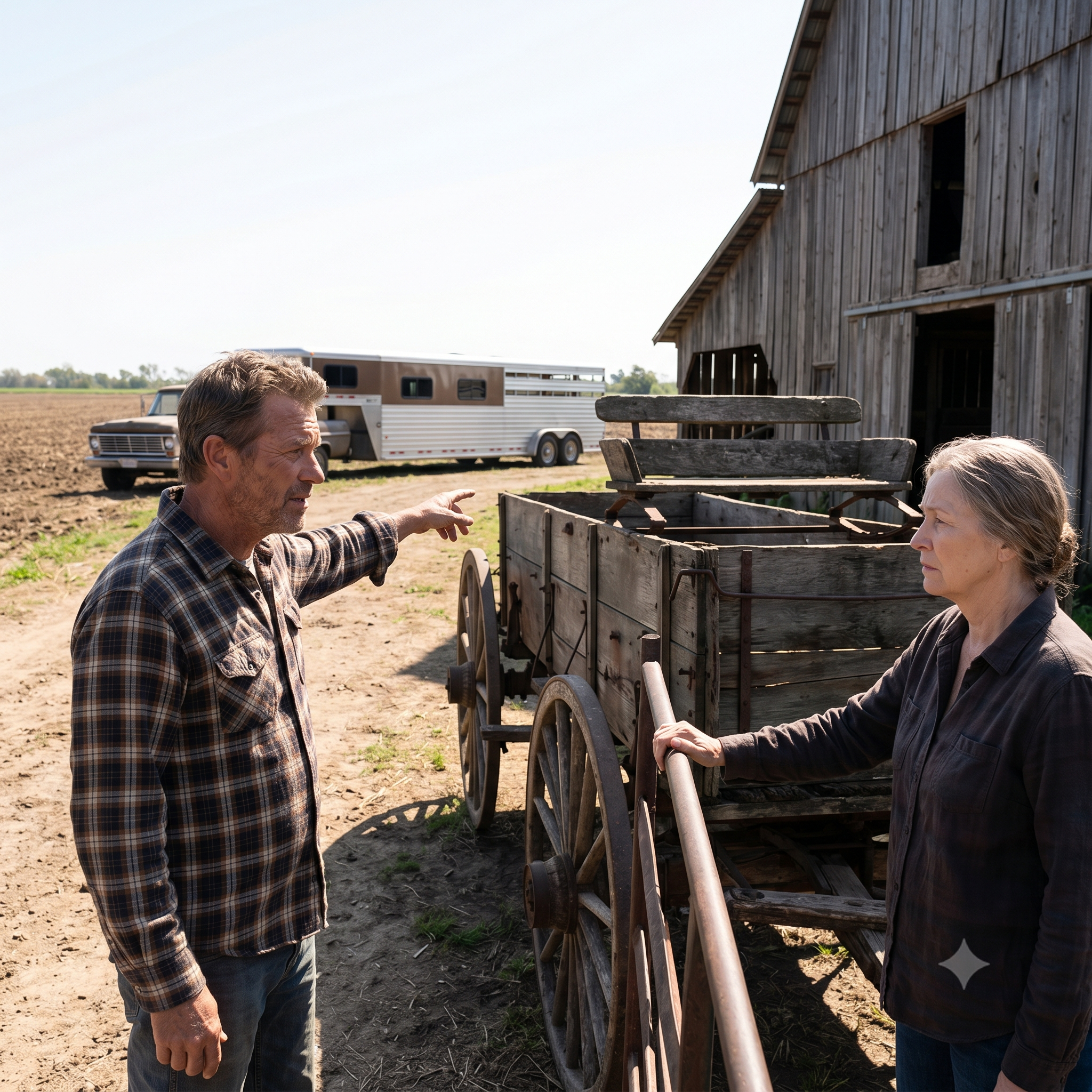
My father descended the porch stairs, his boots crunching heavily on the gravel. He walked slowly toward the conveyance I had just parked in the yard. It was a custom-built, 1988 Miley horse transport wagon. It had heavy oak siding, reinforced steel joints, and a faded, seafoam-green paint job that was peeling at the edges.
It was also the exact wagon my mother had died in fifteen years ago.
My father stopped ten feet away from it, as if the wood itself were radiating heat. The color drained completely from his face, leaving a terrifying, ashen gray behind his sun-beaten wrinkles.
“You brought her tomb back to this ranch,” he whispered, his voice vibrating with a mixture of horror and a sudden, violent rage. “Grace, the whole county knows what happened in that box. They’re going to think you’ve lost your damn mind. I bought you the Pegasus to keep our show-horses safe, to move this business into the modern era, and you trade it for a cursed relic?”
“The Pegasus wasn’t safe, Dad,” I shot back, my own temper flaring. “It was destroying them.”
He let out a harsh, mocking laugh. “It had air-ride suspension, climate control, and digital monitoring! It was perfect!”
“It was perfect on paper!” I yelled, finally closing the distance between us. “But you don’t ride in it, do you? I do. And the horses do.”
For the last two months, the new trailer had been an absolute nightmare. My father was right about the specs: it was a marvel of modern engineering. But horses aren’t machines; they are deeply sensitive, intuitive prey animals. From the very first day we loaded our prize quarter-horses into that aluminum fortress, they panicked.
I had watched our calmest, most bomb-proof geldings turn into terrified, sweating wrecks the second the ramp closed. They would kick the walls, rear up, and arrive at the rodeo grounds completely exhausted and traumatized. My father blamed it on the horses, claiming they just needed to “get used to it.”
But I knew my animals. I spent weeks trying to figure out what was wrong. Finally, I rode in the back with them while a ranch hand drove us down the highway.
It took me less than five minutes to realize the horrible truth.
The new trailer was built entirely of aerospace-grade aluminum. It was incredibly light and strong, but out on the rough, grooved highways of Wyoming, the metal acted like a giant tuning fork. The friction of the tires on the asphalt created a continuous, low-frequency vibration that echoed off the metal walls. Humans could barely hear it—it was just a dull hum to my ears—but to a horse, whose hooves are packed with hypersensitive nerve endings meant to feel the faintest tremors in the earth, it was torture.
The trailer was constantly sending a physical signal to their brains that an earthquake was happening beneath their feet. They were trapped in an aluminum echo chamber of pure, inescapable panic.
I tried to explain this to my father. I showed him the veterinary reports, the cortisol levels in the horses’ bloodwork. He dismissed it all as “hippie nonsense.”
So, I took matters into my own hands. I sold the modern marvel and tracked down the old Miley.
“Your mother was crushed to death inside that thing, Grace,” my father said, his voice dropping an octave, filled with a dark, threatening edge I rarely heard. “A stallion spooked in the dark, and she couldn’t get the side door open in time. Her ribs were shattered. And you went out of your way to drag it back here. You are obsessing over a ghost.”
“I am protecting my herd,” I replied coldly. “The old wagon has solid oak floorboards. Wood absorbs sound. Wood absorbs vibration. It breathes. I’m loading the horses into it for the show in Cody tomorrow, and you can’t stop me.”
He stared at me for a long, terrible moment. His eyes were cold, calculating, and completely devoid of paternal warmth. “Fine,” he spat. “But when that rotting piece of firewood breaks down, don’t call me to tow you out.”
He turned and walked away.
That afternoon, I led my most anxious mare, a beautiful roan named Sierra, up the heavy wooden ramp of the Miley. She hesitated at the threshold, sniffing the old, familiar scent of the oak. Then, with a soft exhale, she stepped inside.
I closed the ramp. I started the truck. I drove her ten miles down the roughest stretch of gravel road I could find. When I pulled over and opened the back, I braced myself for the whites of her eyes and the lather of nervous sweat.
Instead, Sierra was calmly munching on the hay net I had tied to the wall. Her heart rate was steady. The heavy wood had absorbed every ounce of the road’s brutal vibration.
The old wagon had worked perfectly.
But as I stood there, patting the weathered oak siding, a strange, uneasy feeling washed over me. I looked at the side access door—the door my mother supposedly couldn’t open when the stallion panicked. The latch was massive, heavily oiled, and designed to pop open from the inside with the slightest downward pressure of a human hand.
It was an anti-entrapment safety latch. Even a child could have opened it in an emergency.
I stared at the heavy iron mechanism, a cold knot forming in my stomach. Why couldn’t she get out?
I brushed the thought away. I had a ranch to run. But I didn’t know that the mountains were about to burn, and the old wagon was about to reveal a secret that had been buried for fifteen years.
Part 2: The Mud Route and the Floorboards of Betrayal
The first sign of disaster came three days later, as a faint, metallic taste of ash on the wind.
By noon, the sky above the Wind River range had turned the color of an old bruise—a sickly, terrifying mix of plum and charcoal. A dry lightning storm had ignited the dense, drought-stricken timber on the northern ridge. Fanned by forty-mile-an-hour winds, the Blackwood Fire was moving down the valley with the speed of a freight train.
The county emergency siren began to wail, a high, mechanical shriek that made the horses scream in the pastures.
My radio crackled to life with the panicked voice of the local sheriff. “Mandatory evacuation for the lower valley. I repeat, mandatory evacuation. The fire has jumped the creek. You have less than an hour.”
My father burst out of the house, his eyes wide with genuine panic. “Load the herd! Now!”
Chaos descended. We worked with frantic, terrifying speed, haltering the horses and leading them toward the trailers. But the situation was rapidly deteriorating. To make matters worse, the massive thunderheads that had started the fire finally broke open, dumping a torrential, localized flash-rain over our section of the valley.
It wasn’t enough to put out the fire raging in the heavy timber above us, but it was enough to turn the dirt roads of the valley floor into a treacherous, deep swamp of slick, unyielding mud.
We managed to load four of our best horses into the old wooden Miley. The neighboring ranchers—the Suttons, who owned the massive corporate spread next door—were also scrambling. I watched as their convoy of massive, six-horse aluminum trailers, practically identical to the Pegasus I had just sold, tried to pull out onto the main evacuation route.
The heavy, rigid metal frames of the modern trailers were their doom. The tires instantly sank up to their axles in the thick, wet clay. The drivers gunned their diesel engines, black smoke billowing into the sky, but the heavy aluminum rigs only dug themselves deeper into the mud. They were completely stuck, blocking the main road.
“We can’t get through the main gate!” I yelled to my dad over the roar of the approaching fire. The heat was becoming unbearable, baking the rain off the hood of my truck in hissing clouds of steam.
“Take the old logging road behind the ridge!” he screamed, coughing through the thick smoke. “It’s the only way out!”
I threw my truck into four-wheel drive and hit the gas. The old wooden wagon groaned behind me, but here, its age was its salvation. The Miley wasn’t built on a rigid, heavy modern chassis; it was designed with independent leaf-springs and a flexible wooden frame that twisted and rolled with the uneven terrain. It was significantly lighter than the aluminum behemoths.
The truck fishtailed wildly, tires violently throwing thick chunks of mud into the air. The wagon slid, bounced, and shuddered, but it never sank. The heavy oak frame surfed over the deep ruts.
I looked in my rearview mirror. Through the blinding smoke and rain, I saw the Suttons abandoning their stuck, multi-million-dollar rigs, desperately trying to unhitch their horses and run them out by hand as the flames crested the hill.
We made it.
We crested the safety of the southern ridge just as the valley below us was swallowed in a wall of orange fire. I pulled the rig into the designated county safe zone, my hands shaking so violently I could barely turn off the ignition.
I jumped out and ran to the back of the Miley, throwing open the doors.
The horses were terrified, wide-eyed, and soaked in sweat, but they were alive. The wooden walls had protected them from the worst of the heat and the terrifying roar of the firestorm.
I spent the next three hours calming them down, brushing the ash from their coats, and getting them settled in the temporary holding pens. The adrenaline was finally beginning to crash out of my system, leaving me hollow and exhausted.
Wanting to give the trailer a quick inspection for any fire damage, I grabbed a flashlight and climbed inside the empty, ash-covered Miley.
The smell of smoke was heavy, mixing with the sharp scent of old wood. I knelt on the floorboards to check the structural integrity of the base. As I ran my hand over the heavy oak planks, my fingers caught on a strange, uneven ridge near the front corner, right beneath the feed manger.
It wasn’t a natural crack in the wood. It was a perfectly straight seam.
Frowning, I pulled a flathead screwdriver from my back pocket and wedged it into the seam. I applied pressure. The wood groaned, then unexpectedly popped upward.
It was a hidden compartment, expertly crafted into the subfloor of the wagon.
My heart hammered against my ribs as I shined the flashlight into the shallow cavity. Inside, wrapped in thick, waterproof oilcloth, was a stack of papers and several small, glass vials.
I pulled the bundle out. My hands were trembling as I untied the leather cord holding the oilcloth together.
The documents were old, dated exactly fifteen years ago—the year my mother died. I opened the first page. It was a toxicology report from an independent veterinary lab in Denver.
Subject: Equine Water Supply, Morgan Ranch. Finding: High concentrations of lead, arsenic, and agricultural runoff.
Beneath it were financial records. Bank transfers. E-mails printed out on old, fading paper. They were communications between the Suttons—our neighbors—and a shell corporation. The Suttons had been intentionally poisoning the creek that fed our lower pastures. They were trying to kill our horses, bankrupt our ranch, and force my parents to sell the land for pennies on the dollar.
My mother had found out. She had gathered the evidence. She was preparing to go to the state authorities.
I stared at the papers, my vision blurring with shock. The story I had been told my whole life—that a horse had simply panicked in the dark and crushed her—was a lie. This was murder.
I dropped the papers, feeling incredibly sick, and looked back down into the hidden compartment to see if there was anything else.
The beam of my flashlight hit the underside of the heavy wooden floorboard I had just pried up.
I stopped breathing.
There were deep, frantic gouges carved into the wood. They weren’t made by a tool. They were the unmistakable, desperate scratch marks of human fingernails tearing into the oak.
Beneath the blood-stained scratches, violently carved into the wood with what must have been a hoof pick or a pocketknife, was a single, jagged sentence.
“Grace, your father arrived before the sheriff.”