I Sold the New Electric Fencing System… and Bought Back the Crooked Wooden Fence My Father Burned
I Sold the New Electric Fencing System… and Bought Back the Crooked Wooden Fence My Father Burned
Part 1: The Phantom Shocks and the Drunk Fence
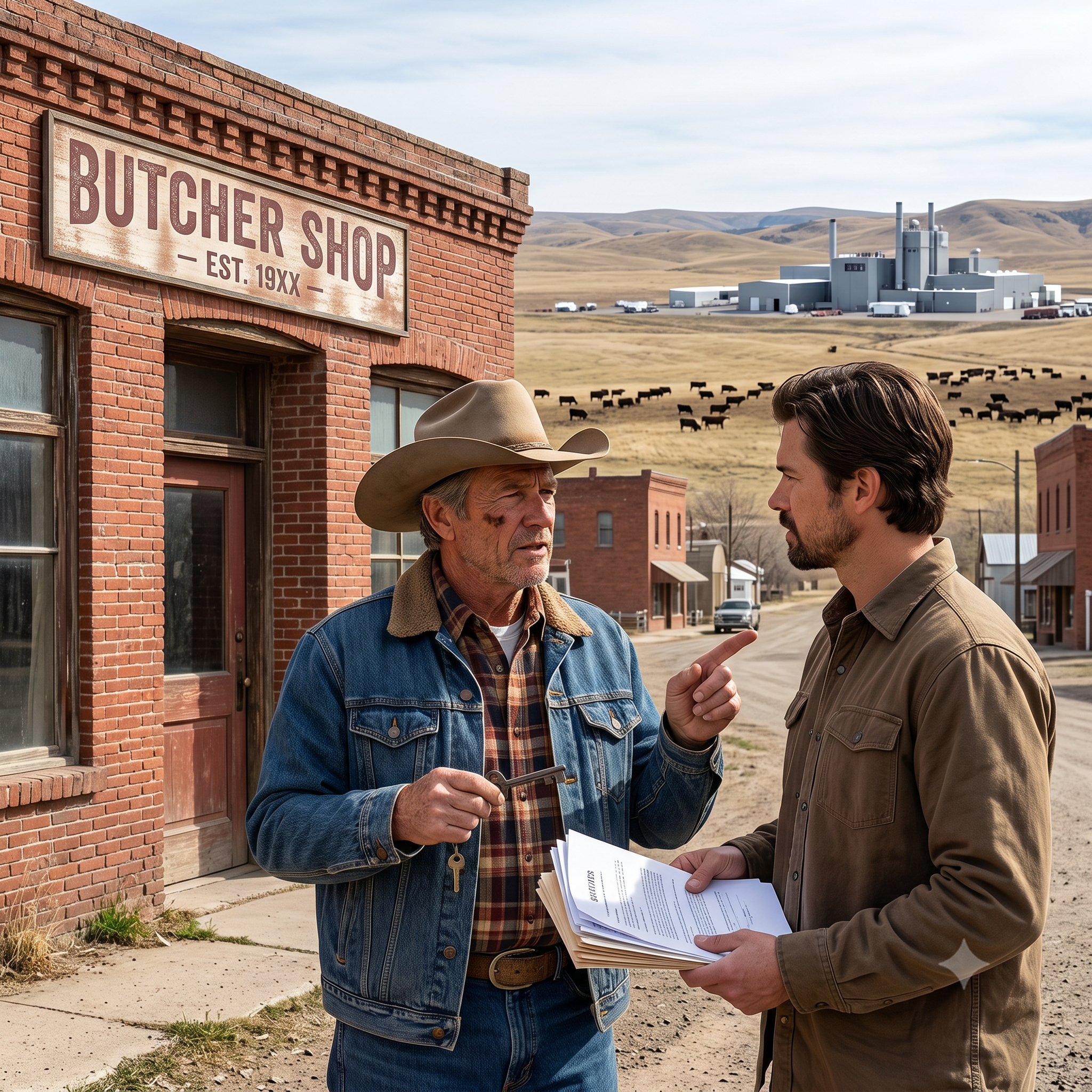
“You have exactly one minute to explain to me why the Sentinel-Tech truck is driving away with ninety thousand dollars of my ranch’s infrastructure,” my father said.
His voice wasn’t loud. It was worse. It was that dead, flat tone he used right before a horse needed to be put down. He stood on the porch of our Montana ranch house, a silhouette against the glaring afternoon sun, staring at the empty, rolling pastures.
I wiped the grease from my hands onto my jeans, not breaking eye contact. “I sold it back to them, Dad. Broke the lease. Paid the penalty fee out of my own savings. The invisible fencing is gone.”
“That was a military-grade, GPS-guided containment system, Hannah,” he hissed, his hands curling into fists. “It was the only thing bringing the Pike Ranch into the modern century. You stripped the collars off the herd. You deleted the containment app. And you replaced it with what?”
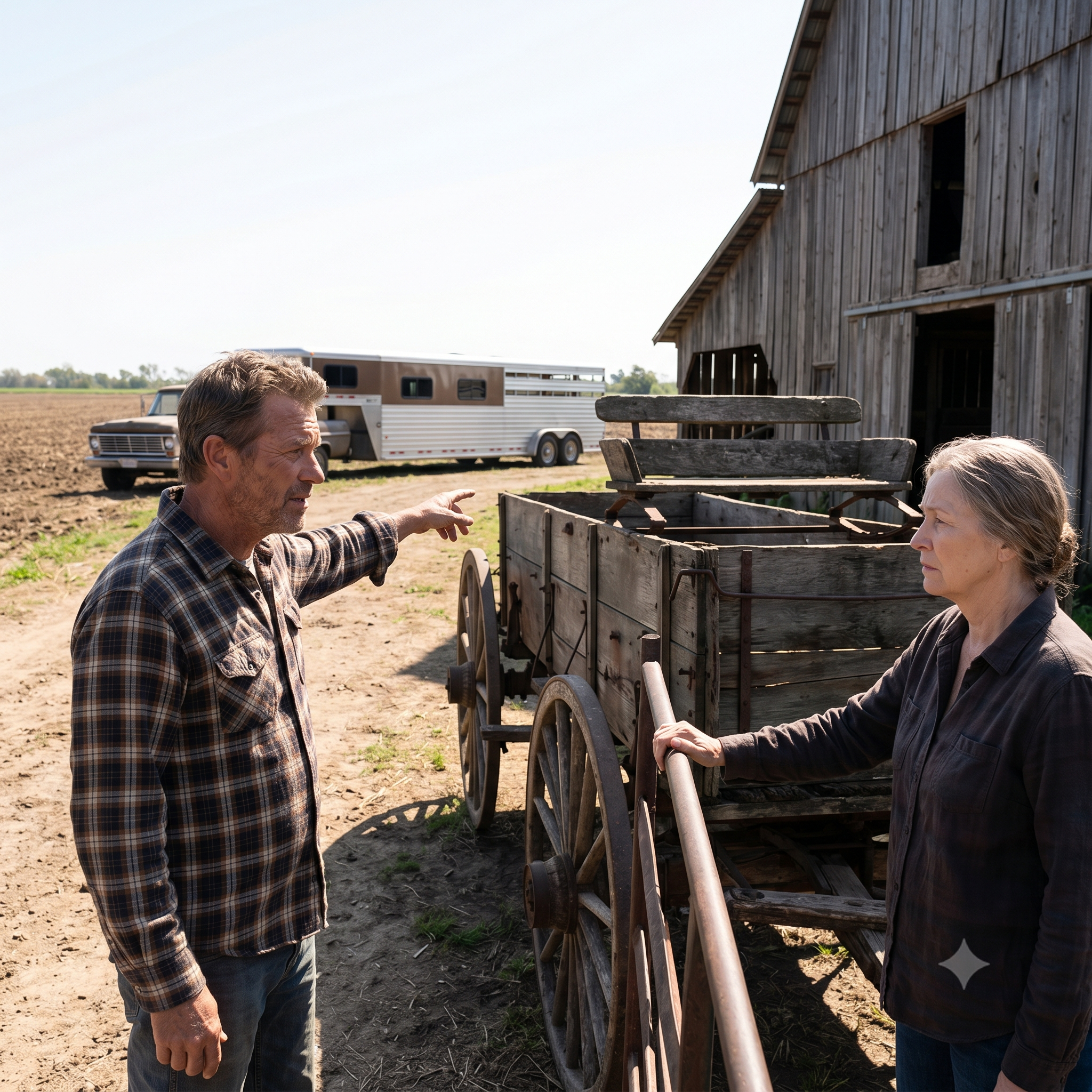
He gestured wildly toward the lower valley. Down there, cutting through the sagebrush and dry yellow grass, was a staggered, chaotic line of misshapen timber.
“I bought back the wood you tried to burn last year,” I said evenly. “I dug the surviving posts out of old man Miller’s scrap barn. I rebuilt Grandpa’s fence.”
My father’s face went completely bloodless. For a second, I thought he might actually strike me. Instead, he let out a harsh, bitter laugh. “They’re already taking bets down at the feed store on how long it takes for us to go bankrupt. They’re calling it ‘Pike’s Drunk Fence.’ Look at it, Hannah! It doesn’t even run in a straight line! It weaves like a blind snake! You’ve lost your damn mind.”
He turned on his heel and slammed the screen door behind him, leaving me alone with the wind and the smell of dry dust.
He was right about one thing: the town was merciless. Montana ranchers are practical people. They like straight lines, high-tensile wire, and efficiency. So when my father, Arthur Pike, bought the Sentinel-Tech Smart Fence a year ago, the valley was in awe.
There were no wires. Just heavy GPS collars around the necks of our five hundred Angus cattle, connected to a master server. I could draw a boundary on my iPad, and if a cow crossed that invisible digital line, the collar delivered a warning beep, followed by a sharp electrical shock. My father loved it. He immediately tore down my grandfather’s ancient, hand-hewn wooden fences—piled them up and set a match to them, claiming he was “cleansing the ranch of obsolete garbage.”
But the tech didn’t work. Not really.
It looked great on an iPad, but out here under the massive, unpredictable Montana sky, it was a nightmare. Our ranch sits right in the pocket of a valley known for intense geomagnetic anomalies and localized static storms. During the aurora season, or when a heavy dry-lightning storm rolled over the peaks, the GPS signals fractured.
The boundaries shifted. The collars glitched.
I spent four months watching my herd suffer from “phantom shocks.” A mother cow would be standing dead in the center of a safe pasture, eating grass, and suddenly the collar would malfunction, delivering a high-voltage crack to her neck. I watched calves get shocked while trying to nurse. I watched our heaviest bulls develop severe neuroses, terrified to take a single step because they didn’t know where the invisible pain was coming from. They stopped grazing. They started pacing in tight, paranoid circles.
The tech was driving the herd insane.
So, while my father was away at a cattlemen’s association meeting in Helena, I made the call. I ripped off every single collar. I called Sentinel-Tech and told them to come get their garbage.
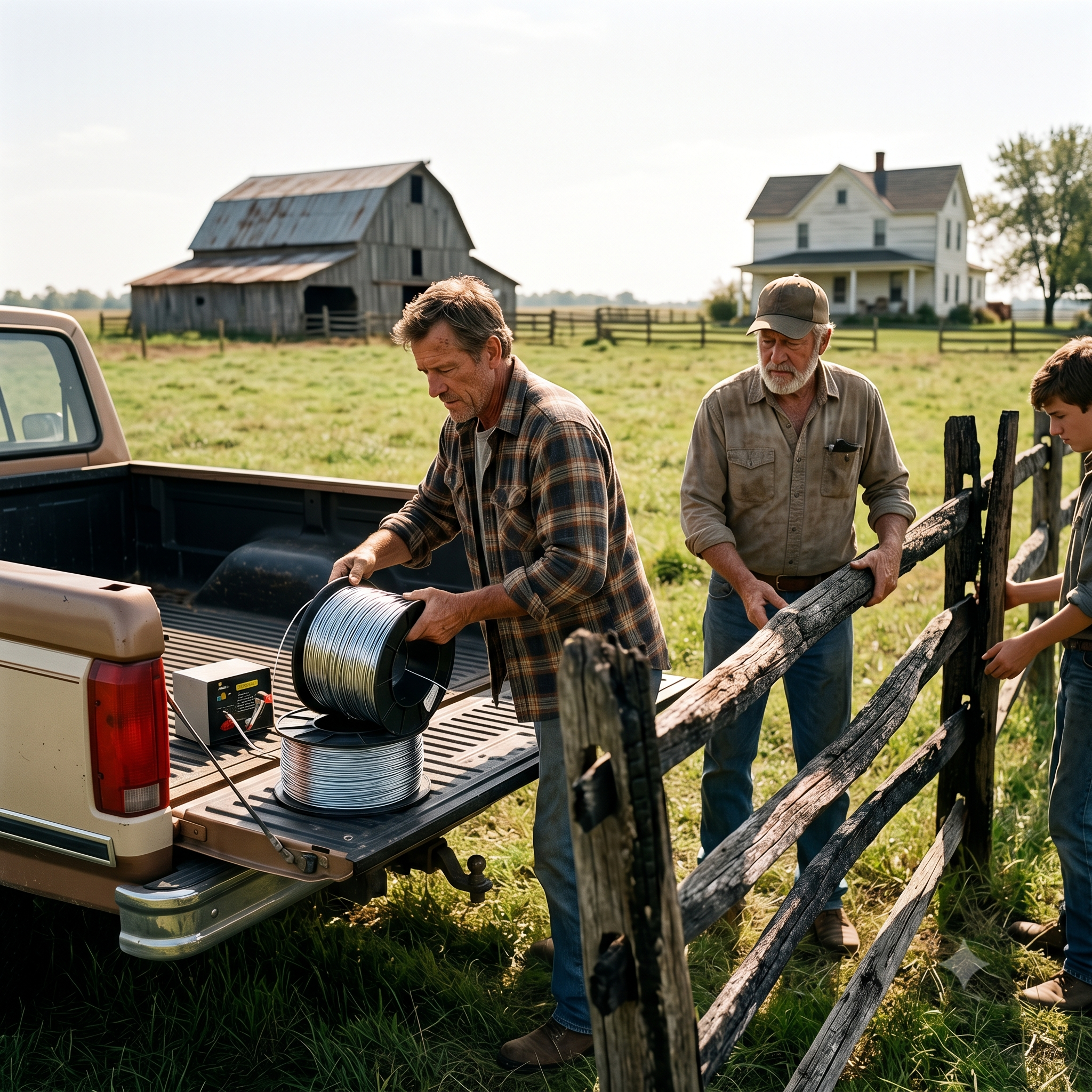
Then, I drove over to the Miller property. When my father had burned Grandpa’s fences, Miller had salvaged a truckload of the thick, crooked posts from the edge of the burn pile, intending to use them for firewood. I bought them back for three hundred dollars.
For the last three weeks, I had been out in the brutal sun, digging post holes by hand, setting the heavy, strangely warped timber back into the earth exactly where I remembered it being.
It was a strange fence. My father wasn’t wrong. Grandpa hadn’t built it in a straight perimeter. The posts were carved from natural, un-milled timber, retaining their heavy, organic curves. The fence meandered. It dipped wildly into ravines, looped around patches of scrub oak, and cut strange diagonal paths across the open flats. It looked entirely random.
But as soon as the last post was set, the herd changed. Without the collars, the paranoia vanished. They walked up to the heavy wooden rails, sniffed them, and let out long, low breaths. They began to graze along the chaotic, sweeping lines of the wood. The natural hierarchy of the herd returned.
I didn’t care if the county called me crazy. My animals were safe.
But as August rolled in, bringing a suffocating, rainless heatwave that turned the valley floor into a tinderbox, I realized I had no idea why my grandfather had built the fence that way.
I was about to find out.
Part 2: The Firebreak and the Ashes of 1989
It started on a Tuesday, sparked by a dry lightning strike up on the north ridge.
By noon, the sky had turned a bruised, apocalyptic orange. Ash fell like dirty snow across the windshield of my truck. The wind was howling at forty miles an hour, pushing a massive wall of fire directly down into the valley.
The emergency sirens in town were screaming. Over the crackle of the CB radio, it was pure chaos.
“The grid is down! I repeat, the main substation just blew!” a voice panicked over the radio.
I stood on the porch, watching the smoke plume devour the sun. My father came running out of the house, his eyes wide with a terror I had never seen in him before.
“The wind is pushing it straight toward the lower pastures!” he yelled over the roar of the approaching firestorm. “We have to move the herd!”
“Get the ATVs!” I shouted back.
But as we rode out into the choking black smoke, the true horror of the valley’s modernization revealed itself. On the neighboring ranches—the ones who had kept the Sentinel-Tech systems—the disaster was absolute.
Without power, the main servers were dead. But the battery-operated collars on their cattle had gone into a default “lockdown” mode. We could hear the chaotic bellowing of the neighbor’s herds through the smoke. The cattle were trapped by invisible walls, too terrified of the electrical shocks to run from the flames. The tech that was supposed to keep them safe was holding them hostage in the path of a roaring inferno.
“Hannah!” my dad screamed, coughing through a bandana. “Our herd! Where are they?”
We crested the hill overlooking the lower valley. The heat was blistering, singing the hair on my arms. The fire was cresting the ridge, a terrifying tidal wave of red and gold, moving faster than a horse could run.
But I didn’t see a panicked stampede. I didn’t see chaos.
Through the thick, blinding smoke, I saw my herd moving in a swift, orderly stream.
They weren’t running wildly. They were following the fence.
Pike’s Drunk Fence.
Suddenly, the chaotic, weaving design of my grandfather’s wooden posts made perfect, chilling sense. The fence didn’t just mark a boundary; it was a map. It guided the herd away from the thickest patches of flammable dry brush. It bypassed the dead-end box canyons where a herd could easily get trapped and burn.
The heavy, sweeping curves of the wood acted like a funnel, catching the panicked animals and physically guiding their momentum downward, steering them in a massive, sweeping arc directly into the deep, rocky basin of the dry creek bed.
The creek bed was a natural firebreak—a massive trench of stone and wet mud where the fire couldn’t reach.
“Look!” I pointed, awe washing over me.
My father stopped his ATV. He stared down into the valley as the last of our five hundred cows trotted safely into the rocky ravine, flanked by the heavy, crooked timber of the fence.
The fire roared down the hill, consuming the dry grass, but when it hit the barren rocks of the creek bed, it starved. The flames licked the air, billowed furiously, and then began to die out, moving around the natural sanctuary Grandpa’s fence had led them to.
We had survived. We hadn’t lost a single head of cattle.
The next morning, the valley was a smoldering, blackened wasteland. The air smelled of sulfur and wet ash. The neighboring ranches had been devastated, their high-tech systems failing them when it mattered most.
I walked down the hill alone, carrying a thermos of coffee, tracing the line of the old wooden fence. The posts were scorched. Many of the top rails had burned away, but the deep, thick bases still stood, anchored into the Montana earth like stubborn teeth.
It wasn’t just a fence. It was a perfectly engineered cattle escape route. My grandfather had built it immediately following the legendary fire of 1962. He had studied the topography, the wind patterns, and the fire behavior, and he had permanently marked the safe passage in heavy timber.
Why in God’s name had my father burned it?
I walked further down the line, near the entrance of the rocky creek bed. Here, the fire had burned hottest. One of the massive, crooked corner posts—a thick piece of ancient ironwood—had been heavily charred.
The fire had burned away the top two inches of the wood’s surface, stripping away decades of weather and rot.
I stopped.
There was something beneath the ash.
I knelt down, pulling off my leather work glove. The wood hadn’t just burned; the fire had exposed a deep, deliberate carving inside the core of the timber. My grandfather hadn’t just built a fence. He had hidden a message inside the wood, sealing it tight, knowing that one day, a fire would come and strip away the exterior.
I brushed the black soot away from the deep gouges in the wood. The letters were jagged, carved with frantic, desperate energy.
My breath caught in my throat as I read the words left behind by a man who had died thirty years ago.
“Your father blocked this route the year your mother vanished.”