The road was so empty that morning it seemed to have forgotten it belonged to human beings.
Dust lay over it in a fine pale layer, soft as flour on a worktable, and every time the wind rose, the dust lifted and drifted and settled again as if it had all the time in the world. There were no wagons in sight, no riders, no barking dogs from nearby yards, not even the distant crack of an axe from a field. Just the road, the open country, and Mariana Gutiérrez sitting at the edge of it with a worn suitcase by her feet and the full weight of her life pressing down on her shoulders.
When she first left the town behind her, she told herself she would make it as far as the next village by noon. By noon she told herself she could at least reach the crossroads where the stage sometimes stopped. By the time the sun had climbed to a white, punishing height, she had stopped making promises and sat down on the roadside because her legs had begun to shake in a way she knew was no longer stubbornness but warning.
Her blouse clung damply to her back. Sweat had dried and dried again on her skin. The leather handle of the suitcase had cut a red line into her palm. Inside the suitcase were three dresses, two blouses, underthings, a comb missing two teeth, a small box of buttons she had collected over the years because she could never bear to throw away anything useful, a notebook with only twelve blank pages left in it, and a faded photograph of her parents taken before the fever years hollowed out their faces and then took them both entirely.
It was not enough for a life.
It was all she had.
The landlady’s words still rang in her ears with a crispness that felt almost obscene beneath the open sky.
I don’t want to see you around this house again.
Mariana had stood in the doorway of the sewing room that morning with her apron still on and pins still tucked at the front of her dress while the woman she had worked for the last four years held up an armful of imported fabric and looked at her as if she had finally proven something ugly everyone should have expected.
You think because I don’t count every inch, I won’t notice? Do you know what this cloth costs? Do you imagine I’m blind?
Mariana had answered as calmly as she could, because calm was often all a poor woman possessed when she was accused by someone richer.
I didn’t take anything.
The landlady had smiled in that thin way women do when they are less interested in truth than in maintaining the right to define it.
Of course you’d say that.
That had been the end of it. No search. No proper accounting. No attempt at fairness. In a small inland town, the employer’s suspicion was worth more than the servant’s innocence, especially when the employer knew exactly how to wear outrage like virtue.
By nine o’clock Mariana had lost her room, her position, and whatever fragile place she had held in that household. By ten she was on the road with her suitcase and the knowledge that gossip traveled faster than any cart. By nightfall, if she remained within the ring of villages that knew one another’s business, she would be not Mariana the seamstress but Mariana who stole. Mariana the girl without references. Mariana the kind of trouble no respectable house invited in.
So she walked.
And now she sat with her legs aching and her head light from heat and hunger and she tried, for one exhausted minute, not to think beyond the next mile.
Then she heard wheels.
Not many.
One cart.
The sound came soft at first, a distant wooden complaint over ruts in the road. Then the rhythm of hooves joined it, steady and unhurried. Mariana lifted her head.
The cart emerged over the rise like something from a story told to tired children. A chestnut horse with a broad white blaze. A weathered wagon painted green long ago and then surrendered to sun and time. A man on the front board holding the reins with the easy competence of somebody who had spent half his life tied to horses and the other half measuring land by weather. Behind him, in the shallow bed of the cart, five girls sat close together in a tangle of skirts, braids, elbows, and curious eyes.
The horse slowed before Mariana fully rose. The man drew the reins in and the cart stopped a few yards from where she stood with her suitcase hanging heavy from one hand.
For one strange second, none of them spoke.
Mariana noticed the details because tired people always notice details. The man’s hat was broad-brimmed and pushed back just enough to show dark hair at the temples touched already with early gray. His shoulders were wide beneath a work shirt rolled to the elbows. His hands were rough, sun-browned, and scarred in the small practical ways of real labor. He looked to be perhaps thirty-eight or forty, though life on ranch land aged men unfairly and sometimes kindly in the same breath.
The girls were fair-haired except one whose hair was more honey than gold. The youngest could not have been older than three. The oldest sat with her spine stiff and her chin slightly raised, as if she had already decided trust would not be given freely to anyone new.
The man was the first to speak.
“Are you hurt?”
His voice was deep without being harsh, and there was something in the way he asked—direct concern, no wasted softness—that made Mariana answer honestly before caution could catch up.
“No. Just tired.”
He studied her a moment longer. Not rudely. Measuring the road behind her, perhaps, and the road ahead.
“You traveling alone?”
“Yes.”
“To where?”
She almost laughed because it would have sounded deranged to say to wherever still has use for me. Instead she said, “South. To the valleys, if I can get that far.”
The man glanced toward the horizon where the road thinned into heat haze. “That’s twenty kilometers, maybe more, and the sun’s got another several hours of cruelty left in it.”
“I don’t have another option.”
That came out sharper than she intended. Pride surviving even when everything else had collapsed.
One of the girls in the cart leaned forward. The smallest one. Her curls had escaped whatever ribbon once held them, and she peered at Mariana with all the open alarm children feel when they see adult sadness too plainly.
“Daddy,” she said softly, “she’s sad.”
The man’s face changed in a way Mariana would later remember often. Not soft exactly. More attentive. As if the child’s statement had given him permission to consider something he was already circling.
He handed the reins to the girl beside him—an eight-year-old, maybe, solemn and capable-looking—then climbed down from the wagon with the easy movement of somebody built for it.
Up close he was taller than she had first thought. There was dust on his boots and a tear mended neatly at one knee of his trousers. His eyes were brown, darker than coffee and just as impossible to read at first glance.
“My name is Ernesto Mendoza,” he said.
Mariana shifted the suitcase to her other hand. “Mariana Gutiérrez.”
He nodded once, as though he approved of names stated plainly.
“I’ve got a ranch in San Miguel del Valle,” he said. “About ten kilometers from here.”
Mariana waited.
He looked back at the girls in the cart before continuing. The oldest girl stared at him as if already bracing for whatever came next.
“I’ve a proposal for you.”
Every instinct Mariana owned sharpened at once.
A woman alone on a road learns quickly that proposals from strange men are rarely wrapped in kindness. Her spine straightened despite the exhaustion. She saw his eyes flick once to the suitcase, to the hem of her dress dusty from walking, then back to her face.
“What kind of proposal?”
The youngest girl was still watching her with painful seriousness. Another of the girls—a seven-year-old with a smattering of freckles—had begun whispering something to the child beside her. The oldest remained rigid, suspicious, already unhappy.
Ernesto seemed aware of all of this and yet committed to speaking plainly anyway.
“You need a roof over your head,” he said. “And I need a mother for my daughters.”
The words landed between them like something heavy.
Mariana stared at him.
Not because the meaning was unclear, but because it was so startlingly, brutally clear.
Before she could answer, he lifted one hand slightly, forestalling whatever misunderstanding her face had already begun to form.
“I mean someone to care for the house,” he said. “Cook. Keep order. Be there. Their mother is gone, and I can’t ranch full time and raise five girls properly at the same time. You’d have your own room. Food. Wages at the end of the month. Honest work. Respect.”
The oldest girl made a disapproving sound under her breath.
Ernesto glanced back at the cart. “Daniela.”
Daniela looked away toward the fields.
Mariana felt heat rise in her face, half from sun, half from humiliation at how transparent her desperation must be if a man with five children thought she might accept employment on the side of a road from a stranger.
And yet.
He had not leered.
He had not smiled that certain smile men wear when they think need makes women easy.
He had not said anything false about rescue or luck.
Only the facts: work, shelter, room, wages.
“What happened to their mother?” Mariana asked.
The smallest girl was tracing circles in the dust with one shoe. The second oldest, whom Mariana would later learn was Valeria, sat with her hands folded too tightly in her lap.
Ernesto answered after the slightest pause.
“She left.”
No embellishment. No bitterness in the word, at least not openly. Just a fact stated like weather. Mariana noted the omission and the strain in his jaw and understood at once that there was much more to the story than he intended to offer a stranger in a road.
“What about payment?” she asked, because if she accepted this, she needed to stand inside the agreement with as much dignity as she could gather.
“Room, board, laundry done in the house, and a fair wage at month’s end,” Ernesto said. “Not generous, but honest. And I don’t put hands on people. That matters enough to say out loud these days.”
Mariana looked down at the suitcase, then at the road stretching south toward rumor and hunger and another town where her name might arrive before her face did.
She was not naïve. A widower or abandoned husband with five daughters and a neglected house was no simple refuge. There would be labor. Disorder. Grief layered into every room. The oldest girl already hated the idea of her. The community, if there was one, would likely judge her before learning anything real. A woman with no family of her own moving into a man’s house in the country—people would dress that story however it pleased them.
But there was food in the cart.
There were children who looked at him with the weary trust of girls who had learned where safety lived.
And there was no other road that did not end in some fresh humiliation by nightfall.
The youngest child leaned so far over the side of the wagon she nearly tumbled. “Come with us,” she said. “We have chickens.”
Mariana laughed then, not because anything was funny, but because if she didn’t laugh the whole weight of the day might crush her where she stood.
“All right,” she said.
The word surprised even her.
Ernesto nodded as if he had been prepared for either answer and intended to honor both. “Then put your suitcase in the cart.”
He took the case from her before she could object and lifted it in with one hand.
As Mariana climbed into the back beside the girls, the youngest scooted over at once and patted the worn board next to her.
“I’m Julia,” she announced. “I’m three.”
“Julia, let the lady breathe,” said the girl with the freckles.
“I’m breathing,” Julia said indignantly. Then she turned back to Mariana with devastating sincerity. “You look tired.”
“I am.”
“That’s all right,” Julia said. “Sometimes Daddy looks tired too.”
Mariana smiled despite herself.
The seven-year-old rolled her eyes in a way so adult it was almost theatrical. “I’m Renata. She’s Ana.” She pointed to a five-year-old with a gap-toothed grin. “That’s Valeria.” The eight-year-old nodded solemnly. “And the oldest grump is Daniela.”
“I’m not grumpy,” Daniela said at once. “I’m observant.”
Ernesto barked a laugh from the front board of the wagon, the first hint of humor Mariana had seen in him.
“That’s one word for it.”
The cart jolted into motion.
Mariana held the side rail with one hand and let the rhythm of wheels and hoofbeats carry her forward into a life she had not imagined an hour earlier.
For the first stretch, conversation came in little bursts. Julia asked if Mariana liked cookies, rain, dogs, and stories, all with equal urgency. Ana leaned close to inspect the stitching on Mariana’s sleeve and declared it pretty. Valeria watched more than she spoke, as if silently tallying the kinds of woman who might sit in a wagon and which kind this one would become. Renata asked where Mariana had learned to braid her hair so neatly and then, without waiting for an answer, launched into a report about a rooster at the ranch who hated everyone equally.
Only Daniela remained guarded.
She sat with her arms crossed, eyes turned toward the road ahead, every line of her body saying I will not be charmed into carelessness again.
Mariana recognized that posture. She had worn versions of it herself.
“You won’t last a week,” Daniela said eventually, without looking at her.
The other girls all made some version of protest.
“Daniela,” Ernesto warned.
But Mariana spoke before he could say more.
“Maybe you’re right,” she said. “I’ve never kept a ranch house before.”
Daniela turned then, startled by the lack of defense.
“Then why come?”
Mariana thought about the landlady, the road, the empty south, the suitcase.
“Because sometimes,” she said carefully, “you can be afraid something won’t last and still decide it’s worth trying.”
The answer did not soften Daniela. But it did make her quiet.
They traveled through country that broadened with every mile. Small fields gave way to open grazing land. Wind moved through tall grasses in silver-green swells. Once they passed a low adobe house with laundry snapping on a line and an old man asleep on the porch with his hat over his face. Once they crossed a narrow creek where the horse slowed and drank without being told. Everywhere there was space—more than Mariana was used to, more than the narrow alleyways and close-built houses of the town where she had worked.
She had not realized until then how much her life had shrunk in those years. Her sewing corner. Her rented room. The kitchen. The service yard. The market. Back again. A woman can become a small creature without noticing if the world keeps rewarding her for taking up less room.
The ranch appeared in late afternoon.
It sat on a slight rise of land outside San Miguel del Valle, with fields dropping off behind it and a line of cottonwoods marking the creek beyond. The house itself was not grand, but it was sturdy. Whitewashed once, now weathering toward cream and dust. A wide porch in front. A low barn to one side. Corrals. A chicken yard. A vegetable patch behind the house gone half-wild but still fighting. Everything bore the look of labor stretched thin—kept alive, not adorned.
Mariana felt relief and apprehension arrive together.
This was no elegant refuge. It was a working house carrying too much.
When the wagon stopped, the girls spilled out in familiar order. Julia first because impatience ruled her. Ana next, almost tripping in her hurry. Renata and Valeria together. Daniela alone, jumping down without help and heading toward the house as though she belonged to no one’s rescue.
Ernesto lifted Mariana’s suitcase from the back.
“I’ll show you your room.”
He led her inside while the girls’ voices echoed overhead and through the hallway. The house smelled of coffee, soap, worn wood, and the faint lingering trace of onions fried earlier in the day. It was cleaner than she expected, though a certain kind of practical disarray clung to things. A shirt mended and folded over a chair. Schoolbooks stacked in one corner of the dining room. A basket of socks awaiting sorting. Evidence not of neglect exactly, but of one adult doing the work of two and losing ground in the small places.
On the walls were framed photographs.
Mariana noticed immediately what was missing.
Ernesto with a baby in his arms.
Ernesto kneeling beside a child holding a chicken.
The girls grouped by height each Christmas, ribbons and stubborn expressions and all.
But no photograph of their mother. Not one.
Her room was small and at the back of the house on the first floor. A narrow bed, a wardrobe, a chest of drawers, a washstand. The window overlooked the back yard and beyond it the struggling vegetable garden. The room was plain, but the sheets were clean and the curtain at the window had been washed recently. That detail moved her in a way she did not expect. He had prepared it. Maybe not today. Maybe not even for her specifically, if there had indeed been other women before. But someone had made the bed carefully knowing a stranger would need somewhere to rest.
“The bathroom’s down the hall,” Ernesto said, setting her suitcase on the bed. “My room’s on the opposite end. The girls are upstairs. You’ll have privacy here.”
Something about the way he said it made her think the sentence was for her comfort and his own peace at once.
“I understand.”
“I’ll explain the routine in the morning. Today, settle in. Rest if you want.”
She looked at the window, the bed, the tiny square of ordered space that was suddenly hers.
“When do I start?”
He considered her with something almost like admiration.
“You’ve already had one hard day. We can survive until dawn without assigning another.”
Then he left, closing the door gently behind him.
Mariana sat on the bed and looked at her hands.
For the first time since the landlady’s accusation, since the road, since the decision in the wagon, she let herself cry.
Not loudly.
Not in grief exactly.
The tears came from relief, from the shock of interruption, from the simple fact that disaster had not continued in a straight line all day. Sometimes survival is no nobler than that.
When she had put her few belongings away, there came a soft knock at the door.
Julia stood there hugging a faded brown bear by one arm.
“Are you going to sleep here?”
“Yes.”
“It’s close to the kitchen,” Julia said approvingly. “That’s good. Sometimes I get hungry in the night.”
Mariana crouched so they were eye level. “And what happens then?”
Julia shifted the bear. “I try not to wake Daddy. He gets very tired.”
The matter-of-fact sadness of it hit Mariana harder than she wanted to show.
“We’ll solve that,” she said. “If you get hungry, you can knock on my door. We’ll keep something here for emergencies.”
Julia’s eyes widened. “Really?”
“Really.”
The child launched herself forward and wrapped both thin arms around Mariana’s neck with a force that belonged to long deprivation, not momentary delight. Mariana hugged her back and felt something open painfully inside her—a place where tenderness had been waiting with nowhere to land.
“Julia,” Daniela called from the hallway. “Stop bothering her.”
Julia sprang back at once, guilty.
Daniela appeared in the doorway, arms crossed.
“I wasn’t bothering her,” Julia muttered.
Daniela ignored that. She looked at Mariana with those bright, skeptical eyes and said, “The others all tried too.”
Mariana rose slowly. “Tried what?”
“Being nice.” Daniela’s mouth tightened. “It didn’t make them stay.”
She left before Mariana could answer.
That night at dinner, Ernesto served rice, beans, and fried chicken cooked in the plain competent style of a man who had learned to feed children because no one else would do it if he didn’t. The girls ate with the hunger of active children and the ingrained speed of those who had once learned food might not always wait. Daniela sat farthest from Mariana. Julia sat close enough that their elbows nearly touched and seemed not to notice the significance of this.
“It smells wonderful,” Mariana said, meaning it.
Ernesto shrugged. “I do what I can.”
That sentence told her almost everything she needed to know about the house.
Not enough.
Doing what he could.
Trying to feed children and fix fences and fill absences with labor because labor was measurable and grief was not.
During the meal she watched dynamics emerge.
Daniela corrected Ana’s table manners before Ernesto could.
Valeria automatically passed water to Julia without being asked.
Renata announced a story from school and stopped halfway through to make sure Ernesto was listening.
He was.
He always was.
Even exhausted, he missed very little.
After dinner, Ernesto took the younger girls to wash up while Daniela began clearing plates with the competence of a girl far too used to helping. Mariana joined her in the kitchen.
“Can I dry?”
“It’s not necessary.”
“But I’m here.”
Daniela looked like she wanted to argue and then realized argument would only prolong the interaction. So she passed a towel instead.
They worked in silence for a minute, clink of dishes and splash of water the only sounds.
“You’re not going to ask about my mother?” Daniela said finally.
“Would you like me to?”
“No.”
“Then I won’t.”
The answer landed strangely between them.
Mariana could almost see the girl adjusting her expectations in real time. Adults, in Daniela’s experience, either pried or vanished. She did not yet know what to do with someone who could refrain.
Later, lying in the narrow bed beneath the clean sheet, Mariana listened to the house settle around her. Ernesto’s heavy steps going upstairs. The softer rustle of goodnights. One child laughing. Another asking for water. Then quiet.
She looked at the moonlight on the wall and understood with a clarity that surprised her that she had not merely found a place to sleep.
She had entered a wound.
The next morning began before dawn with the crow of a rooster and the sound of the wood stove being coaxed back to life.
Mariana dressed quickly and went to the kitchen to find Ernesto already there, sleeves rolled, hair damp from the pump, coffee pot in hand.
“You’re up early.”
“I’m used to it.”
His mouth tilted. “You and everyone else in this house, apparently.”
He showed her where supplies were kept: flour in the big tin by the pantry door, beans in sacks on the lower shelf, salt pork hung in the cooler back room, preserves from last summer lined up with labels half-faded because nobody had time for vanity. He explained the schedule in practical terms.
“I’m up at five for the animals. Girls wake around six. Breakfast by seven before Daniela catches the school wagon. Renata and Valeria go in the afternoon. Ana and Julia stay here.”
“And laundry?”
“Monday, mostly. Though some of them can turn one dress into a disaster in under an hour.”
He said this without criticism, only a kind of weary amusement. Mariana found herself wanting to smile.
By the time the girls came down, she had coffee on, bread toasted, and eggs scrambled with onion and a little tomato from the garden. It was a simple breakfast. The kind any house should manage. Yet when the girls sat and stared at the table, she realized it was not their usual.
“Did you make this?” Ana asked, eyes huge.
“I helped,” Ernesto said dryly, and she noticed the little protective instinct in that too. He was careful not to let the girls place impossible hope on her in one morning. Careful not to suggest salvation where there was only effort.
Still, Julia ate two pieces of toast and smiled like a sunrise, and even Daniela, after one suspicious bite of the eggs, finished everything on her plate.
That first week taught Mariana what the house required.
It required hands, obviously.
But more than that, it required steadiness.
She swept corners that had not known a broom properly in months. She washed curtains. She showed Ana and Julia how to shake cushions out on the line and turn it into a game. She mended two aprons, one pillowcase, and the hem of Valeria’s school skirt before anyone had time to ask. She stood over the neglected vegetable patch and made quick ruthless assessments: weeds first, then staking tomatoes, then turning the tired soil around the bean rows so it could breathe again.
The girls orbited her in different ways.
Julia followed openly, holding her hand whenever possible and announcing thoughts at random intervals.
Ana asked a thousand questions and accepted every answer as though Mariana might be one more reliable fact in a world that had often shifted under her feet.
Renata tested boundaries with little jokes and sideways glances, but responded instantly to inclusion. Give a seven-year-old real responsibility and you learn a great deal about her heart.
Valeria watched, thoughtful and less trusting, but kind in all the invisible ways—carrying extra clothespins without being told, reminding Julia to wash her hands, noticing when Mariana sat down too quickly and asking, “Are you tired?”
Daniela resisted.
Not loudly.
That would have been easier.
She resisted by distance. By correcting others before Mariana could. By waiting for mistakes. By making little predictions about failure in a tone that dared the world to prove her right because being disappointed by expectation was easier than being blindsided by hope.
Mariana knew that language too.
So she let trust build where it could instead of attacking where it wouldn’t.
On the third day, she decided to tackle the garden in earnest.
The afternoon sun was hot enough to make the earth smell green and bitter as she knelt in the rows, pulling weeds by their roots and loosening the soil around the surviving plants. She had just tied the first tomato stem to a stake when she heard footsteps on the path behind her.
“What are you doing?”
Daniela stood with her hands on her hips, trying for accusation and not quite landing it.
“Saving what can still be saved.”
Daniela squinted at the rows. “Those tomato plants need stronger support. They’ll break once they start fruiting.”
Mariana looked up. “Will you help me do it right?”
For a moment the girl seemed almost offended by being asked as an authority.
Then she picked up a small trowel leaning against the fence and came into the row.
“My mother always tied them lower,” she said. “If you go too high, the stem bends.”
And just like that, they were working side by side.
Mariana said little. She let Daniela name plants, explain which beds had once held herbs and which held flowers “just because Mom liked to see them from the porch.” She listened to the story of how Claudia—her name appeared for the first time in the garden, quiet and strange in Daniela’s mouth—used to come out at dusk with her skirt pinned up and a bucket on one arm and let the girls choose one bloom each for the dinner table.
“She planted flowers when there wasn’t time,” Daniela said at one point, pressing soil around a stake with more force than necessary. “Dad thought it was silly. She said pretty things counted too.”
Mariana smiled faintly. “She was right.”
Daniela’s hands stilled.
For a second she looked as though she might argue, then perhaps decided any defense of her mother from this new woman would feel unbearable.
“She changed after Julia,” Daniela said instead.
The words came low and quick, as if they had been waiting for a place to land.
Mariana kept working.
“In what way?”
“At first she was tired.” Daniela shrugged, eyes on the dirt. “Then more than tired. She’d cry because the kettle boiled over. Or not cry at all for days. She stopped coming to the garden. Stopped singing. Sometimes I’d find her staring at the wall while Julia screamed and she’d look at me like she didn’t know what to do first.”
The trowel in Daniela’s hand scraped a rock hard enough to spark.
“Dad took her to doctors,” she went on. “He took over feeding us, the washing, everything he could. But there were five of us and one of him, and I…” She stopped.
“You stepped in.”
Daniela nodded once.
Mariana thought of the way the girl corrected table manners, monitored younger sisters, and scanned adults for weakness before relaxing around them. Of course she had stepped in. Someone always does in houses where one adult disappears while still physically present.
“She left one morning,” Daniela said. “She packed before dawn. Dad begged. I heard him. She said she couldn’t stay. She said she needed to go away before she hurt us worse than she already had.”
Her voice broke on the last word.
Mariana set the hoe aside and crouched properly, making herself a little lower than the girl so the conversation had room.
“You were a child.”
Daniela looked furious at once.
“Don’t say that like it changes anything.”
“It changes what was your responsibility.”
Daniela’s blue eyes filled abruptly, violently, the tears arriving as if they had been waiting just behind the surface for permission.
“I had to make bottles,” she whispered. “I had to get Julia quiet at night because Dad was too tired and Mom was shut in her room and Renata wet the bed if no one woke her before dawn and Valeria was always trying to help but she was little too and…”
The words collapsed into crying.
Not dainty crying. Not the kind girls are praised for as ladylike. The whole-body sobbing of someone who has been holding adulthood inside a child’s frame for too long.
Mariana did what instinct and restraint together told her to do. She did not grab. She did not smother. She opened her arms and waited.
Daniela came to her.
Later Mariana would think that was the moment everything changed. Not because trust was complete after one embrace, but because the girl chose it.
“None of that should have been yours,” Mariana said into her hair. “None of it.”
Daniela cried until the hard little knots in her shoulders loosened.
When they finally stood, dirt streaked both their skirts and neither cared.
That evening, while the younger girls chased each other around the table and Ernesto came in from the pasture carrying a loose board over one shoulder, Daniela did a small astonishing thing.
She put the extra spoon at Mariana’s place without being asked.
It was such a tiny gesture.
It nearly undid her.
Over the next month, the house changed in ways visible and invisible.
The visible changes were simple enough. Clean windows. Fresh bread cooling on the sill. The garden beginning to look purposeful instead of abandoned. Curtains washed. Shirts mended. Flower pots on the porch because Mariana believed Claudia had not been wrong about pretty things counting, and the girls helped choose marigolds because they were hardest to kill.
The invisible changes were the ones that mattered.
Julia stopped sneaking downstairs at night for cookies because now she knew where to knock.
Ana started asking Mariana to braid her hair before church.
Renata began bringing school papers straight to the kitchen instead of shoving them into corners.
Valeria, who had always gone quiet at conflict, started speaking up when she disliked a storybook ending because “that mother should have stayed.”
And Daniela, inch by inch, returned to girlhood where she could. Not all at once. Never entirely. But enough that sometimes Mariana caught her laughing with her sisters before she remembered to be vigilant.
Ernesto noticed everything.
He noticed the house first, perhaps because it was easiest to name. One night after supper, while the girls played upstairs and the dishes were drying in rows by the sink, he stood in the kitchen doorway and looked around like a man taking inventory of a miracle he didn’t want to offend by calling it one.
“The house is different,” he said.
Mariana, wiping down the table, glanced up. “Different how?”
He took a moment, considering.
“Alive.”
The word settled over the room.
It was the first real praise he had offered, and because it was so simply said, it carried more weight than flattery ever could.
Mariana looked down at the damp cloth in her hand and told herself not to be moved by a single word from an employer. She failed.
That same evening, perhaps because the kitchen already held too much honesty to permit half-truths, Ernesto asked about the road.
“Why were you out there alone?”
She did not answer immediately. Part of survival had always been selective silence. But Ernesto had given her work, shelter, and trust without interrogating her beyond what dignity allowed. He deserved something true.
So she told him.
Not dramatically.
Not to earn pity.
Just the facts.
The sewing room.
The accusation.
The missing fabric.
The dismissal.
The landlady’s certainty that accusation itself was proof.
The impossibility of staying where her name had been made dirty.
The empty road.
When she finished, Ernesto was silent for a long time.
Then he asked the question that mattered.
“Did you take it?”
“No.”
He nodded once.
He did not ask again.
Did not ask for details.
Did not make a theater of believing her.
That faith, offered so plainly, moved Mariana more than sympathy would have.
“I know what it is to be judged by a story other people prefer,” Ernesto said quietly. “After Claudia left, half this town decided I must have driven her away. Men don’t get abandoned, not in stories people respect. They get blamed.”
Mariana looked at him.
There was old hurt in the line of his mouth, and something else too—fatigue from carrying his version of events into rooms already furnished with other people’s opinions.
“What happened?” she asked carefully.
He rubbed a hand over his face.
“Postpartum depression, the city doctor called it. After Julia. Maybe before that and worse after. It swallowed her whole.” He stared at the cold coffee in his cup. “I kept thinking if I worked harder or listened better or got the right doctor sooner, I could pull her back out. Then one morning she packed a bag and told me she couldn’t stay.”
He did not cry.
He did not dramatize.
He only said the truth, which was somehow harder to hear.
“I hated her for leaving,” he said. “Then I hated myself for hating someone sick. Then I got too busy to hate much of anything. Five girls will do that to a man.”
Mariana smiled sadly.
Something gentle settled between them then, not romance yet exactly, but the recognition of two people who had both been made lonelier by circumstances others did not understand.
Sunday brought Doña Mercedes.
Mariana had heard about her already. The neighbor with the cart. The woman who fetched orders from town and redistributed them with produce and gossip in equal measure. She arrived before breakfast in a cloud of righteous purpose, a short broad woman with graying hair pinned into submission and eyes sharp enough to pare skin.
Ernesto met her on the porch.
Mariana, hearing the voices rise from the kitchen, stepped into the hallway just in time to hear Doña Mercedes say, “I’m not saying you can’t have help, Ernesto. I’m saying people will talk.”
“People always talk,” Ernesto said.
“Yes, and usually for good reason. A young woman appears out of nowhere, with no family, no references anyone here can verify, and suddenly she’s living in your house.”
Mariana stepped onto the porch then because there are only so many ways to be spoken about within earshot before self-respect requires visibility.
Doña Mercedes looked her over head to toe in one merciless sweep.
“So. You’re the seamstress.”
“I’m Mariana Gutiérrez.”
Mercedes’s mouth tightened slightly at the formality.
“Where are your people?”
“Dead or gone.”
The bluntness of the answer landed harder than a polite fiction would have.
Mercedes recovered quickly. “And what does a seamstress know about running a ranch household full of children?”
Mariana almost said enough by the end of the week, but chose restraint.
“I know how to work,” she said. “The rest can be learned.”
Doña Mercedes sniffed. “That remains to be seen.”
News

THE MOMENT THE CASE CHANGED: According to prosecutors, a five-word statement allegedly made before the confrontation with Austin Metcalf became a turning point in the courtroom battle… 👇👇
By U.S. Crime Desk Five words may become one of the most important pieces of the Karmelo Anthony murder trial. “Touch me and see what happens.” The sentence, allegedly spoken moments before 17-year-old Austin Metcalf was fatally stabbed at a…
AUSTIN METCALF’S FAMILY REACTS IN ANGER: New testimony in the Karmelo Anthony has focused on five words prosecutors
By U.S. Crime Desk Five words may become one of the most important pieces of the Karmelo Anthony murder trial. “Touch me and see what happens.” The sentence, allegedly spoken moments before 17-year-old Austin Metcalf was fatally stabbed at a…
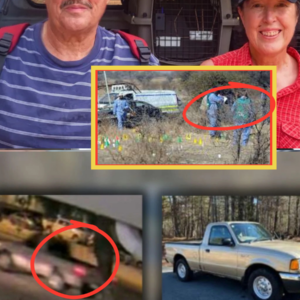
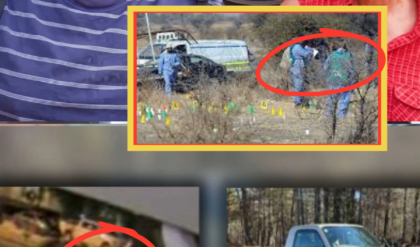
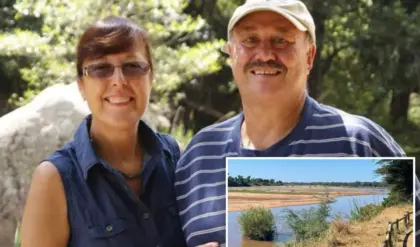
THE ROAD LOCALS FEARED MOST: Before Ernst and Dina Marais disappeared, a driver reportedly warned them about a risky route near Pafuri
By Africa Crime Desk At the time, it was only a casual warning. The kind of thing locals say to tourists near Pafuri every day: take care on that road, avoid the quieter route too late, don’t assume the bush…
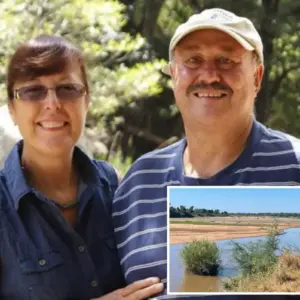
THE GATE CAMERA MAY HOLD THE ANSWER: Newly recovered security footage is reportedly helping investigators reconstruct the final hours before Ernst and Dina Marais vanished into the Kruger mystery…
The killers may have thought the river would hide everything. The bodies.The vehicle.The route.The reason Ernst and Dina Marais were targeted in one of the most shocking crimes in Kruger National Park’s history. But the case may not have ended…
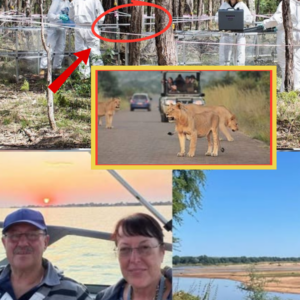
THE DOGS DIDN’T FAIL — THE TRAIL CHANGED: At the riverbank in Kruger, the scent vanished near the water
The dogs followed the scent until the river took it away. That is the chilling claim now circulating around the murder of Ernst and Dina Marais, the retired Mossel Bay couple found dead near Crooks Corner in Kruger National Park….
The sniffer dogs stopped at the water’s surface” at the location where Ernst and Dina’s bodies were found in Kruger National Park During the search
The dogs followed the scent until the river took it away. That is the chilling claim now circulating around the murder of Ernst and Dina Marais, the retired Mossel Bay couple found dead near Crooks Corner in Kruger National Park….
End of content
No more pages to load