At first, the hospital footage seemed to offer a familiar image in a tragedy: a teenage survivor, badly injured, waking up to a nightmare she claimed she could not remember.
Mackenzie Shirilla had survived the crash. Dominic Russo and Davion Flanagan had not.
But as more footage, police material, and post-crash details resurfaced, public sympathy began to fracture. What viewers expected to see was panic, horror, and an immediate desperate need to know whether Dominic and Davion were alive. What they saw instead became one of the most debated parts of the case.
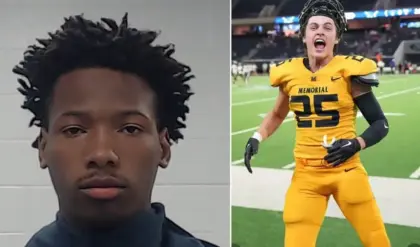
The crash happened on July 31, 2022, when Shirilla drove her Toyota Camry into the Plidco Building in Strongsville, Ohio, at nearly 100 mph. Dominic Russo, her boyfriend, and Davion Flanagan, their friend, were killed. Prosecutors argued the crash was intentional, and Shirilla was later convicted on 12 charges, including murder, receiving a sentence of 15 years to life.
The court case centered on evidence: speed, route, vehicle data, lack of braking, and the prosecution’s argument that the crash was not a sudden accident but a deliberate act. But the public conversation has increasingly focused on what happened after impact.
That is where the bodycamera footage became so damaging.
Police footage and later documentaries showed pieces of the investigation that complicated the image of Shirilla as only a confused survivor. PEOPLE reported that bodycam footage released after trial revealed “erratic behavior” and other strange aspects of the aftermath, adding to public scrutiny over her post-crash conduct.
Then came the emotional contrast no courtroom argument could soften: the two empty chairs.
Dominic and Davion were not there to explain what happened in the car. They could not describe whether they saw the wall coming, whether they tried to stop her, or whether they knew in the final seconds that the crash was not going to be avoided.
Their families had to sit in court while the only surviving person in the car spoke through lawyers, interviews, recordings, and explanations.
That imbalance became central to the outrage.
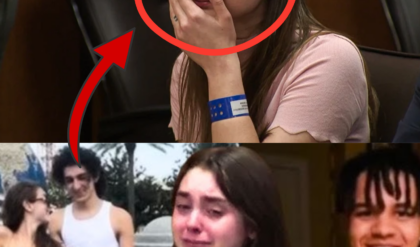
The “rings” detail has become part of the viral framing around the case because it represents a larger accusation from viewers: that Shirilla’s post-crash behavior appeared focused on herself, her belongings, her future, and her version of the story, rather than immediately centering the two people who died. That claim should be handled carefully unless tied to a specific verified clip or transcript, but the broader criticism is clear: every detail from the aftermath has been judged against the fact that Dominic and Davion never got to speak again.
Recent renewed interest has been driven by Netflix’s The Crash, which features Shirilla’s first public interview after conviction, along with other documentaries and programs that revisit police footage, trial evidence, and commentary from legal experts. PEOPLE reported that several documentaries now cover the case, including Netflix’s The Crash, Court TV’s coverage, and other true-crime programs examining the evidence and investigation.
The rage mentioned in viral retellings of the case appears to come from how some viewers interpreted interrogation and post-crash material: not as simple confusion, but as flashes of anger, defensiveness, and self-preservation. That interpretation has become part of why sympathy for Shirilla eroded so quickly online.
But the legal conclusion did not depend on viral emotion.
It depended on the judge’s finding that the crash was intentional.
Prosecutors argued that Shirilla had driven the same route before, that the crash site was not random, and that the car accelerated without braking before impact. Coverage of the case has noted that GPS data suggested she may have done a dry run of the route days before the fatal crash.
That detail transformed the case from tragedy to calculation in the eyes of the court.
For Dominic Russo’s and Davion Flanagan’s families, the bodycamera footage and hospital details may never matter as much as the simplest fact: two young men were alive when they got into that car, and they never came home.
The rings became a symbol of what Shirilla still had.
The bodycamera became a witness to what happened after.
And the two empty chairs became the image that no defense explanation could erase.
Because whatever Mackenzie Shirilla remembered, forgot, regretted, or denied, Dominic and Davion lost the only thing that mattered most.
Their future.
News
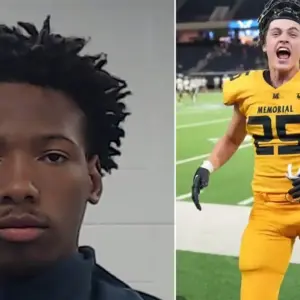
THE MOMENT THE CASE CHANGED: According to prosecutors, a five-word statement allegedly made before the confrontation with Austin Metcalf became a turning point in the courtroom battle… 👇👇
By U.S. Crime Desk Five words may become one of the most important pieces of the Karmelo Anthony murder trial. “Touch me and see what happens.” The sentence, allegedly spoken moments before 17-year-old Austin Metcalf was fatally stabbed at a…
AUSTIN METCALF’S FAMILY REACTS IN ANGER: New testimony in the Karmelo Anthony has focused on five words prosecutors
By U.S. Crime Desk Five words may become one of the most important pieces of the Karmelo Anthony murder trial. “Touch me and see what happens.” The sentence, allegedly spoken moments before 17-year-old Austin Metcalf was fatally stabbed at a…
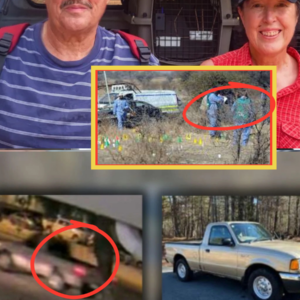
THE ROAD LOCALS FEARED MOST: Before Ernst and Dina Marais disappeared, a driver reportedly warned them about a risky route near Pafuri
By Africa Crime Desk At the time, it was only a casual warning. The kind of thing locals say to tourists near Pafuri every day: take care on that road, avoid the quieter route too late, don’t assume the bush…
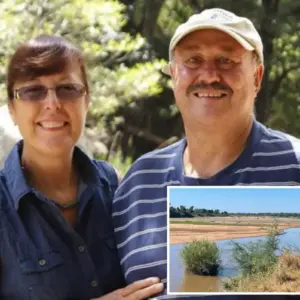
THE GATE CAMERA MAY HOLD THE ANSWER: Newly recovered security footage is reportedly helping investigators reconstruct the final hours before Ernst and Dina Marais vanished into the Kruger mystery…
The killers may have thought the river would hide everything. The bodies.The vehicle.The route.The reason Ernst and Dina Marais were targeted in one of the most shocking crimes in Kruger National Park’s history. But the case may not have ended…
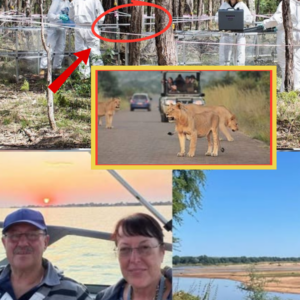
THE DOGS DIDN’T FAIL — THE TRAIL CHANGED: At the riverbank in Kruger, the scent vanished near the water
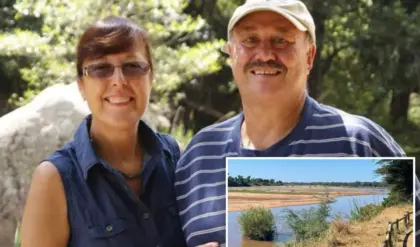
The dogs followed the scent until the river took it away. That is the chilling claim now circulating around the murder of Ernst and Dina Marais, the retired Mossel Bay couple found dead near Crooks Corner in Kruger National Park….
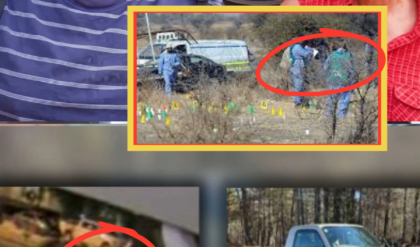
The sniffer dogs stopped at the water’s surface” at the location where Ernst and Dina’s bodies were found in Kruger National Park During the search
The dogs followed the scent until the river took it away. That is the chilling claim now circulating around the murder of Ernst and Dina Marais, the retired Mossel Bay couple found dead near Crooks Corner in Kruger National Park….
End of content
No more pages to load