Thrown Into the Snow at Fifteen, He Buried Hope Underground to Keep His Little Sister Alive All Winter
When Caleb Mercer was fifteen years old, he learned the sound a deadbolt made when it turned against you.
It was a hard metallic click, quick and final, the kind of sound that told you a thing had ended whether you were ready or not.
He stood on the porch of the narrow rental house with snow blowing sideways across the yard, his little sister pressed under his arm in a coat that had once been their mother’s and now hung on her like a blanket with sleeves. The porch light buzzed overhead. Through the yellow glass of the front door, Caleb could still see Roy Danner’s shape moving inside, broad shoulders, thick neck, the dark outline of a man who had spent years making every room smaller just by standing in it.
“Roy!” Caleb shouted, hitting the door with the heel of his palm. “Open the damn door!”
Inside, Roy did not turn around.
Seven-year-old Maddie clutched Caleb’s flannel shirt with both fists. Her knit cap had slipped over one eyebrow, and the tip of her nose was already pink from the cold. She did not cry at first. That was what scared him most. Maddie only went silent when she was truly afraid.
“Caleb,” she whispered. “Did he mean it?”
The wind shoved powdery snow across the porch boards. Caleb stared at the door another second, waiting for some miracle to reverse itself.
Roy had thrown a black garbage bag of their clothes onto the porch and told them both to get off his property. He had said it with the raw, bored cruelty of a man kicking aside something he no longer wanted underfoot. Caleb had tried to push past him, and Roy had shoved him so hard he cracked his shoulder on the doorframe. Then Roy had smiled that flat, dangerous smile and said the sheriff would hear Caleb was a violent, thieving kid if he didn’t disappear fast.
Their mother had been dead ten months.
The house had never belonged to Roy before she died. But death had a way of handing the keys to the wrong people.
Caleb banged once more on the door. “You can’t do this!”
This time Roy turned just enough for his face to appear behind the glass. He lifted one finger and pointed toward the road.
Then he flipped off the porch light.
Darkness rushed in, broken only by the weak blue sheen of snow and the far-off glow of the town water tower. Maddie made a small sound in her throat and pressed her face into Caleb’s side.
He stood there one second too long, maybe two, because some part of him still believed adults had a line they would not cross. But winter taught quick lessons, and so did men like Roy. Caleb grabbed the garbage bag and took Maddie down the steps into the storm.
They had nowhere to go.
That was the simple truth.
There was no grandmother waiting in another county, no decent neighbor with a spare room and a brave heart, no father driving through the night because he had finally decided to be one. Their father had left when Maddie was a baby, heading west with promises that got thinner every year until they disappeared entirely. Their mother, Teresa, had worked double shifts at the diner until the coughing started, then the diagnosis, then the oxygen tank in the living room, then the funeral paid for by a church that barely knew them.
Roy had come before the diagnosis was final and stayed after the casket was lowered.
At first he fixed things. He patched the sink. He drove Teresa to appointments. He brought groceries. Then he took control of the money, then the truck, then the house, then every conversation. By the last month of Teresa’s life, Caleb had learned to read every angle of Roy’s jaw the way other boys read road signs.
And now Roy had decided the kids were expensive and inconvenient.
Caleb pulled Maddie along the sidewalk, their boots sinking in the fresh snow. She stumbled once and he caught her by the elbow.
“Where are we going?” she asked.
He swallowed against the cold in his throat. “Somewhere warm.”
It was a lie. He knew it the second it left his mouth. But it was the kind of lie older brothers had to tell—small enough to hold in your hand, strong enough to get you through the next ten steps.
They cut behind the laundromat, past the frozen dumpsters and the chain-link fence where drifts had piled hip-high. The town was called Blackridge, Missouri, though it felt less like a town than a place that had once believed in itself and slowly stopped. There was a grain elevator, a diner, a tire shop, a pharmacy with flickering neon, two churches, and a rail line that split the town like an old scar. Beyond Blackridge stretched fields, woods, and limestone ridges pocked with old cellars and forgotten foundations from farms that had been abandoned before Caleb was born.
He knew the whole place by foot.
He had delivered newspapers when he was twelve, cut lawns in the summer, raked leaves for cash, hauled feed sacks, and once spent three Saturdays cleaning pigeon droppings from the high school bleachers for a man who never paid him. He knew which porches sagged, which dogs bit, which barns stood empty, which back roads nobody drove after dark.
And he knew one other thing.
Three miles north of town, past Miller’s cornfield and the old quarry road, there was a buried storm shelter on land that used to belong to an old man named Vernon Hale. Caleb had seen it once, years ago, when he followed his mother to help clean Hale’s house after his wife died. The shelter door was set into a hillside behind the barn, almost hidden by brush and cedar. Vernon had laughed when Caleb stared at it and told him, “Boy, if the world ends, I’m going underground with canned peaches and a shotgun.”
Vernon Hale had died last spring. The farm had sat empty since.
Caleb had not thought about that shelter in years.
Now it rose into his mind like a match striking in the dark.
He crouched in the alley and pulled Maddie close so the wind wouldn’t whip straight into her face. “Listen to me. We’re going to walk for a while. You can do that, right?”
She nodded, but her teeth were chattering.
He opened the garbage bag and dug through it with numb fingers. A sweatshirt. Two pairs of jeans. One of Maddie’s socks without the match. A faded blanket. A flashlight, miracle of miracles—one of the cheap red plastic ones from the kitchen drawer. He clicked it on. Weak, but working.
He wrapped the blanket over Maddie’s shoulders and took her small backpack from the bag. Inside were crayons, a broken hairbrush, a library book about horses, and three packets of instant oatmeal. He almost laughed at the sight of them. Roy had truly scooped their lives by the armful and thrown out whatever came easiest to hand.
“Do we have food?” Maddie asked.
Caleb checked the side pocket. Half a sleeve of saltines in a sandwich bag. Two peppermint candies stuck together. That was all.
“Enough for tonight,” he said.
Again, a lie measured to the next horizon.
They left town by the old rail path. Snow softened the world and made it look quieter than it was. Under the silence Caleb could hear the rattle of dry weeds, the distant groan of a truck on Route 16, Maddie’s breath growing harsher with every minute.
The cold climbed into him like an animal with claws.
He kept seeing his mother’s face the week before she died. She had taken his wrist with fingers light as paper and said, “You keep her safe, Caleb. No matter what else happens, you keep your sister safe.”
At the time he had hated her for saying it.
Not because he did not love Maddie. He loved her more fiercely than he knew how to say. He had raised her half her life already. But he had hated the way the words sounded final, as if she were passing him a weight meant for a grown man when he was only fourteen and still pretending he could be something ordinary one day.
Now, crunching through waist-deep drifts beside the tracks, he realized she had not passed him a weight.
She had passed him a direction.
The road north was worse than he remembered. Wind had scoured the fields clean in some places and stacked drifts like walls in others. Maddie began stumbling every few yards. Once she dropped to her knees and said, in a voice so thin it nearly broke him, “I’m trying.”
He lifted her without speaking. She was too big to carry long, but adrenaline and fear gave him strength he would later pay for in shaking muscles and bruised lungs. He carried her to the tree line, then set her down and rubbed her hands between his.
“Stay mad,” he told her. “Mad keeps you warm.”
She blinked up at him. “At Roy?”
“At everybody.”
That got the faintest little spark in her eyes.
They cut through the woods where the wind couldn’t hit as hard. Branches cracked overhead under the weight of ice. The dark closed in fast, and the snow reflected just enough light to make the tree trunks look like rows of pale ghosts.
By the time Caleb found the broken fence at Hale’s property, his legs felt hollow.
The house sat black and blind beyond the field, its windows boarded, the barn leaning west as though tired of standing. Snow covered the yard so completely that the place seemed sunk into the earth, only its shapes remaining. Caleb stood at the fence and listened. No engine, no dog, no voices.
He led Maddie around the side of the barn toward the hill.
Brush had grown thick over the old shelter entrance. Juniper and briars scratched at his hands while he shoved through them. For one terrible second he thought he had remembered wrong, that there was no shelter, that he had dragged his sister three freezing miles toward a childhood story.
Then his boot hit metal under the snow.
He dropped to his knees and clawed at it.
A rusted hatch, slanted into the hillside. Half-buried. The handle crusted with ice.
Caleb scraped with both hands until his fingers burned. Maddie knelt beside him and brushed snow away with a mitten. “Is it a door?”
“Yes.”
“Will it open?”
“It has to.”
He yanked the handle. Nothing.
He braced one boot against the frozen ground and pulled again with both hands. Metal screamed. The hatch lifted half an inch, then slammed back down.
“Again,” Maddie whispered, as if she were afraid to scare the door away.
Again. Again. On the fourth try it gave enough for him to jam his fingers under the lip. A smell rose from below—cold dirt, rust, stale air, the deep shut-in scent of a place that had not seen daylight in years.
Caleb hauled with everything left in him.
The hatch swung open on protesting hinges, revealing a set of concrete steps descending into blackness.
For a long moment neither of them moved.
Then Maddie said, very softly, “It’s underground.”
“It’s out of the wind.”
He shined the flashlight down. The beam found concrete walls, a narrow landing, another door at the bottom.
“Stay behind me.”
He descended first, every step slow, testing for rot that wasn’t there. The second door stuck until he rammed it with his shoulder. It opened inward with a belch of dust.
The room beyond was small, maybe twelve by sixteen, with cinderblock walls and a low concrete ceiling crossed by pipes. Shelves lined one side. A cot frame without a mattress leaned against the far wall. There was an old kerosene heater, a dented metal trunk, a table, two folding chairs, and stacks of mildewed newspapers bundled with twine. Against another wall sat a row of mason jars and rusted cans furred with age. Someone had once intended the place to last through disaster.
Caleb’s flashlight shook in his hand.
To another boy, it might have looked like a grave.
To him, it looked like a chance.
Maddie came in behind him and shut the door against the wind. The sudden stillness was so complete it rang in his ears.
“Is this ours?” she asked.
He looked around at the concrete room, the dust, the forgotten shelves, the freezing dark. Somewhere overhead the storm moved across the hill like the sea.
“For now,” he said.
That first night nearly killed them anyway.
The shelter was out of the wind, but the cold inside still cut like a blade. Caleb found two wool army blankets in the trunk, stiff with age but dry enough. He spread one on the floor, wrapped Maddie in the other, and used the old newspapers for extra insulation beneath them. The heater smelled of fuel, and there was one half-full can of kerosene nearby, but he did not trust himself to use it in a sealed room until he figured out the vent pipe. So they huddled together in the dark with the flashlight off to save battery.
He gave Maddie one peppermint candy and half the crackers.
“You take more,” she said.
“I already ate some.”
She studied him in the darkness. “You’re lying.”
His throat tightened unexpectedly. “Maybe a little.”
She broke one cracker in half and held it up to his mouth. “Then only a little.”
He took it because refusing would frighten her more.
Later, when she was half asleep, she asked, “Do you think Mom can see underground?”
Caleb stared into the dark until shapes formed where there were none.
“Yeah,” he said. “I think she can see anywhere.”
“Then she knows where we are.”
“She does.”
Maddie nodded against his shoulder. “Good.”
He didn’t sleep much. Every time his eyes drifted closed, he jerked awake afraid the air had gone bad, the door had opened, Maddie had stopped breathing, Roy had found them, or the cold had simply reached in and taken one of them without asking. Around midnight he got up and explored the shelter by flashlight. There was a tiny ventilation shaft with a hand crank, partly clogged but functional. A narrow closet held empty water jugs, matches in a sealed tin, and a small hatchet. Behind the shelving, he found three more cans of kerosene, two full. In the back corner, covered by a tarp, was a narrow bunk mattress wrapped in brittle plastic. It smelled musty, but dry meant life.
Most important of all, there was a hand pump connected to what looked like an old cistern line.
He worked the handle in silence, heart pounding.
At first nothing. Then a cough of brown water. Then a slow, miraculous stream.
It smelled metallic and old, but it was water.
Caleb almost fell to his knees.
By morning the storm had buried the hatch so completely that only a sliver of light came through the upper seam when he pushed it open. He climbed out into a white world so bright it hurt. Wind still raced over the field, but the sky had cleared to a brittle blue. His footprints from the night before were nearly gone.
He stood atop the hill, shivering, and looked at Blackridge in the far distance.
Nobody knew where they were.
Nobody was coming.
The truth settled over him not as panic this time, but as shape. He could fight a shape. He could build around it.
He went to the house first.
The back door had been nailed shut, but a pane in the mudroom window was already broken, likely by teenagers months ago. Caleb cleared the jagged edges with the hatchet handle and crawled through. The farmhouse smelled like mouse droppings, dust, and old wood. Furniture crouched under sheets. Cupboards stood half-open like mouths.
He searched with the desperate focus of a starving animal. In the pantry he found canned green beans, peaches, tomato soup, and a sack of potatoes gone soft but not fully rotten. In a drawer lay two boxes of candles and a manual can opener. In the coat closet, three heavy jackets and a pair of men’s insulated boots too big for him. Upstairs, he found wool socks, quilts, and an old transistor radio that crackled when he shook it.
He made three trips between house and shelter before noon, dragging supplies in a feed sack through the snow.
Maddie looked at the cans lined on the shelf with round-eyed amazement. “We’re rich.”
Caleb laughed, a strange rusty sound in his own ears. “Not yet.”
He spent that afternoon making rules.
One candle only when needed. Heater only with the vent open and the door cracked until he understood the draft. Food rationed by day. Water boiled if he could manage it. No going outside together unless necessary. If he ever said hide, Maddie hid without questions. If she ever heard voices, she stayed silent. If he did not come back from a trip by dark—
He stopped there.
Maddie watched his face. “You always come back.”
He nodded once, because he had to.
The days quickly formed a rhythm shaped by need.
Each morning Caleb climbed out before dawn to cover their tracks around the hatch. Then he checked the barn, the house, and the tree line for signs of anyone else. He scavenged what the Hale farm still had to offer: split wood from the shed, jars of rice in the cellar, a tackle box, rope, nails, an old hunting knife, seed catalogs, a coffee tin half full of sugar turned to rock. He learned the heater’s temper and got it running low and steady for short stretches, enough to warm the room without choking them. He patched cracks under the shelter door with strips torn from feed sacks. He swept out the mildew and mouse droppings. He rigged a curtain from a blanket so Maddie could have a corner that felt like hers.
He even built a small shelf from barn boards to hold the things that mattered most: the flashlight, the matches, the can opener, the hatchet, the radio.
Maddie appointed herself keeper of order. She stacked the cans by label. She folded blankets. She drew pictures with the crayons from her backpack and taped them to the cinderblock wall with candle wax: horses, a red house with smoke rising from a crooked chimney, a family of four holding hands beneath a yellow sun. Their mother always had long brown hair and a smile too big to be real.
The radio brought them the outside in flashes.
School closings. Livestock warnings. State highway reports. A preacher from St. Louis shouting about sin and drought. Country songs full of trucks and regret. Once, late at night, a station from Kansas drifted through with weather reports that sounded like another planet. Every voice was proof that life continued above them, careless and loud.
Caleb did not know whether that comforted or enraged him more.
After the first week, hunger sharpened into something cleaner. He could think through it. He counted the cans every night. Twenty-three total at the start, if you included the soup and peaches and ignored the ones too rusted to trust. Three pounds of rice. A dozen potatoes holding on. Oatmeal packets. Crackers. Sugar. A jar of peanut butter found in the house, expired but edible. With strict rationing, maybe a month. Six weeks if they got lucky.
Winter in Missouri could last longer than pride.
So Caleb hunted.
The Hale barn held rusty leg-hold traps he refused to use and a .22 rifle with no ammunition. In Vernon Hale’s closet he found an old recurve bow and six arrows, the fletching dusty but intact. Caleb had shot arrows exactly twice in his life at a church picnic. But desperate boys learn fast or do not learn long.
He practiced behind the barn, aiming at a bale wrapped in old feed sacks. By the third day he could hit broadside from fifteen yards. By the sixth he brought back a rabbit, small and gray, eyes glazed like marbles.
Maddie stared when he laid it on the table.
“Did you kill it?”
“Yes.”
“Was it scared?”
He paused. “Probably.”
She looked down at her hands. Caleb braced for tears.
Instead she said, “Then we should thank it.”
So they did.
He skinned it outside behind the shelter, hands shaking more from the act than the cold. That night he cooked rabbit stew in a dented pot over a small sterno can he found in the trunk, using soup, rice, and the last decent potato. It tasted gamey and thin. It was the best meal either of them had eaten in months.
From then on, survival stopped feeling like waiting and became work.
Snow trapped everything in stillness, but Caleb moved through it with increasing skill. He learned where rabbits cut tracks under the hedge rows. He found a creek under ice and set lines with bent safety pins. He traded one of Vernon’s old silver belt buckles to a drifter at the gas station edge of town for a box of .22 shells after inventing a story about raccoons in his uncle’s chicken coop. He never used his real name if he could help it.
The first time he went back into Blackridge after Roy threw them out, his chest felt packed with broken glass.
He waited until dark, pulled a knit cap low, and walked into town by the rail line. He hit the donation bin behind the church and found gloves, a boy’s winter coat, and a pink scarf Maddie later wore like treasure. Behind the grocery store he scavenged bruised apples and a loaf of bread tossed only that day. He stood under the diner’s back window just long enough to smell frying onions and coffee, and the ordinary warmth of that scent nearly knocked him sideways.
He could have gone to the police.
The thought had crossed his mind a hundred times.
But Blackridge had one deputy on nights, and Roy drank with him. Roy also knew how to cry when needed. He knew how to lower his voice, roughen it with concern, say Caleb was always difficult, say the boy ran off with the little girl after threatening him, say he tried his best after Teresa died but there was only so much a man could do.
And Caleb knew another truth too ugly to ignore: the system did not guarantee safety. He had seen kids moved like boxes between foster homes, group homes, cousins’ couches, churches, strangers. He had seen a boy named Brent come to school with a split lip and say he “fell.” Adults heard what kept paperwork moving.
Maybe somewhere else there were good people and clean offices and women who said sweetheart and meant it.
In Blackridge, winter had taught him to trust what he could touch.
One afternoon, three weeks into their underground life, Maddie came down with a fever.
It began with flushed cheeks and a cough. By evening she was shivering under both army blankets, eyes glossy, hair stuck damp against her forehead. Panic exploded through Caleb so violently he had to grip the table to stay steady.
He boiled water. He wrapped hot rags. He made her sip broth one spoon at a time. Through the night she tossed and muttered, sometimes calling for their mother, sometimes for a teacher from first grade, once for a stuffed rabbit she had lost two summers earlier at the county fair.
Caleb sat beside her with his hand on her arm and listened to every breath as if it were a fuse burning toward disaster.
At dawn he made the choice he had been avoiding.
He would get medicine.
Not scavenged cough syrup from a trash bin or aspirin from an abandoned cupboard. Real medicine. From town.
He left Maddie sleeping and ran the whole way, the cold cutting his lungs raw. At the pharmacy he waited outside until the delivery man propped open the back door, then slipped in through the alley. He did not plan to steal, not really. He planned only to beg the woman at the counter, maybe tell enough truth to shame her.
But when he saw Roy standing at the end of aisle three talking to Deputy Harlan with a smile on his face, every plan evaporated.
Caleb ducked behind a display of cough drops.
Roy’s beard had been trimmed. He wore Teresa’s old blue scarf looped around his neck like he had bought it himself. Harlan, heavyset and red-cheeked, leaned one elbow on the shelf and chuckled at something Roy said.
“—boy’s always had a temper,” Roy was saying. “I’m worried for the little one, you know? Lord knows I tried.”
“You file the report?” Harlan asked.
“Yesterday.”
“Then if they show, they show. Cold’ll drive ’em somewhere public.”
Caleb’s fists closed so tight his nails bit skin.
Roy had filed a report.
Not that he had thrown two children into the snow, but that they were runaways.
The pharmacy felt suddenly too bright, too open. Caleb backed away and bumped into a cardboard display. It rustled loud as thunder.
Roy turned.
For one suspended instant, their eyes met down the aisle.
Caleb bolted.
Harlan shouted. Roy cursed. Boots slammed against linoleum behind him.
Caleb hit the back door at a dead run, nearly colliding with the delivery man. He tore through the alley, vaulted the dumpster, and slid on ice behind the laundromat. A hand snatched at his coat and missed by inches. He cut through the rail yard, lungs on fire, hearing Harlan fall behind while Roy kept coming, rage giving him speed. Caleb took the drainage ditch, crawled under a low bridge, and lay submerged in frozen muck while Roy’s footsteps pounded overhead.
“Boy!” Roy roared into the wind. “I know you hear me! Bring that girl back before you kill her!”
Caleb pressed himself into the mud and bit his own sleeve to keep from making a sound.
After several minutes the footsteps faded.
He waited ten more before crawling out.
He did not bring medicine back to the shelter. He brought fury, cold, and the knowledge that Roy was hunting them now with official help.
Maddie’s fever broke the next day on its own.
Caleb sat on the floor and laughed so hard he scared her.
“What?” she asked weakly.
He wiped his face. “Nothing.”
But it was not nothing. It was relief so immense it had nowhere to go.
January deepened.
The storm shelter changed with them. Soot darkened the vent pipe. Their blankets smelled like earth and smoke and sibling sweat. Caleb marked days on the wall with pencil, each line a stubborn declaration that they were still here. Maddie started school on the cinderblock floor using old workbooks he found in a closet at the Hale house. Caleb taught her long division the way he remembered it and read aloud from the library horse book until he could recite parts from memory. She, in turn, taught him how to make paper chains from seed catalogs and hung them from the pipes overhead until the underground room looked a little less like something lost.
Sometimes they talked about spring as if it were a person expected for dinner.
“What do you think the first green thing will be?” Maddie would ask.
“Dandelions,” Caleb said.
“No, that’s boring.”
“Then grass.”
“Also boring.”
He pretended to consider. “Okay. Wild violets.”
She would smile. “That’s better.”
At night, when she slept, Caleb let himself imagine different futures. Maybe by spring he could get work on a farm far enough from Blackridge that Roy wouldn’t matter. Maybe he could claim they’d been staying with a friend and just slipped under the radar. Maybe he could find their father, though the idea disgusted him almost as much as it tempted him. Maybe the world would change all at once because it finally noticed them.
Mostly, though, he did not think in years or even months.
He thought in fuel, water, traps, weather, and the next meal.
Then came the fire.
It started in the barn just after midnight in the second week of February. Caleb woke to the smell before the sound—a bitter, oily smoke seeping through the shelter vent. He sat upright, heart slamming. Above them came a muffled crack, then another, like giant knuckles breaking.
“Maddie. Up.”
She blinked, disoriented. “What?”
“Now.”
He threw open the inner door and climbed to the hatch. When he lifted it, orange light flooded the stairwell.
The barn was burning.
Flames rolled through the hayloft and punched from the roof in bright violent tongues. Snow around the structure glowed red as fresh blood. Sparks tore sideways in the wind toward the house.
For one stunned second Caleb simply stared.
Then he saw the truck parked by the road.
Roy’s truck.
Rage snapped through him so clean and cold it steadied his hands.
Roy had found them. Maybe not the shelter itself, but he had found the farm. And now he was burning the barn in winter, at midnight, with the house and surrounding field dry enough under the snow crust for sparks to carry.
“Maddie, coat on,” Caleb said. “We’re leaving.”
“Why is the barn on fire?”
“No questions. Boots. Now.”
News

THE MOMENT THE CASE CHANGED: According to prosecutors, a five-word statement allegedly made before the confrontation with Austin Metcalf became a turning point in the courtroom battle… 👇👇
By U.S. Crime Desk Five words may become one of the most important pieces of the Karmelo Anthony murder trial. “Touch me and see what happens.” The sentence, allegedly spoken moments before 17-year-old Austin Metcalf was fatally stabbed at a…
AUSTIN METCALF’S FAMILY REACTS IN ANGER: New testimony in the Karmelo Anthony has focused on five words prosecutors
By U.S. Crime Desk Five words may become one of the most important pieces of the Karmelo Anthony murder trial. “Touch me and see what happens.” The sentence, allegedly spoken moments before 17-year-old Austin Metcalf was fatally stabbed at a…
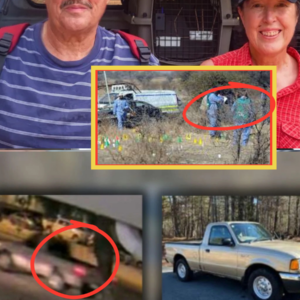
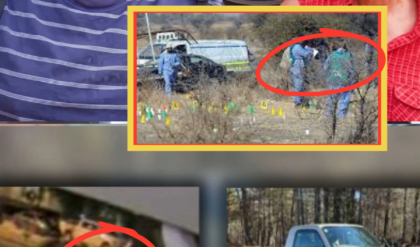
THE ROAD LOCALS FEARED MOST: Before Ernst and Dina Marais disappeared, a driver reportedly warned them about a risky route near Pafuri
By Africa Crime Desk At the time, it was only a casual warning. The kind of thing locals say to tourists near Pafuri every day: take care on that road, avoid the quieter route too late, don’t assume the bush…
THE GATE CAMERA MAY HOLD THE ANSWER: Newly recovered security footage is reportedly helping investigators reconstruct the final hours before Ernst and Dina Marais vanished into the Kruger mystery…
The killers may have thought the river would hide everything. The bodies.The vehicle.The route.The reason Ernst and Dina Marais were targeted in one of the most shocking crimes in Kruger National Park’s history. But the case may not have ended…
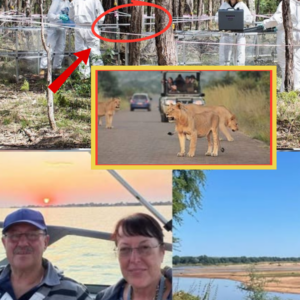
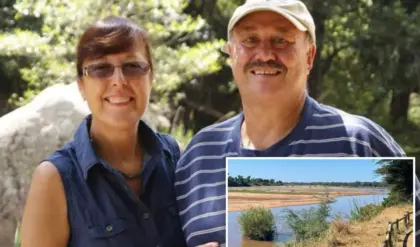
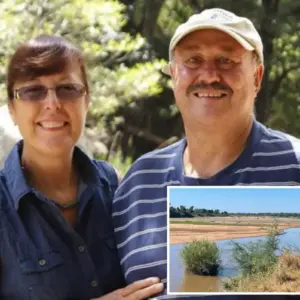
THE DOGS DIDN’T FAIL — THE TRAIL CHANGED: At the riverbank in Kruger, the scent vanished near the water
The dogs followed the scent until the river took it away. That is the chilling claim now circulating around the murder of Ernst and Dina Marais, the retired Mossel Bay couple found dead near Crooks Corner in Kruger National Park….
The sniffer dogs stopped at the water’s surface” at the location where Ernst and Dina’s bodies were found in Kruger National Park During the search
The dogs followed the scent until the river took it away. That is the chilling claim now circulating around the murder of Ernst and Dina Marais, the retired Mossel Bay couple found dead near Crooks Corner in Kruger National Park….
End of content
No more pages to load