By the time the first hard freeze silvered the weeds along Route 17, most of Briar Ridge, Kentucky, had already made up its mind about Sadie Monroe.
She was the woman living in a cave.
That was how people said it at Dawson’s Diner, between bites of country ham and overcooked eggs, as if the phrase itself proved she had lost what little sense God had given her.
Not renovating a natural limestone structure on her own land.
Not building an emergency shelter into the mountain.
Just living in a cave.
Sadie heard it the first week she started hauling lumber up the old mining road in her father’s rusted Ford.
She heard it again when she bought rigid insulation panels at the feed store and Wade Tull, who had spent the last fifteen years doing nothing but leaning on counters and commenting on other people’s failures, laughed loud enough for the whole place to hear.
“Monroe,” he had called after her, “you planning to start hibernating?”
The men around him chuckled.
Sadie balanced the stack of supplies on her hip and kept walking.
“Maybe,” she said without turning around. “You oughta try it. Might save the town from your opinions all winter.”
That got a few coughs and one sharp laugh from the cashier, but by sundown the story had spread anyway. Sadie Monroe had come back from Louisville broke, divorced, and apparently crazy enough to move into Cold Hollow Cave on the twelve-acre parcel nobody else wanted.
The land had gone up for tax auction after old Mr. Abernathy died without heirs. It was steep, rocky, and half of it sat over limestone voids that made bankers nervous and insurers impossible. There wasn’t a proper house on it, just the skeleton of a tobacco barn, a capped well that no longer pumped, and the cave mouth hidden behind cedar and laurel halfway up the ridge.
To everybody else, the place was worthless.
To Sadie, it was the only thing in Briar Ridge she could afford.
She had come home in August with her life tied up in the bed of a pickup: two duffel bags, a toolbox, a folded mattress, a cast-iron skillet, a milk crate full of old notebooks, and the last $4,700 she had after legal fees, late rent, and the kind of divorce that left both people meaner than when they started.
Her ex-husband, Brent, had liked telling people she was too stubborn for marriage and too practical for kindness. Sadie had spent twelve years proving she could outwork any man on an HVAC crew in Louisville, crawling under houses in July heat, replacing compressors in strip mall roofs, fixing furnaces in January when customers stood over her shoulder and asked when the “real technician” would get there.
She knew ductwork, airflow, insulation, heat loss, moisture, mold, vapor barriers, thermal bridging, and the thousand ways a building could betray the people inside it.
What she did not know, at thirty-six, was how to start over after everything familiar had collapsed at once.
Briar Ridge had not exactly welcomed her home.
The town sat in a bowl of hills where old coal roads curled into hollows and church signs changed more often than fortunes. On Friday nights the high school football field still filled up, though the mill had closed, the mine had been dead for years, and half the younger people with any ambition had moved to Lexington, Knoxville, or farther.
Sadie’s mother was gone. Her father had been buried three winters earlier. The little white house she grew up in had been sold to cover his medical debt. That left her with memory, pride, and a mountain parcel with a cave in it.
So she studied the land.
She hiked every inch of it with a laser thermometer, a notebook, and a headlamp. She cleared brush at the cave mouth and found the entrance bigger than she remembered from childhood—eight feet high at the center, thirteen across, sloping inward to a chamber the size of a one-room cabin. Beyond that, a narrower passage bent right and opened into a second, deeper room where the air changed.
It was warmer there.
Not hot. Not magical. Just steady.
When the August afternoon outside sat at ninety-two, the first chamber held at sixty-one degrees. The deeper chamber stayed sixty-four. In September, when cool nights dropped into the forties, the deeper chamber stayed sixty-four. In October, after the first frost, it stayed sixty-five.
There was a hairline seam along the back wall where a warm mineral trickle fed a shallow pool no wider than a washtub. The rock around it stayed several degrees higher than the rest of the cave. Nothing dramatic. No steaming hot spring. Just the kind of underground warmth most people never noticed because most people never stopped to measure.
Sadie did.
She sat on an overturned bucket in the rear chamber and stared at the numbers in her notebook until the idea stopped sounding desperate and started sounding possible.
A cave didn’t have to be a home by itself.
It could be a shell.
A thermal envelope.
A giant, ancient buffer between a small human structure and the weather.
If she built a room inside the cave—framed, insulated, sealed, and vented right—the mountain could do half the work.
The more she ran the calculations, the more sense it made.
Deep earth temperature. Reduced wind exposure. Minimal exterior surface area. Massive thermal stability. A small efficient heater. Heat-retaining masonry bench. Layered entry. Controlled airflow. Moisture management.
It wasn’t madness.
It was physics.
So she started building.
By the third week of October, she had hauled up salvaged two-by-fours, plywood, mineral wool, foam board, masonry blocks, firebrick, stovepipe, old windows, a steel door she bought cheap off Facebook Marketplace, and two solar panels from a farm auction outside Hazard. She sealed the cave mouth with a wide timber frame and hung double reclaimed barn doors on the outer side. Six feet behind those, she built a second insulated entry wall with a narrower weather-sealed door, creating an airlock.
Sixty feet inside, where the cave widened and the floor leveled, she marked out a rectangle sixteen feet by twenty.
That was where the real shelter would stand.
Amos Pike found her there one gray afternoon, standing ankle-deep in crushed stone and wrestling a treated floor joist into place.
Amos was seventy-two, hollow-faced, broad-handed, and bent just enough to suggest the mountain had spent decades trying to fold him back into it. He had worked underground from the time he was eighteen until the mine took most of the hearing in his left ear and all the cartilage in one knee.
He parked his old Polaris near the entrance, stepped inside, and looked around without speaking for nearly a full minute.
Then he said, “Well, I’ll be damned.”
Sadie wiped sweat from her temple with her sleeve. “That good or that bad?”
“That depends,” Amos said. “You dying in here, or you planning not to?”
“Planning not to.”
He limped forward and studied the floor piers. “Raised deck over the damp. Smart. You doing a floating cabin?”
“Room inside the chamber. Insulated walls, insulated ceiling. Small enough to heat. Cave stays the buffer.”
Amos looked up toward the blackened trace of an old fissure venting somewhere overhead. “And smoke?”
“Rocket mass heater with vertical exhaust through that seam. I had a mason in Louisville look at the draft design years ago when I was studying off-grid cabins. It’ll pull if I line it right.”
He grunted once, which in Briar Ridge could mean approval, skepticism, or indigestion.
“Town says you’re crazy,” he said.
Sadie picked up the impact driver. “Town’s had that opinion about me since I beat Wade Tull in algebra.”
Amos almost smiled.
He took off his gloves, set them on a rock, and said, “Hand me the other end of that joist.”
That was the beginning of it.
Not friendship exactly. Something steadier.
Amos did not ask for explanations. He respected work, tools put back in the right place, and people who knew the difference between moisture problems and structural problems. He showed Sadie where the cave floor dipped in spring runoff, where an older side crawl connected to a natural chimney, and which section of ceiling had sound stone instead of crumbly calcite.
He also taught her things her HVAC training never had: how cave air behaved after heavy rain, how mountain rock carried cold near the mouth but held warmth farther in, how animals traveled through old shafts, how sound could lie underground, and how not to trust a dry patch just because it had been dry all week.
Together they built the shelter slow and right.
Sadie laid a gravel base over a thick plastic vapor barrier, then anchored a deck on concrete piers she leveled by hand. On that platform she framed the cabin walls and packed them with mineral wool. She skinned the exterior in plywood, taped every seam, added a radiant barrier where it made sense, and built a steep-insulated roof below the cave ceiling to keep condensation from dripping directly onto the living structure.
She installed a tiny wood cookstove near the front of the cabin and the rocket mass heater bench along one wall, made of firebrick, steel, and clay, so it would absorb heat for hours after the fire dropped.
A side alcove became a pantry lined with shelves for canned beans, flour, rice, salt, lard, coffee, and mason jars of venison Mabel King from the diner insisted she take.
The rear corner held a bed built on storage drawers.
Another corner held batteries, an inverter, and a charging station fed by solar panels outside the cave mouth where winter sun could still catch them.
For water, Sadie rigged a gravity-fed filtration system from the warm mineral seep in the back chamber and backed it up with hauled jugs. For sanitation, she built a composting toilet in a separate curtained section near the outer chamber and vented it carefully.
By Thanksgiving, the cabin was airtight enough that when she lit the rocket heater and sealed the inner door, the temperature inside the shelter climbed from sixty-four to seventy-eight in under an hour.
By the time she adjusted the draft and added the stove for cooking, it held at eighty-one.
She took a picture of the wall thermometer because even she barely believed it.
Outside, sleet rattled against the barn doors. Inside, she stood in a T-shirt, breathing in cedar shavings and warm stone.
The mountain gave back heat like it had been saving it for her.
And for the first time in a very long time, Sadie did not feel ruined.
She felt ready.
She just didn’t know yet what she was getting ready for.
Part Two: The Town That Laughed
Briar Ridge had two reliable institutions: Dawson’s Diner and public opinion.
The first served biscuits the size of softballs and coffee so strong it could peel paint. The second required no evidence, no mercy, and no waiting period.
By early December, Sadie’s cave had become the town’s favorite topic.
People speculated about snakes, bats, mold, collapse, and whether loneliness had finally tipped her over the edge. Some said she was trying to go viral online. Others said she was doing it for attention because Brent Monroe had left her. A few claimed she was preparing for the end times.
The sheriff’s department received three anonymous calls about “an unsafe dwelling in an uninspected hole.”
Sadie learned that last part from Sheriff Ben Keller himself, who drove up one windy afternoon, cut the engine, and stood looking at the cave mouth like he expected the mountain to cough her out.
Ben had been two years ahead of Sadie in school. At seventeen he had been broad-shouldered and silent; at forty now he was broader, still silent, with deep lines around his eyes and a calm way of standing that made angry people lower their voices without knowing why.
He pulled his gloves off finger by finger.
“You gonna arrest me for being eccentric?” Sadie asked from the ladder where she was mounting one last LED strip.
“Depends,” Ben said. “You armed?”
“With sarcasm, mostly.”
He looked past her into the chamber. The cabin walls glowed amber under battery lights. Split oak was stacked neatly under a tarp. Tools hung organized from pegs. The air smelled of clean sawdust and hot tea.
Ben’s eyebrows rose just a little.
“I got complaints,” he said.
“Anonymous?”
“Of course.”
“About structural safety or about the idea of a woman doing something they wouldn’t?”
“Both, maybe.”
Sadie climbed down. “You here as sheriff or building inspector?”
“Sheriff. County doesn’t have a building inspector for unincorporated caves.”
That got the nearest thing to a smile from him.
He stepped inside the airlock and then into the main chamber. His breath showed once, then faded. When Sadie opened the inner cabin door, a wave of eighty-degree air rolled out.
Ben stopped.
“You’re kidding.”
“Nope.”
He walked in, glanced at the thermometer, then at the heater bench, the sealed walls, the roof cavity, the vent line, the smoke detector, the carbon monoxide monitor, and the fire extinguishers mounted near both exits.
“You’ve got redundancy,” he said.
“I like living.”
He crouched to study the vent pipe. “How’d you get this to draft in a cave?”
“Natural chimney fissure. Lined and tested. I’ve also got intake control and backup cross-vent if the weather shifts.”
“Any collapse concerns?”
“I mapped the sound ceiling with Amos. Marked the weak pockets. Nothing overhead here but competent limestone.”
Ben stood up. “You know most people in town think you’re insane.”
Sadie leaned against the table she’d built from an old door. “Most people in town think queso is ethnic food.”
He gave in and actually smiled that time.
Then the smile disappeared, and he looked at her the way practical men look at somebody they suspect might be tougher than they are comfortable admitting.
“You planning to ride winter out here alone?”
Sadie shrugged. “That was the original idea.”
Ben nodded once, but his eyes moved to the pantry, the extra blankets folded on a shelf, the stack of firewood larger than one person reasonably needed, and the second cot she had not intended anyone to notice.
“You expecting company?”
“No.”
“You prepared for it anyway.”
“Always was my best bad habit.”
When Ben left, he told her he couldn’t stop people from talking, but no law said a woman couldn’t live on her own land if she wasn’t putting anyone else in danger.
That should have been the end of official interest.
It wasn’t.
Three days later, Travis Bell came up the ridge in a black SUV that looked absurd on the mud road.
Travis had grown up in Briar Ridge too, only he’d spent the last decade becoming the kind of man who said portfolio and development corridor and wore expensive boots that had never seen manure. His family had money from construction, trucking contracts, and enough land deals to convince half the county he was the future.
He stepped out wearing a camel coat and a face full of confidence.
Sadie disliked him on sight all over again.
“Sadie Monroe,” he said, smiling as if cameras might be hidden in the brush. “You look busy.”
“That’s usually what people look like when they’re working.”
He ignored that. “I’ve been meaning to come by. Word is, you turned Abernathy’s sinkhole parcel into a residence.”
“Word gets around.”
“It does in a place this small.”
She set down the bucket of mortar she’d been carrying. “What do you want, Travis?”
“Straight to business. I respect that.”
“No, you don’t.”
His smile tightened. “I’m putting together acreage on this side of the ridge. Cabins. Seasonal rentals. Hunting packages. Maybe a wedding venue if the county extends utilities. Your parcel happens to sit near the access route we need.”
Sadie folded her arms. “Then I guess you’re having a hard week.”
“I’m willing to make it easy. Cash offer. Fifteen thousand.”
She laughed.
Not politely. Not once.
A full, surprised laugh that bounced off the cave walls and made his expression go flat.
“That land isn’t worth that,” he said sharply.
“You offering it, not me.”
“It’s scrub and rock.”
“It’s my scrub and rock.”
He took a step closer. “Let’s be practical. You’re alone. Winter’s coming hard this year. Folks at the Weather Service are already talking about a bad one. You could walk away with cash, rent someplace decent, and not end up frozen in a hillside.”
Sadie looked past him at the mountains.
The oaks were bare now. The sky had gone the particular color of pewter that promised weather with intention.
Then she looked back at Travis.
“I already live someplace decent,” she said. “And if winter gets ugly, I’d rather be in this mountain than in one of your cheap cabins.”
That landed.
Travis’s jaw moved once.
“You always had a mouth on you,” he said.
“And you always thought money made you smart.”
He glanced toward the interior of the cave. “Just remember I tried to do this civil.”
“Is that what you call it when rich men assume broke women can be intimidated?”
For the first time, the polished tone cracked.
“You’re making yourself a joke in this town.”
Sadie stepped closer until he had to decide whether to back up.
He did not, but he wanted to.
“No,” she said quietly. “I’m making people uncomfortable because I didn’t fail the way they hoped I would.”
Travis held her gaze another second, then put his sunglasses back on though the sky was gray.
“This ridge will be worth money eventually,” he said. “You’ll regret being difficult.”
Sadie turned her back on him and picked up the mortar bucket again.
“Drive careful,” she said. “Your tires look expensive.”
After he left, she stood alone near the cave mouth and listened to the echo of his engine fade down the road.
Then Amos, who had apparently been splitting kindling behind the barn and heard enough, shuffled into view.
“That boy,” he said, “could ruin a sunrise.”
Sadie snorted.
Amos leaned on the maul handle. “You selling?”
“Not unless I lose my mind.”
“Good.”
“That a compliment?”
“It’s as close as you’re getting.”
The news came the second week of December.
Not from television first, though every network eventually had a map in alarming colors.
It came from old-timers.
From Amos, who said the geese were flying low and wrong.
From Mabel at the diner, who said her knees felt like knives.
From feed store gossip about propane shortages and road salt orders.
And then, officially, from the National Weather Service: a deep Arctic front, sustained below-average temperatures, repeated snow events, dangerous wind chill, potential infrastructure strain across the region. The coldest extended pattern in decades.
At Dawson’s, men began discussing generators.
At the grocery, shelves of bottled water thinned.
People who had laughed at Sadie suddenly started asking her quiet questions in the parking lot.
You really got it warm in there?
How warm is warm?
You got running water?
What about electricity?
She answered without boasting.
“Enough.”
“Warmer than outside.”
“Some battery, some solar.”
“Better than nothing.”
She did not say the number aloud very often—over eighty degrees—because somehow that sounded like bragging, and she had learned years ago that people in places like Briar Ridge would forgive sin faster than they forgave competence.
Then, three nights before Christmas, the first heavy snow came sideways on a screaming wind.
Sadie stood under the cave mouth awning, watching the dark swallow the ridge, and felt the storm pressing toward her like a living thing.
Inside the shelter, the thermometer read eighty.
Inside the mountain, the stone held.
And somewhere below in town, people who had laughed at the cave were turning their thermostats higher and trusting wires, boilers, supply lines, and systems they had never once imagined might fail.
Sadie closed the barn doors.
She slid the bolt.
And winter began.
Part Three: Warm Stone, Cold Hearts
For the first four days, the storm was just winter.
Heavy, yes. Bitter, yes. But still recognizable.
Snow stacked along the road cut. Church services were canceled. The school district called off classes. Local Facebook filled up with pictures of porches buried to the rails and captions about chili, card games, and “real Kentucky weather.”
Sadie used the lull to test every system in the cave.
She kept a notebook on the small table by her bed and logged temperatures morning, noon, evening, and late night.
Outer chamber: 28°F near the entrance, 46°F deeper in.
Inner cave chamber: 63°F steady.
Cabin interior without fire after eight hours: 68°F.
Cabin interior with moderate burn in rocket mass heater: 77°F.
Cabin interior with cookstove active at supper: 81°F.
Humidity stable after minor vent adjustment.
Battery reserve decent.
Water flow from the mineral seep unchanged.
Condensation only at one seam, sealed by morning.
It was, from an engineering standpoint, beautiful.
But winter is never just numbers.
On Christmas Eve, Mabel called from town on a crackling line.
Sadie had to stand near the cave mouth to get a signal. Snow hissed across the ridge around her boots.
“You all right?” Mabel asked without preamble.
“I’m fine,” Sadie said. “You?”
“Boiler’s acting mean at the diner. Furnace in the apartment upstairs keeps shutting off. I got blankets out like I’m running a boarding house in 1932.”
“Need me to come look?”
“Road’s too slick. Besides, you ain’t Santa Claus.”
“No, but I do HVAC.”
“I know what you do, honey. I also know that county road won’t reach us till daylight and I’m not having your body found in a ditch because I couldn’t keep my biscuits hot.”
Sadie smiled despite herself. “Call me if it quits completely.”
There was a pause. Then Mabel lowered her voice.
“Folks been talking.”
“People do that.”
“Not like before.” Another pause. “They’re nervous.”
“Good.”
“Hush. I mean it. There’s old people out here on fixed incomes trying not to run space heaters all day. Propane truck hasn’t made two deliveries. Grocery generator failed twice this week. Church shelter’s full of cots but half the county can’t get there if roads close. People are starting to think about what happens if this isn’t over quick.”
Sadie leaned against the cedar post and watched snow drift against the dark pines.
“It won’t be over quick,” she said.
Mabel exhaled softly, as if that matched what she already knew.
“You stay warm, child.”
“You too.”
Christmas morning dawned hard and white.
Sadie cooked biscuits in a cast-iron pan, fried the last of the bacon, and sat at her little table wrapped in warmth while the storm rattled the outer doors. She ate alone, but not unhappily. She had spent enough years enduring loud, joyless holidays in city apartments to appreciate a silent one.
After breakfast she carried a mug of coffee to the rear chamber and stood by the warm seam in the rock.
When she was little, her father had brought her here once during squirrel season. He had shown her how the cave breathed warmer than the woods around it and told her the mountain kept secrets from people who only looked at the surface.
At the time she thought he meant treasure.
Now she thought maybe he meant endurance.
By afternoon, another band of snow moved in. The wind rose.
Just after dusk, headlights flashed through the outer crack of the barn doors.
Sadie set down her book, grabbed her flashlight, and went to the airlock.
It was Lena Ross.
Sixteen years old, all sharp elbows and stubborn eyes, bundled in a red coat dusted white with blown snow. Her family lived half a mile downhill in a rental trailer that always looked one bad season away from surrender.
“What are you doing up here?” Sadie shouted over the wind as she pulled her in.
Lena’s face was blotched from cold. “Mama sent me to Amos’s, but the road drifted over and his place looked dark and—” She stopped, teeth chattering. “Our power went out. Like all the way. And the trailer’s so cold the pipes popped. Mama said go to Mr. Pike’s because his stove works but I couldn’t get that far.”
Sadie ushered her through the inner door and wrapped a blanket around her shoulders.
“Where’s your mom?”
“At home with Eli and Noah.”
Her brothers. Eight and six. Thin little boys who wore coats indoors in November.
Sadie’s stomach tightened. “Why didn’t she come with you?”
“She said she had to keep them there till she knew where to go.”
“Phone service?”
“Dead half the time.”
Sadie looked at the thermometer, the food shelves, the second cot, the stacks of split oak, then at the girl trying not to cry.
“Sit down,” Sadie said. “Get warm. Then you’re taking me back.”
Lena stared. “In this?”
“In this.”
Thirty minutes later Sadie had layered herself in thermal gear, loaded ropes, blankets, a lantern, and a portable propane heater onto the little sled she used behind Amos’s Polaris when he loaned it to her, and headed downhill with Lena clinging behind her.
The road had vanished under drifts.
The world was reduced to headlight, wind, and instinct.
At the Ross trailer, the windows were dark. Ice crusted the inside of the glass.
Emily Ross opened the door with one arm around little Noah and the other gripping a flashlight. Her face, already pale from a late pregnancy nobody in town had stopped gossiping about, had gone gray with worry.
“You should not have come,” Emily said the second she saw Sadie.
“Too late,” Sadie answered. “Pack what you need. You’re coming up.”
Emily looked back into the trailer.
A single candle glowed on the kitchen counter. Eli sat on a chair wearing two coats, trying to act brave.
“I can’t drag them through that hill,” Emily said. “Not with the baby and the boys and—”
“You’re not dragging anyone,” Sadie said. “We’re loading them.”
It took seventeen minutes.
Blankets around the boys. Emergency heat packs in mittens. One tote bag with medicine, diapers, crackers, and the ultrasound picture Emily snatched from the fridge door without seeming to realize she’d done it. Sadie put Noah in front with her, Eli between Emily’s knees on the sled, and Lena walking beside them with a flashlight until they hit the harder part of the grade.
The ride back felt longer.
The wind shoved at them sideways. Twice Sadie thought the machine might bog down. Once she stopped and had everybody duck low while a burst of snow erased the whole road in front of them. But the mountain loomed where she knew it would. The cedar markers she’d tied with reflective tape shone when her light hit them. The cave mouth appeared like judgment at the end of a white tunnel.
When they got inside, Emily Ross stood in the main chamber staring at Sadie’s lit shelter as if she had stepped into a church.
Sadie opened the inner door.
Warmth spilled across them.
Noah burst into tears from the shock of it. Eli laughed and cried at the same time. Lena just stood there with both hands over her mouth.
Emily looked at the thermometer on the wall.
“Eighty?” she whispered.
“Eighty-two right now.”
Emily stared at Sadie, and for the first time since Sadie returned to Briar Ridge, there was no pity in anyone’s eyes.
Only disbelief.
And need.
“Take your boots off by the bench,” Sadie said gently. “You’re safe here.”
That night there were five people sleeping inside the cabin.
Sadie on the bed.
Lena and the boys on the cots and floor pallet.
Emily propped with pillows in the warmest corner, one hand on her belly as the baby turned under her ribs.
The snow beat at the mountain all night long.
And Sadie lay awake listening to four other people breathe, realizing her shelter was no longer something she had built for survival alone.
It was becoming something else.
By morning, the county was in trouble.
Power outages spread from one hollow to the next. A substation south of town iced over. The propane terminal in the next county had a line of trucks waiting six hours for refill. Generators failed. Pipes burst. Space heaters overloaded circuits. Cell service flickered in and out.
At ten-thirty, Sheriff Ben Keller called from a satellite unit the county had just activated.
“Sadie,” he said, voice clipped by bad signal, “you got people with you?”
“Four besides me.”
“How warm?”
“Seventy-nine inside without pushing the fire. Why?”
There was a pause.
Then Ben said, “School shelter boiler quit.”
Sadie closed her eyes.
“How many people?”
“Twenty-eight there overnight. We moved some to the church, but that furnace is struggling too. Roads are blocked north and west. County garage says we’re out of clear lanes by nightfall.”
She already knew what he was asking before he asked it.
“You want to use the cave,” she said.
“I want to know capacity.”
Sadie looked around the shelter. Then beyond it to the broader chamber, where with enough blankets and careful spacing more people could sleep out of the wind.
News

THE MOMENT THE CASE CHANGED: According to prosecutors, a five-word statement allegedly made before the confrontation with Austin Metcalf became a turning point in the courtroom battle… 👇👇
By U.S. Crime Desk Five words may become one of the most important pieces of the Karmelo Anthony murder trial. “Touch me and see what happens.” The sentence, allegedly spoken moments before 17-year-old Austin Metcalf was fatally stabbed at a…
AUSTIN METCALF’S FAMILY REACTS IN ANGER: New testimony in the Karmelo Anthony has focused on five words prosecutors
By U.S. Crime Desk Five words may become one of the most important pieces of the Karmelo Anthony murder trial. “Touch me and see what happens.” The sentence, allegedly spoken moments before 17-year-old Austin Metcalf was fatally stabbed at a…
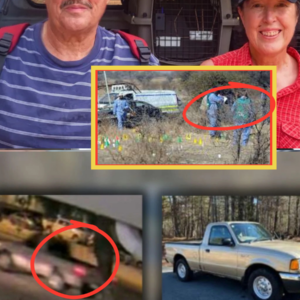
THE ROAD LOCALS FEARED MOST: Before Ernst and Dina Marais disappeared, a driver reportedly warned them about a risky route near Pafuri
By Africa Crime Desk At the time, it was only a casual warning. The kind of thing locals say to tourists near Pafuri every day: take care on that road, avoid the quieter route too late, don’t assume the bush…
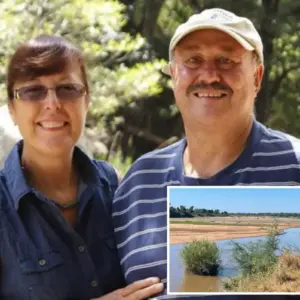
THE GATE CAMERA MAY HOLD THE ANSWER: Newly recovered security footage is reportedly helping investigators reconstruct the final hours before Ernst and Dina Marais vanished into the Kruger mystery…
The killers may have thought the river would hide everything. The bodies.The vehicle.The route.The reason Ernst and Dina Marais were targeted in one of the most shocking crimes in Kruger National Park’s history. But the case may not have ended…
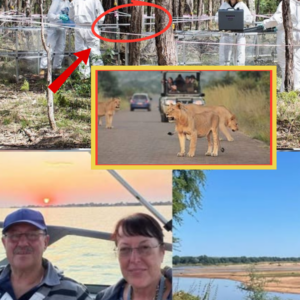
THE DOGS DIDN’T FAIL — THE TRAIL CHANGED: At the riverbank in Kruger, the scent vanished near the water
The dogs followed the scent until the river took it away. That is the chilling claim now circulating around the murder of Ernst and Dina Marais, the retired Mossel Bay couple found dead near Crooks Corner in Kruger National Park….
The sniffer dogs stopped at the water’s surface” at the location where Ernst and Dina’s bodies were found in Kruger National Park During the search
The dogs followed the scent until the river took it away. That is the chilling claim now circulating around the murder of Ernst and Dina Marais, the retired Mossel Bay couple found dead near Crooks Corner in Kruger National Park….
End of content
No more pages to load