A new forensic angle may deepen the investigation into the Maldives cave-diving disaster, as reports claim examiners are looking at unusual marks on the gas-cylinder valves used by members of the Italian diving group who died beneath Vaavu Atoll.
Authorities have not publicly confirmed that scratches were found on the valves, nor have they said whether any equipment damage contributed to the deaths. But the possibility that investigators are now focusing on the divers’ cylinders adds a disturbing new layer to a tragedy already surrounded by questions about depth, gas use, permits, and cave conditions.
Five Italian divers died after entering an underwater cave system near Alimatha island last week. The group was reportedly diving at around 50 to 60 meters, a depth far beyond the Maldives’ legal recreational diving limit of 30 meters. Their bodies were later found in or near the cave system, with several victims located deep inside what recovery divers described as the third and innermost chamber.
The victims included University of Genoa marine ecologist Monica Montefalcone, her daughter Giorgia Sommacal, researcher Muriel Oddenino, marine biology graduate Federico Gualtieri, and diving instructor Gianluca Benedetti. Reuters reported that Maldivian authorities are investigating whether the group descended deeper than expected and whether the equipment used was appropriate for the dive.
If valve damage is confirmed, experts say investigators would likely examine several possibilities: whether the marks were caused during normal transport, impact against rocks inside the cave, recovery operations, corrosion, pressure-related handling, or pre-dive interference.
At this stage, there is no official evidence that the cylinders were tampered with.
Still, the valves matter because they are among the most critical components of a diver’s life-support system. A damaged or partially obstructed valve can affect gas delivery. A hard impact can complicate regulator function. In deep cave conditions, even a minor equipment problem can quickly become fatal because divers cannot ascend directly to the surface.
The recovery operation itself showed the severity of the environment. AP reported that Finnish technical divers using advanced equipment, including closed-circuit rebreathers, were brought in after earlier recovery efforts became too dangerous. A Maldivian military diver involved in the search also died, reportedly after suffering decompression sickness during the mission.
The cave’s third chamber has become the center of the investigation. According to diving reports, some of the bodies were located roughly 60 meters deep inside the cave’s largest and deepest section. That detail has intensified questions about whether the group had enough gas, whether they were using the right breathing mixture, and whether they became disoriented or incapacitated before they could turn back.
Forensic examination of the cylinders could be crucial. Investigators may test the remaining gas, inspect valve threads and regulator connections, review pressure readings, and look for signs of impact, abnormal wear, saltwater intrusion, or mechanical failure.
But experts warn that scratches alone do not prove sabotage.
Dive cylinders and valves can be scratched during loading, boat handling, cave contact, rescue recovery, or post-accident movement. In a rocky underwater environment, marks on metal equipment may be expected. The key question is whether the scratches show a pattern inconsistent with normal diving or recovery damage.
That is why the investigation is expected to move slowly. Authorities will need to compare physical evidence from the equipment with dive logs, witness statements, boat records, gas-fill information, permit documents, and autopsy findings.
For now, the tragedy remains officially under investigation.
But if the reported marks on the gas-cylinder valves are confirmed, they could shift the case from a question of depth and planning to something far more complex: whether the divers’ equipment failed, was damaged during the dive, or carried a warning sign no one noticed until it was too late.
At the bottom of the Maldives, the cave has already given up the bodies.
The equipment may be the next witness.
News

THE MOMENT THE CASE CHANGED: According to prosecutors, a five-word statement allegedly made before the confrontation with Austin Metcalf became a turning point in the courtroom battle… 👇👇
By U.S. Crime Desk Five words may become one of the most important pieces of the Karmelo Anthony murder trial. “Touch me and see what happens.” The sentence, allegedly spoken moments before 17-year-old Austin Metcalf was fatally stabbed at a…
AUSTIN METCALF’S FAMILY REACTS IN ANGER: New testimony in the Karmelo Anthony has focused on five words prosecutors
By U.S. Crime Desk Five words may become one of the most important pieces of the Karmelo Anthony murder trial. “Touch me and see what happens.” The sentence, allegedly spoken moments before 17-year-old Austin Metcalf was fatally stabbed at a…
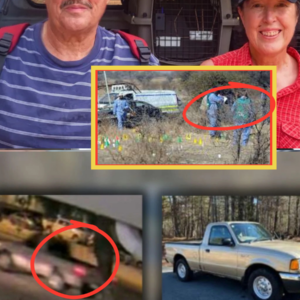
THE ROAD LOCALS FEARED MOST: Before Ernst and Dina Marais disappeared, a driver reportedly warned them about a risky route near Pafuri
By Africa Crime Desk At the time, it was only a casual warning. The kind of thing locals say to tourists near Pafuri every day: take care on that road, avoid the quieter route too late, don’t assume the bush…
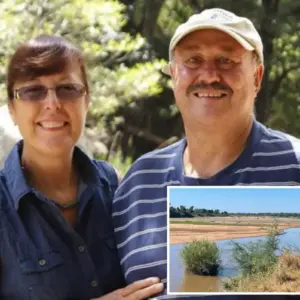
THE GATE CAMERA MAY HOLD THE ANSWER: Newly recovered security footage is reportedly helping investigators reconstruct the final hours before Ernst and Dina Marais vanished into the Kruger mystery…
The killers may have thought the river would hide everything. The bodies.The vehicle.The route.The reason Ernst and Dina Marais were targeted in one of the most shocking crimes in Kruger National Park’s history. But the case may not have ended…
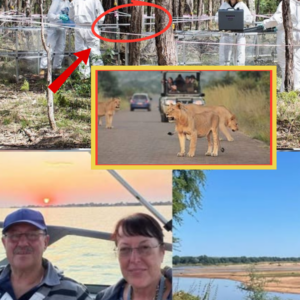
THE DOGS DIDN’T FAIL — THE TRAIL CHANGED: At the riverbank in Kruger, the scent vanished near the water
The dogs followed the scent until the river took it away. That is the chilling claim now circulating around the murder of Ernst and Dina Marais, the retired Mossel Bay couple found dead near Crooks Corner in Kruger National Park….
The sniffer dogs stopped at the water’s surface” at the location where Ernst and Dina’s bodies were found in Kruger National Park During the search
The dogs followed the scent until the river took it away. That is the chilling claim now circulating around the murder of Ernst and Dina Marais, the retired Mossel Bay couple found dead near Crooks Corner in Kruger National Park….
End of content
No more pages to load