She Paid $27 for a Forgotten Billionaire’s Storage Unit—Then One Hidden Room Rewrote Her Entire Life Forever
Nora Blake had learned, the hard way, that desperation had its own smell.
It smelled like old grease trapped in a diner uniform after a twelve-hour shift. Like sun-baked vinyl seats in a truck with no air-conditioning. Like the envelope taped to her apartment door that morning, the one stamped with FINAL NOTICE in red ink so bright it looked almost cheerful.
By ten-thirty on a Thursday in Phoenix, Arizona, the heat was already coming up off the pavement in waves. Nora stood in the gravel lot of Cactus Crown Storage with forty-three dollars in her wallet, a splitting headache behind her left eye, and a promise to herself that she would not cry in public again.
Not today.
Not after rent went late for the second month in a row.
Not after the electric company left her a voicemail that began with, “This is a courtesy call.”
And definitely not after she’d skipped lunch so she could put five more dollars in the gas tank of her father’s old Ford Ranger, which only ran if she turned the key halfway, whispered “come on, baby,” and hit the dashboard exactly twice.
Storage auctions weren’t glamorous. Television lied about that.
There were no easy fortunes, no instant antiques, no dramatic crowd gasps when treasure appeared under a moth-eaten blanket. Usually it was broken furniture, baby clothes, holiday decorations, mold, and occasionally something so depressing it followed her home and sat with her in silence. A cardboard box of unsent birthday cards. A wedding dress with the tags still on. An urn no one had bothered to pick up.
But sometimes—rarely, beautifully—there was enough to make the week.
A set of power tools. Vintage sneakers. Restaurant equipment. A decent mid-century chair. Sell enough pieces online, hit the swap meets on weekends, and Nora could keep the lights on a little longer.
That was the whole business plan.
“Blake!”
She turned.
Gil Mercer, the auctioneer, was standing on the loading curb with a clipboard tucked under one arm and mirrored sunglasses reflecting back the rows of metal doors. He had a tan like old leather and a voice that could cut through concrete. “You bidding or sightseeing?”
“Bidding,” Nora called.
Gil grinned. “That’s the spirit. Though if you’re here for Unit 221, don’t waste your time. Smells like something died in there.”
A few men nearby laughed.
Nora knew most of the regulars. Retired contractors. Flea-market resellers. Junk haulers with side hustles. Two brothers who overpaid on anything with wheels. A woman named Denise who only bought units with holiday décor and somehow made a killing every December.
And then there were the sharks—guys with dealer licenses, crews, warehouses, cash to burn.
Nora wasn’t one of them.
She was thirty-two, wore boots with the soles thinning at the heels, and had started coming to auctions after her father died and her mother’s hospital bills ate what little savings the family ever had. At first she’d sold his tools because she had to. Then she learned she had a decent eye for value. Then life kept getting worse, so she kept showing up.
“First unit,” Gil barked. “C-14. Partial view only, same rules as always. Cash or approved payment by end of sale. You buy it, you clear it, no whining.”
The metal door rattled upward.
The crowd leaned in.
Nora saw a bicycle with no front wheel, a stack of plastic bins, broken shelving, and what looked like a treadmill older than she was.
“Who’s giving me fifty?”
No one.
“Twenty-five?”
A hand went up. Another. It sold for forty.
The next two units were no better. One had boxes of old paperwork and a cracked massage chair. Another was wall-to-wall stained mattresses. The regulars joked, cursed, and shook their heads. Nora kept her hands in her pockets.
Then Gil led the group to the far end of the facility, where the buildings changed.
The standard roll-up units gave way to climate-controlled interior spaces with keypad access and polished stucco walls. The rich people lockers, Nora called them privately. The ones where people stored wine collections, designer furniture, art, and the kind of mistakes you only make when you have too much money.
Gil stopped at a gray roll-up door with a faded strip of red tape across the latch.
“Unit L-47,” he announced. “Delinquent eleven months. Registered to Vale Strategic Holdings.”
A low murmur moved through the crowd.
Nora frowned. The name meant nothing to her until the guy beside her whistled under his breath.
“No kidding,” he said. “Vale?”
Another man snorted. “Probably fake.”
“No,” Denise said quietly. “Not fake. Malcolm Vale used that LLC for personal property.”
That got the group talking.
Everyone in Arizona knew the name Malcolm Vale.
He was the billionaire who had built a logistics empire out of warehouses, trucking routes, and data systems. A self-made king of the desert. The kind of man who ended up on magazine covers in open-collar shirts, looking like he personally invented ambition. Two years earlier he had disappeared after a helicopter crash in northern Nevada. The wreckage had burned so badly investigators never publicly confirmed much beyond “no survivors believed possible.” Then his wife and board spent the next year fighting over the estate, his companies dipped, lawsuits multiplied, and the news cycle moved on.
Now apparently one of his personal storage units was up for auction in a facility off Interstate 17.
Nora felt the crowd stiffen around her.
This one mattered.
Gil raised his voice. “Door’s coming up.”
The unit opened.
There was a beat of silence.
Then the disappointment hit like a wave.
“Are you kidding me?” someone said.
At first glance the space looked like trash.
A dusty velvet loveseat with one leg broken. Three warped side tables. Cardboard wardrobe boxes collapsed inward. Plastic garment bags hanging from a metal rack. A cracked lamp. Two fake ficus trees. A pile of old framed prints turned backward against the wall. Everything gray with dust, the kind of dust that said long neglect and poor packing. No obvious electronics. No visible art. No crates. No safe.
A billionaire’s leftovers, maybe. Or a decoy.
“Lot starts at two hundred,” Gil called.
No one moved.
“One hundred.”
Silence.
“Fifty?”
Still nothing.
The brothers exchanged a look and shrugged.
Someone in the back said, “Probably lawyers emptied it already.”
Denise folded her arms. “Or family.”
Nora stared at the unit.
It looked wrong.
Not worthless. Wrong.
The furniture was too random. Too intentionally random. Cheap fake plants beside expensive upholstery. Wardrobe boxes stacked badly enough to collapse, but the garment bags were evenly spaced. Dust across everything except, she noticed, a narrow line on the floor near the back wall where something heavy might once have been dragged.
Gil sighed. “All right, folks. Twenty-five.”
Nora lifted her hand before she had time to talk herself out of it.
Gil pointed. “Twenty-five from Blake. Do I hear thirty?”
One of the brothers smirked at her, but neither bid.
“Thirty? Thirty anywhere?”
Nothing.
Nora’s heart thudded. She immediately regretted it.
Then a voice from the back: “Twenty-seven.”
Heads turned.
A tall man in a golf shirt she didn’t recognize raised two fingers lazily.
Gil nodded. “Twenty-seven. Do I hear thirty?”
Nora looked at the man. He gave her a small smile that didn’t reach his eyes. He wasn’t a regular. He looked too polished for this crowd—watch too nice, shoes too clean, no dust on him anywhere.
Something about him made her skin prickle.
“Thirty?” Gil repeated.
No one answered.
Nora swallowed.
If she lost it, maybe that was a blessing. She only had forty-three dollars.
Then the polished man glanced away, already bored, as if twenty-seven dollars meant less to him than gum stuck to his shoe.
Nora raised her hand. “Twenty-eight.”
That drew a laugh.
Gil grinned. “Twenty-eight to Blake. Looking for thirty.”
The man in the golf shirt studied her for one beat too long.
Then he shook his head.
“Sold,” Gil shouted. “Twenty-eight dollars to Nora Blake.”
A few people chuckled and moved on.
Gil scribbled on his sheet and handed her the invoice when the group dispersed. “Almost had yourself a bidding war there.”
“On a trash pile?”
He shrugged. “Sometimes the trash piles are the dangerous ones.”
Nora glanced back toward the polished stranger, but he was already walking toward the parking lot, talking quietly into his phone.
By noon, after paying fees, the unit cost her twenty-seven dollars and all the change in her cup holder. Gil rounded down because he knew her and because storage auctions ran on a strange mix of competition and mercy.
“Get it cleared in forty-eight hours,” he said. “And if you find a gold toilet, remember your friends.”
She managed a smile. “If I find a gold toilet, I’m buying this whole place.”
He laughed, then lowered his voice. “Hey. One thing.”
“What?”
“That guy who bid against you? He called the office this morning asking specifically whether this unit had gone legal for auction. Never seen him before.”
Nora’s fingers tightened around the paper.
“Did he say why?”
“Nope.” Gil spit sunflower seed shells into a cup. “Could be nothing. Could be a lawyer fishing. Could be some rich widow with weird taste in furniture. Just… if you find paperwork, maybe don’t toss it too fast.”
He walked off before she could ask more.
Nora stood under the humming fluorescent lights outside Unit L-47 and listened to the air-conditioning vent breathe cold air into the hallway.
Twenty-seven dollars.
A joke purchase.
Maybe a mistake.
She rolled the door all the way up and stepped inside.
The unit smelled faintly of cedar, dust, and expensive cologne gone stale.
For the first hour, it looked like everyone else had been right.
The lamp was broken beyond repair. The side tables were veneer, not hardwood. The fake plants were junk. Two framed prints were cheap hotel art. The garment rack held tailored suits, but the linings were water-damaged. A couple of jackets still had designer labels, though, and she set those aside. The velvet loveseat had good bones under the grime. The wardrobe boxes held shoes—Italian, mostly, but dried and cracked from heat exposure.
Not a fortune. Not nothing.
Still, not enough to explain the man in the golf shirt.
Nora had borrowed a dolly from the office and dragged the larger pieces toward the front, sweat darkening the back of her T-shirt. By two o’clock her stomach was growling hard enough to make her irritable. She sat on an overturned crate, drank warm water from a bottle, and stared at the back wall.
That wrong feeling hadn’t gone away.
She got up and walked to the rear of the unit.
The wall looked standard enough—painted concrete block, climate-sealed. But a towering walnut wardrobe stood against it, absurdly out of place among the cheap furniture. Eight feet tall, carved trim, brass pulls. Real wood. Real weight. The kind of piece that belonged in an old-money house, not a storage locker full of junk.
She tugged one door open.
Empty.
The other door stuck halfway, then gave with a groan.
Also empty.
But when she knocked on the wardrobe’s floor panel, the sound changed on the right side. Hollow.
Nora crouched.
There, almost invisible in the grain near the corner, was a recessed brass tab worn smooth by fingers.
Her pulse kicked once.
“No way,” she whispered.
She pulled the tab.
The floor panel lifted.
Underneath sat a matte-black steel case, perfectly fitted into the hidden compartment.
Not a toolbox.
Not a cash box.
A professional case—weatherproof, lockless, and heavy.
Nora stared at it for a long time without touching it.
Then she looked over her shoulder, though she was alone.
Every survival instinct she had told her to close the panel and walk away.
Every unpaid bill in her apartment told her not to be stupid.
She gripped the handle and hauled the case out onto the concrete.
It was heavier than it looked. Her palms were slippery with sweat by the time she laid it flat and popped the latches.
Inside, cut into black foam, were twelve hard drives. Three flash drives. Two old flip phones. A thick leather journal. A manila envelope sealed with red wax. And beneath all of it, stacked in neat plastic-banded bricks, cash.
A lot of cash.
Nora sucked in air and forgot how to let it out.
There had to be fifty thousand dollars in the case. Maybe more.
Her mouth went dry.
At the bottom corner sat one more item: a silver key attached to a tag that read only BOX 944.
The sealed envelope had a single line written across the front in bold black ink.
If this case is open, then I was right.
For a full minute, Nora did nothing.
Then she heard footsteps in the hallway.
She snapped the case shut so fast the latches bit her fingers.
The footsteps passed.
No one stopped.
She stayed frozen, knees on the concrete, heart hammering in her throat.
When the air went still again, she carried the case into the back of the wardrobe, slid the panel shut, and stood with both palms pressed against the wood.
Her whole life had trained her to understand one thing clearly: money like that never arrived alone.
Money like that came with teeth.
That evening Nora drove home with the cash case wrapped in a quilt under the back seat of the Ranger, glancing in the rearview mirror every thirty seconds.
Her apartment complex sat on the west side of the city, a two-story square of peeling stucco, sun-blasted railings, and laundry strung from balconies despite the lease saying not to. Kids rode bikes in the parking lot. A pit mix slept under a truck with its tongue hanging out. The whole place smelled like hot asphalt and fried onions from the taco stand on the corner.
Home, more or less.
She carried the case upstairs after dark because she didn’t want Mrs. Granger from 2B asking questions. Nora had once brought home a mannequin torso and heard about it for three weeks.
Inside, she locked the deadbolt, pulled the curtains, and set the case on her kitchen table.
Her apartment was one bedroom if you were generous, studio if you were honest. A narrow galley kitchen, thrift-store couch, chipped coffee table, and a bookshelf her father had built before his hands got too shaky to do finish work. Every inch of the place was earned.
The silence felt strange tonight, almost alert.
Nora checked the peephole, then returned to the table and opened the case again.
The cash looked even bigger under the yellow kitchen light.
She counted two bundles before forcing herself to stop. Twenty thousand. There were many more.
The journal was old-fashioned, dark leather with an elastic band around it. Inside the front cover was a name written in all caps.
MALCOLM VALE
Nora sat down slowly.
The billionaire.
The first pages were not diary entries. They were dates, names, account numbers, meeting notes written in crisp block letters. The kind of notes made by a man who expected his thoughts to be evidence one day.
About ten pages in, the tone changed.
If anyone but me is reading this, then I either failed or I am dead. I’m not writing that for drama. I’m writing it because I have spent thirty years becoming a man who trusted leverage more than love, and now leverage is all I have left.
Nora read until her tea went cold beside her.
Malcolm Vale had believed, in the last year of his life, that people inside his own company were stealing from him, laundering money through shell charities, bribing regulators, burying safety reports, and using one subsidiary—South Canyon Logistics—to hide illegal chemical waste disposal contracts.
Nora’s breath caught at that name.
South Canyon Logistics.
She knew it.
Everyone in her old neighborhood knew it.
Fifteen years ago, a warehouse fire at South Canyon had killed three workers, including her father, Ben Blake. The company’s statement said the blaze started during an attempted theft. Security footage was “inconclusive.” The dead workers were quietly blamed. Nora had lived with the ugliness of that rumor half her life. Her father the thief. Her father the screwup. Her father the reason insurance refused to pay fully.
But in Malcolm Vale’s journal, South Canyon appeared over and over beside the words cover, waste manifests, false incident report, and one name boxed twice:
BEN BLAKE
Nora stopped breathing for a second.
She turned the page with trembling fingers.
B. Blake was not involved in theft. Internal memo confirms he flagged unauthorized storage in Bay 12 two weeks before the fire. Danner had site security bury complaint. Fire likely intentional after Blake threatened state contact. His family never received truth.
The room tilted.
Nora shoved back from the table hard enough that the chair legs scraped.
“No,” she whispered.
She read the paragraph again.
Then again.
Her father hadn’t stolen anything.
He had tried to report them.
And they had let the world bury him with the lie.
Nora pressed a hand over her mouth. Tears burned suddenly, hot and furious, but she was too shocked even to cry properly. She saw her father in flashes: grease under his nails, sawdust in his cuffs, laughing while flipping pancakes one Saturday morning after payday. The man who smelled like cedar and motor oil. The man who had looked embarrassed every time someone in a suit came around after the fire, as if he were sorry for dying inconveniently.
All this time.
All this time.
She sat down again because her knees no longer seemed committed to the job.
The journal named names. Evelyn Vale, Malcolm’s wife. Randall Danner, chief financial officer. Two attorneys. A private security consultant. There were page references to files stored on the hard drives, instructions for a deposit box, and repeated warnings written in increasingly jagged letters.
Do not trust the board.
If Evelyn gains access, everything vanishes.
They already know I’m moving material.
If helicopter issue was tampered with, look to Mercer Aviation contract.
By midnight Nora had read enough to understand one thing clearly.
The case didn’t just contain money.
It contained dynamite.
She should have called the police.
But experience had made her cautious about neat moral answers. The police had never come through for her family before. Lawyers cost money she didn’t have. And if this all connected to billionaires, executives, and private security, then turning it over to the wrong person might bury it forever.
She needed someone smart.
Someone angry.
Someone who wouldn’t flinch from a powerful last name.
She thought of June Alvarez.
June was an investigative reporter for the Arizona Ledger, one of the few local journalists who still wrote like the city belonged to ordinary people. Three years earlier, Nora had sold June a filing cabinet from an estate lot. June had shown up in a newsroom blazer and steel-toe boots, bought the cabinet, and spent twenty minutes asking Nora if she ever came across discarded business records from development firms. “The rich,” she’d said, “always hide the truth in boring boxes.”
Nora still had her card in a kitchen drawer somewhere.
She was reaching for her phone when someone knocked on her apartment door.
Three slow raps.
Nora went absolutely still.
It was 12:14 a.m.
Another knock.
Then a man’s voice, pleasant and low. “Ms. Blake? Sorry to disturb you. I’d like a word about a storage unit you purchased today.”
Ice slid down her spine.
She didn’t answer.
The man tried again. “I believe there may have been a mistake in the sale. I’m authorized to resolve it quickly, if you’d open the door.”
Nora backed away from the entrance, silent, her phone already in her hand.
The peephole would expose movement if she looked through it. Instead she stepped lightly to the side window and lifted the curtain one inch with two fingers.
A black SUV idled at the curb.
A man in a golf shirt stood outside her door.
The same one from the auction.
Not a lawyer, then.
Not just a bidder.
She dialed 911 with her thumb.
Before she could hit call, the man spoke again, his tone thinning.
“Ms. Blake, I know you’re inside. The contents of that unit do not belong to you.”
Nora’s eyes went to the kitchen table, where the open journal lay beside the case.
She moved fast.
She killed the lights, grabbed the journal and flash drives, shoved them into a reusable grocery bag, then dragged the entire cash case off the table and onto the floor where it wouldn’t be visible from the window.
Outside, the man tried the knob.
Once.
Twice.
Nora hit call.
As the line rang, footsteps sounded on the metal stairs—someone coming up fast, heavy and annoyed.
Then Mrs. Granger’s voice sliced through the hallway like a siren.
“Who the hell are you?”
The knob stopped moving.
The dispatcher answered, and Nora whispered, “There’s a man outside my apartment trying to get in.”
By the time patrol lights washed red and blue across the lot, the black SUV was gone.
The responding officers took a report, wrote down the plate number Mrs. Granger thought she’d seen, and asked Nora if she knew the man.
“No,” she said.
That part, at least, was true.
She did not mention the unit. Or the cash. Or Malcolm Vale’s journal.
The officers left at 1:03 a.m. Mrs. Granger brought over a baseball bat and insisted Nora keep it “because men are vermin.” Then the apartment finally went quiet again.
Nora didn’t sleep.
At dawn she called in sick to the diner for the first time in eight months, loaded the steel case into the Ranger, and drove to a mechanic shop on Van Buren where her oldest friend, Luis Moreno, was already opening the bay doors.
Luis had known Nora since high school. He was broad-shouldered, tattooed, and had the patient expression of a man who spent his life solving other people’s breakdowns. He wiped his hands on a rag when he saw her face.
“What happened?”
She set the case on his workbench.
“I think,” she said carefully, “I bought trouble.”
He looked at the case, then at her. “How much trouble?”
Nora opened it.
Luis stared at the cash. Then the drives. Then the journal.
Finally he exhaled through his teeth. “That kind.”
She told him everything.
The auction. The bidder. The knock at her door. The journal entry about her father.
Luis didn’t interrupt. When she finished, he leaned against the bench and folded his arms.
“Okay,” he said. “First, your dad wasn’t a thief. I’m sorry you had to hear that from a dead billionaire instead of the truth years ago.”
Nora looked away.
“Second,” he went on, “whoever came to your apartment will come again. So you can’t keep any of this there.”
“I know.”
“Third, if there’s enough in these files to hurt rich people, some of them are going to be very motivated.”
“No kidding.”
He thought for a moment, then reached under the bench and took out a lockbox key from a magnetic tray. “My uncle’s old RV is in the fenced yard behind the shop. No one uses it. Hide the case there for now.”
Nora almost laughed from relief. “Luis—”
“Don’t thank me yet. I’m also about to tell you this is way above our pay grade.”
“I know that too.”
“Good. So who are we calling?”
Nora pulled June Alvarez’s card from her pocket.
Luis squinted. “The reporter?”
“She hates billionaires on principle.”
He nodded solemnly. “Sounds promising.”
June answered on the second ring with the voice of someone already angry at the day. “Alvarez.”
“This is going to sound strange,” Nora said, “but three years ago you bought a green filing cabinet from me and said rich people hide the truth in boring boxes.”
There was a pause.
Then June said, “Nora Blake from the estate lot on McDowell?”
Nora blinked. “You remember that?”
“I remember everyone who knows where paper goes to die. What’d you find?”
“Can you meet me somewhere private?”
Another pause.
“Depends,” June said. “Are we talking divorce papers or federal crimes?”
Nora looked at Malcolm Vale’s name on the journal.
“Maybe murder.”
June arrived forty minutes later at a coffee shop near the courthouse wearing dark jeans, a white shirt, and the kind of expression that suggested sleep was optional but caffeine was sacred. She carried a laptop bag and a small recorder.
When Nora set the journal on the table and opened to the pages about South Canyon Logistics, June stopped being casually interested and became very, very still.
“Where did you get this?”
Nora told her.
June read for several minutes, then looked up sharply. “Do you have the files referenced here?”
“In a secure place.”
“Good answer.”
“You believe it?”
June gave her a look. “I spent six months, four years ago, trying to get records on South Canyon. Everything was sealed, scrubbed, or conveniently missing. That alone makes this plausible.” She tapped the page. “Randall Danner is still on the board of three Vale companies. Evelyn Vale chairs the family foundation and half the city still fawns over her at charity galas. If this is real, it’s not just corporate fraud. It’s obstruction, bribery, maybe homicide.”
Nora leaned forward. “My father—”
“I know.” June’s voice softened. “I’m sorry.”
Nora swallowed hard.
June closed the journal. “You need a lawyer and federal contact before this gets anywhere near publication. Not local cops. Not state regulators. Too easy to lean on.”
“Who?”
“I know an attorney named Daniel Reed. Former DOJ, now private practice, mostly corporate whistleblower cases. Annoyingly ethical. He owes me a favor.”
Nora stared at the steam rising off her untouched coffee. “And the money?”
June’s gaze flicked to her. “How much?”
“Enough to matter.”
“That part is yours if it was abandoned property sold legally,” June said. “Assuming it isn’t evidence tied directly to a crime scene. But if you wave it around, you’ll paint a target on yourself.”
“I think that part already happened.”
June nodded once. “Then from this second forward, you stop moving alone.”
The meeting lasted two hours.
By the end of it, June had made three calls from the parking lot, Daniel Reed had agreed to see them that afternoon, and Nora’s life had become something unrecognizable.
Daniel Reed’s office was in a low glass building downtown that smelled like lemon polish and expensive restraint. He was in his forties, clean-cut, with silver at his temples and the cautious, alert eyes of a man who measured risk for a living.
He read the journal in silence. Then he plugged one of the drives into an air-gapped laptop while June watched over his shoulder.
Folders opened.
Transfers. Scanned contracts. Audio files. Internal memos. Insurance records. Private correspondence.
And, just as Malcolm Vale had written, a subfolder labeled SC_Blake.
Daniel opened it.
The first file was an internal security memo dated fifteen years earlier.
Employee Ben Blake reported unauthorized hazardous storage in Bay 12 and threatened outside contact. Recommend termination for cause and retrieval of copied manifest pages.
Nora shut her eyes.
Daniel kept reading.
The next file was a draft press statement never released.
Incident likely linked to attempted theft by employees Blake / Ortega / Mills.
Drafted two days before the fire.
Two days.
Nora’s hands started shaking.
“That means they were planning the story before my dad died.”
“Yes,” Daniel said quietly.
He turned to another file: a signed instruction from Randall Danner to “contain exposure” and coordinate with site security.
June swore under her breath.
Daniel sat back. “This is real enough to terrify me.”
“Good,” June said. “Terrified is useful.”
He ignored her. “Ms. Blake, from this moment, you do exactly what I say. We preserve chain of custody, duplicate everything, contact federal authorities through channels I trust, and keep your name out of anything public until there is leverage.”
Nora laughed once, humorless. “Pretty sure the men showing up at my apartment missed the memo on keeping my name out of it.”
Daniel’s expression sharpened. “They came to your home?”
She told him.
He stood immediately and walked to his door. “No one leaves alone. I’ll have my investigator escort you.”
By evening, Daniel had copied the drives, sealed the originals in evidence bags, and arranged to meet an FBI contact the next morning. June had already cross-referenced several shell entities from the files with public charity records. Luis moved the cash case again, this time to a hidden compartment under the floor of the RV.
Everything was suddenly urgent.
Everything moved too fast.
And still Nora had to go to work the next day, because disasters did not excuse rent.
At the diner, she poured coffee for construction crews, refilled ketchup, smiled at customers who treated her like part of the furniture, and felt as though she were living two incompatible lives at once.
At 11:17 a.m., her manager waved her over. “Phone call. Says it’s personal.”
Nora picked up the line behind the register.
A woman’s voice, cultured and cool, came through so clearly it felt like ice on skin.
“Ms. Blake. My name is Evelyn Vale.”
The room seemed to narrow around Nora.
News

THE MOMENT THE CASE CHANGED: According to prosecutors, a five-word statement allegedly made before the confrontation with Austin Metcalf became a turning point in the courtroom battle… 👇👇
By U.S. Crime Desk Five words may become one of the most important pieces of the Karmelo Anthony murder trial. “Touch me and see what happens.” The sentence, allegedly spoken moments before 17-year-old Austin Metcalf was fatally stabbed at a…
AUSTIN METCALF’S FAMILY REACTS IN ANGER: New testimony in the Karmelo Anthony has focused on five words prosecutors
By U.S. Crime Desk Five words may become one of the most important pieces of the Karmelo Anthony murder trial. “Touch me and see what happens.” The sentence, allegedly spoken moments before 17-year-old Austin Metcalf was fatally stabbed at a…
THE ROAD LOCALS FEARED MOST: Before Ernst and Dina Marais disappeared, a driver reportedly warned them about a risky route near Pafuri
By Africa Crime Desk At the time, it was only a casual warning. The kind of thing locals say to tourists near Pafuri every day: take care on that road, avoid the quieter route too late, don’t assume the bush…

THE GATE CAMERA MAY HOLD THE ANSWER: Newly recovered security footage is reportedly helping investigators reconstruct the final hours before Ernst and Dina Marais vanished into the Kruger mystery…
The killers may have thought the river would hide everything. The bodies.The vehicle.The route.The reason Ernst and Dina Marais were targeted in one of the most shocking crimes in Kruger National Park’s history. But the case may not have ended…
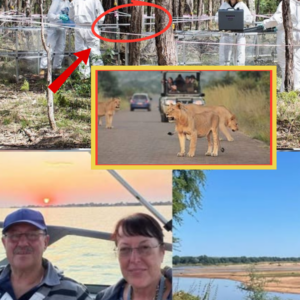
THE DOGS DIDN’T FAIL — THE TRAIL CHANGED: At the riverbank in Kruger, the scent vanished near the water
The dogs followed the scent until the river took it away. That is the chilling claim now circulating around the murder of Ernst and Dina Marais, the retired Mossel Bay couple found dead near Crooks Corner in Kruger National Park….
The sniffer dogs stopped at the water’s surface” at the location where Ernst and Dina’s bodies were found in Kruger National Park During the search
The dogs followed the scent until the river took it away. That is the chilling claim now circulating around the murder of Ernst and Dina Marais, the retired Mossel Bay couple found dead near Crooks Corner in Kruger National Park….
End of content
No more pages to load