The first thing she remembered was the smell.
Hot dust. Old hay. Iron from dried blood. And beneath it, something clean and sharp that did not belong in a desert barn: boiled water.
Her leg burned as if the cactus were still inside it. The rough blanket over her body smelled of sun and soap, not sickness. Somewhere nearby, a horse stamped once, then went still.

She kept her eyes closed.
Outside, Boone called her name the way a man might call for a stray animal he had paid too much money to lose.
“Clara,” he shouted, voice carrying across the yard. “Don’t make this uglier than it has to be.”
Inside the barn, no one answered.
The stranger had moved away from her after cutting the thorns from her calf. She had felt the knife only once, a hot sting followed by the wet slide of blood, then his hand pressing a folded cloth against her skin. Careful. Efficient. Impersonal.
Now she heard him step toward the wall, not the door.
Boone called again. Closer this time. “I know you’re in there.”
The boards creaked under the stranger’s boots. Then came the dry click of a rifle being lifted from pegs.
That sound changed everything.
—
Before the wedding, Boone had known exactly how to look merciful.
He came to her family’s small house in Dry Creek with a black hat in his hands and sympathy arranged neatly across his face. He noticed the patched curtains. The empty chicken pen. The worn cuffs on her father’s Sunday coat. He spoke softly to her mother and never once let his eyes linger on the cracked dishes stacked near the stove.
Then he laid the bank papers on the table.
Eighteen thousand four hundred dollars. Past due. Two notices already filed. One more, and the house would be gone by winter.
He never said the word marriage first. That was what made him dangerous.
He said security. Stability. Respect. He said Clara deserved more than scrubbing floors in other people’s homes. He said her brother should still have land to inherit when he became a man.
He said all of it while sliding the debt receipts toward her father like a priest offering absolution.
And for a few days, she let herself believe him.
There had even been one moment she held onto later because it hurt the most. Three evenings before the wedding, Boone stood beside her under the cottonwoods behind the church and tucked a loose strand of hair behind her ear. His fingers were cool. His voice was calm.
“You’ll never have to be afraid again,” he told her.
At the time, she thought that was a promise.
In the barn, with fever in her veins and Boone outside like a storm with a human voice, she finally understood what he had really meant.
He had not been promising safety.
He had been promising ownership.
—
The stranger’s name was Eli Mercer.
She learned it because Boone spat it through the door like a curse.
“Mercer,” Boone said. “This is private business.”
Silence answered him.
Clara forced her eyes open a slit. From where she lay behind a stack of feed sacks, she could see only part of Eli’s body. One shoulder. One hand around the rifle. His stance was loose, almost lazy, but nothing about him felt unready.
Boone laughed, and the laugh carried that same easy cruelty she had heard in the house when he poured her water into the sink.
“She’s my wife.”
Eli’s voice came back flat. “A wife isn’t livestock.”
It was the first time Clara had heard another man contradict Boone without lowering his eyes afterward.
Outside, leather creaked again. Boone had dismounted fully now.
“You want trouble over a woman you don’t know?” Boone asked.
“I know enough,” Eli said.
The barn went still.
Later, Clara would remember Boone hesitating then. A flicker. A brief pause. The tiny space where he could have left and chosen to remain merely a cruel man instead of becoming a ruined one.
Then he chose himself.
The door slammed open.
Light poured in so hard it made the dust shine white. Boone stepped across the threshold with one hand near his revolver and his eyes already searching, already claiming.
He saw the blood on the floorboards. The torn strips of cactus laid aside. The blanket over Clara’s body.
And he smiled.
“Look at you,” he said to her, as if this were some private joke. “You always did need help understanding what belongs to you.”
Clara tried to push herself upright. Her fever made the room tilt. Eli moved first, stepping between them.
Boone’s smile thinned.
“I paid her family’s debt,” he said. “Every cent. Ask the town clerk. Ask the preacher. Ask her father who kissed my hand after signing.”
Clara felt the old shame rise, hot and choking.
But Eli did not move.
“That bought a receipt,” he said. “Not a person.”
Boone drew then.
Fast. Smooth. Practiced.
Eli fired first.
The shot cracked through the barn and blew splinters from the doorframe inches from Boone’s hand. Not a kill shot. A warning. Boone’s revolver dropped into the hay with a dull thud.
His face changed in pieces.
First surprise. Then fury. Then the cold realization that someone in the room had finally stopped playing by his rules.
—
What Clara did not know, and what Dry Creek had not bothered to ask, was that Boone Kincaid had left two counties behind him with rumors clinging like burrs.
A girl in Sonora who returned a wedding ring before sunrise.
A widow in Mesa Verde whose land passed into Boone’s control six weeks after a hurried engagement fell apart.
A housekeeper in Tucson who vanished from his household and was later found working under another name in a mining town, mute with fear whenever she heard bootsteps behind her.
Men like Boone survived because they dressed appetite as order.
They used contracts. Debts. Respectability. They spoke gently in public and only tightened their hands when the doors closed.
Eli knew that type because he had once buried his sister after she married one.
She had not died by a pistol or a beating. That would have been too obvious. She died slowly inside a lawful house where every bruise had an excuse and every silence was called duty.
By the time Eli got to her, she was thin, careful, and apologizing for the trouble of being afraid.
He never forgave himself for arriving too late.
That was why he lived alone now. Why he kept the barn, the horses, and distance. Why a half-conscious bride in a ruined dress had been enough to make every old failure in him stand up armed.
Boone, of course, knew none of that.
He only knew resistance offended him.
He stared at Eli, then at Clara. “You’re making a mistake,” he said.
Clara tasted blood where she had bitten the inside of her cheek. “No,” she whispered. “I made it this morning.”
That landed harder than the gunshot.
Boone looked at her then, really looked, as if seeing for the first time that obedience and surrender were not the same thing.
“You ungrateful little fool.”
He said it softly.
That softness was what made it monstrous.
“I saved your family.”
Clara pushed herself up on one elbow. Pain trembled through her leg. “You purchased witnesses.”
For one beat, no one moved.
Then Boone lunged, not for the gun this time, but for her.
Eli hit him at the waist and drove him sideways into a stall door. Wood cracked. Horses exploded into frightened sound. Boone swung hard and caught Eli across the jaw. Eli answered with a blow to the ribs that folded Boone long enough for Clara to drag the fallen revolver through the hay with shaking fingers.
When Boone straightened, she was pointing it at his chest.
Her hands were trembling.
The barrel was not.
He stopped.
Not because he respected her.
Because he finally believed she might pull the trigger.
—
The sheriff arrived twenty-two minutes later with two deputies, a church deacon, and Clara’s younger brother clinging white-faced to the back of the wagon.
Eli had sent the deacon’s farm boy riding the moment Boone entered the barn. Quiet men often planned further ahead than loud ones.
Boone tried charm first.
Then outrage. Then insult. Then law.
He demanded they arrest Eli for assault and return his wife to his custody. He spoke of contracts, debt notes, church witnesses, and a lawful union recognized by the county recorder that same afternoon.
The sheriff listened without expression.
Then Clara, still pale under the dust, asked for Boone’s saddlebags.
Inside the right bag was a leather ledger.
Names. Amounts. Dates. Notes written in Boone’s own hand.
Not just her family.
Others.
Widows with acreage. Fathers with gambling debts. Brothers facing jail. Women listed beside numbers as if hardship had made them transferable property.
On the last page, next to Clara’s name, Boone had written a single line: Stronger than she looks. Break early.
The deacon went gray reading it.
The sheriff did not speak for several seconds. Then he asked Boone whether there was anything he wished to explain.
Boone actually smiled.
That was his final mistake.
“You can’t arrest a man for being organized,” he said.
The sheriff closed the ledger.
“No,” he answered. “But I can arrest one for fraud, coercion, unlawful confinement, and what looks a lot like a pattern.”
Boone lunged once more. Not at Clara this time. At the book.
Deputies put him in the dirt before he touched it.
The whole thing ended with his cheek pressed into the same red dust he had expected her to swallow forever.
—
The next morning, Boone’s house no longer felt like a fortress. It felt like evidence.
Clara walked through it on a borrowed cane while the sheriff’s men opened drawers and boxed papers. The kitchen still smelled faintly of coffee and cold iron. One glass sat upside down by the sink where he had emptied her water.
She looked at the bedroom last.
The bed had never been slept in.
That fact altered something inside her more deeply than any bruise. The terror had been real. The threat had been real. But he had wanted ownership more than intimacy. Control more than closeness. Submission more than touch.
He had been staging a life, not building one.
In the study, the housekeeper stood by the window twisting her apron. Her name was Marta. Clara had barely heard her speak before.
Now, with Boone locked in a county cell, Marta unlocked too.
She showed the sheriff where Boone kept duplicate keys. The letters he intercepted. The bank drafts. The ring from Sonora. A brooch from Mesa Verde. Tiny museum pieces of women he had tried to turn into possessions.
By noon, the house had become a map of his habits.
By evening, it was a crime scene.
—
Her father came to see her two days later and seemed to have shrunk ten years.
He stood on Eli’s porch with his hat in both hands and could not cross the threshold at first. Guilt had a way of making even familiar wood look sacred.
“I thought I was saving us,” he said.
Clara believed him. That was the cruelest part.
Poor men did not always sell their daughters because they were heartless. Sometimes they did it because desperation could wear the face of logic. Because shame could be itemized. Because hunger could make a monster look like an answer.
She did not embrace him immediately.
Some injuries deserved honesty before forgiveness.
“You should have asked what he wanted in return,” she said.
Her father bowed his head. “I know.”
After a long while, she let him sit beside her on the porch steps. Neither of them spoke for several minutes. The evening smelled of dust cooling after heat.
It was not peace.
But it was the first shape peace might someday take.
—
Boone’s trial took four months.
Three more women testified.
One arrived veiled, not from modesty, but because she still startled at open rooms. Another wore gloves in August to hide scars across her wrists. The third looked directly at Boone the entire time and never once blinked.
The ledger did what ledgers always do. It made private cruelty measurable.
By the end, the town that had toasted Boone at breakfast would not speak his name above a murmur. The judge voided the marriage on grounds of fraud and coercion. Boone was sentenced to prison for fraud, extortion, unlawful imprisonment, and assault.
His land was seized to satisfy restitution claims.
The debt papers tied to Clara’s family were declared unenforceable.
For the first time since Boone stepped into their kitchen, the numbers released her.
—
Clara stayed through winter at Eli’s ranch, first because her leg still healed, then because leaving too soon felt too much like running again.
He never touched her without warning. Never entered a room loudly. Never asked for gratitude as payment for decency. There were mornings he said almost nothing at all, only left biscuits wrapped in cloth by the stove before heading out to mend fencing.
That quiet changed her more than speeches would have.
In spring, she cut her wedding band loose from a leather cord where she had kept it as evidence and dropped it into the blacksmith’s melt barrel in town. She watched the gold vanish into fire.
Marta came too.
So did the widow from Mesa Verde.
They stood beside her in silence, three women linked not by Boone anymore, but by the fact that he had failed to keep them small.
Later that year, Clara opened a correspondence room above the general store for women who needed letters written, debts read, and contracts explained before any man could use ink as a weapon against them again.
She charged fifty cents for simple letters, two dollars for legal reading, and nothing at all when the woman across from her had fear in her voice and no money in her hands.
People in Dry Creek called it practical work.
Clara knew better.
It was rescue, just done early enough.
—
Sometimes, near dusk, she still thought about the moment in the barn when Boone called her name and another man answered with a refusal.
That had been the hinge of her life.
Not because Eli saved her, though he had.
But because in that instant she saw, with painful clarity, that cruelty only survives where everyone agrees to call it normal.
One man had refused.
Then another. Then a sheriff. Then three women. Then, slowly, a town.
Years later, travelers would stop in Dry Creek and see a modest sign above the upstairs room: LETTERS, CONTRACTS, PETITIONS.
Inside, a woman with steady hands would read every line before anyone signed anything. On the shelf behind her sat a dented tin cup filled with pencils, and beside it a small cactus bloom in a jar.
Most customers noticed only the pencils.
Clara always noticed the flower.
Something sharp had once been cut out of her flesh on a barn floor while danger waited outside the door.
The wound healed crooked.
The leg still ached when storms moved in.
But every spring, somewhere between dust and heat, the desert bloomed anyway.
What would you have done with Boone’s ledger if you were standing in that barn?
News

THE MOMENT THE CASE CHANGED: According to prosecutors, a five-word statement allegedly made before the confrontation with Austin Metcalf became a turning point in the courtroom battle… 👇👇
By U.S. Crime Desk Five words may become one of the most important pieces of the Karmelo Anthony murder trial. “Touch me and see what happens.” The sentence, allegedly spoken moments before 17-year-old Austin Metcalf was fatally stabbed at a…
AUSTIN METCALF’S FAMILY REACTS IN ANGER: New testimony in the Karmelo Anthony has focused on five words prosecutors
By U.S. Crime Desk Five words may become one of the most important pieces of the Karmelo Anthony murder trial. “Touch me and see what happens.” The sentence, allegedly spoken moments before 17-year-old Austin Metcalf was fatally stabbed at a…
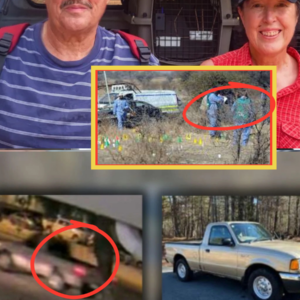
THE ROAD LOCALS FEARED MOST: Before Ernst and Dina Marais disappeared, a driver reportedly warned them about a risky route near Pafuri
By Africa Crime Desk At the time, it was only a casual warning. The kind of thing locals say to tourists near Pafuri every day: take care on that road, avoid the quieter route too late, don’t assume the bush…

THE GATE CAMERA MAY HOLD THE ANSWER: Newly recovered security footage is reportedly helping investigators reconstruct the final hours before Ernst and Dina Marais vanished into the Kruger mystery…
The killers may have thought the river would hide everything. The bodies.The vehicle.The route.The reason Ernst and Dina Marais were targeted in one of the most shocking crimes in Kruger National Park’s history. But the case may not have ended…
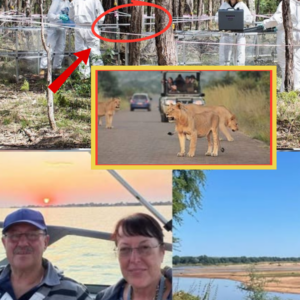
THE DOGS DIDN’T FAIL — THE TRAIL CHANGED: At the riverbank in Kruger, the scent vanished near the water
The dogs followed the scent until the river took it away. That is the chilling claim now circulating around the murder of Ernst and Dina Marais, the retired Mossel Bay couple found dead near Crooks Corner in Kruger National Park….
The sniffer dogs stopped at the water’s surface” at the location where Ernst and Dina’s bodies were found in Kruger National Park During the search
The dogs followed the scent until the river took it away. That is the chilling claim now circulating around the murder of Ernst and Dina Marais, the retired Mossel Bay couple found dead near Crooks Corner in Kruger National Park….
End of content
No more pages to load