She lifted her face a fraction. Beneath the soot, her eyes flashed green. Not dull, not broken. Watchful. Intelligent. Then she dropped them again and rose without touching his offered hand.
That was the first false note in the story everyone thought they understood.
By the time Wade led her into the sleet, half the saloon had decided he’d won himself a servant, and the other half decided he’d made the worst bargain in Montana.
Neither half knew a thing.
The climb into the Bitterroots took two days and most of a third.
Wade rode his gelding, Ash, and led a mule carrying supplies. The woman rode the second mule because he had stopped at the livery on the way out of Butte and traded real money for a proper saddle. She said nothing. She did not complain when sleet turned to snow. She did not complain when the trail narrowed above ravines that dropped away into pine-black dark. She did not complain when dinner was cold beans and hard bread eaten beside a mean little fire under a leaning cliff.
Silence did not bother Wade. Most men used too many words anyway.
Still, he watched her.
On the first night, while he went for deadfall, he came back to find the camp half built. The bedrolls were under an oiled canvas lean-to tied tight against the wind. The fire was laid in a hunter’s star, built for long burning. The mule lines were looped high and clean, where no animal could tangle a leg.
She noticed him watching and instantly changed. Her shoulders rounded. Her chin dropped. The capable woman vanished under that ragged coat, replaced by the skittish creature from the saloon.
Wade said nothing, but a thought lodged itself in him and stayed there.
She was hiding.
Late on the third afternoon, they reached his cabin. It sat in a fold of timber above a frozen creek, stout as a fist and banked on the north side with stacked stone against winter wind. Smoke still ghosted from the chimney where his banked coals had done their patient work.
Inside, the place was spare but clean. A table, two chairs, a shelf of books, a narrow cot, a cookstove, a washstand, a rifle rack, and behind a hanging canvas curtain, a second sleeping alcove Wade had built years ago and never expected to use.
He set down his gear and faced her.
“Listen close,” he said. “I didn’t bring you up here to own you. I don’t want a servant, and I sure as hell don’t want a wife won at cards. You sleep behind that curtain. I take the cot out here. You help with chores, I keep you fed, and when the passes open in spring, if you want down this mountain, I’ll see you to Missoula or Helena with money enough to start over.”
She stared at him for a long moment. In the lantern light, soot could not fully hide the shape of her face. There was a fine line to her bones that did not belong to alleys or mining camps.
Then she nodded once.
That night the wind rammed itself against the cabin walls until dawn.
The next morning Wade strapped on snowshoes and went to check his trapline. He came back near noon carrying two rabbits and a brace of ptarmigan. When he pushed open the door, he stopped dead.
The cabin looked like somebody had taken a brush to his whole life.
Windows, once filmed with smoke and weather, shone pale with winter light. His iron pans had been scrubbed bright. The floor had been swept. Bread baked on the stove. And the woman who turned at the sound of the door was not the ash-streaked wraith he had ridden up from Butte.
She had washed.
Her hair, braided back loosely, was deep chestnut with copper in it when the light caught. Her skin was pale from too many months hidden under grime, though one faint scar ran from the corner of her jaw toward her ear. Her face was striking, but that was not what stunned him. It was the way she carried herself before she remembered not to. Straight-backed. Composed. Refined.
Then she saw his expression and folded inward again, as if beauty itself were dangerous.
Wade set the birds down carefully.
“So,” he said. “Royce Tully lied.”
Her eyes flickered to his, then away.
He noticed her hands when she set a plate on the table. Roughened recently, yes. Nicked from work. But the fingers were long, the nails neat by nature. Not hands born to drudgery. Hands made for books, piano keys, or signing letters with a fountain pen.
He ate in silence because pushing a wild thing too soon was a good way to lose blood.
But that evening, after the dishes were washed and the fire burned low, he placed a book on the table by accident on purpose.
It was an old copy of The Odyssey in Greek, a relic from another life.
He took up his knife and whittled by the hearth, watching the window instead of her face.
For ten minutes nothing happened.
Then, slowly, she moved to mend a torn wool shirt. Her gaze drifted to the open pages. Drifted back. Returned again. At last her lips shaped a line without sound. Her finger hovered over a passage as if recognizing an old friend.
Wade did not look up when he said, “You skipped a line.”
The shirt slid from her lap.
Her head snapped toward him.
He lifted his eyes. “Book Three. You skipped a line.”
For the first time since Butte, real panic crossed her face. She stood so quickly the chair scraped. For one wild second, he thought she might bolt into the snow without a coat. Instead she backed toward the curtain.
“You can speak whenever you’re ready,” he said quietly. “But don’t play simple with me. You’re too good at everything else.”
Her throat worked. No sound came. Then she disappeared behind the curtain and did not come out again that night.
Wade sat by the fire long after the coals went red, regretting the push and not regretting it at all.
Because now he knew for certain the woman he had taken from Butte was not only hiding from a cruel drunk.
She was hiding from the world.
Winter closed around them fast after that, and because the mountain sealed the trails under six feet of snow, neither of them had anywhere else to go.
That changed things.
Not all at once. Nothing worth trusting ever changes all at once. But day by day, with the stubborn patience of weather, they grew less like strangers sharing shelter and more like two people learning the shape of each other’s silences.
She still did not speak.
Yet she watched the stove and knew when to feed it before he asked. He split kindling, and she stacked it to dry by size as neatly as a quartermaster. He showed her how to set rabbit snares. She learned after being shown once. He taught her to sight a revolver unloaded, and though she frowned at the weight of it, her grip was steady.
Once, when a storm pinned them indoors three straight days, he found her standing at his shelf with a volume of Emerson in one hand and a history of Roman campaigns in the other. She set them back before he could tease her.
Another night he woke to hear her whispering in her sleep.
“Don’t sign it,” she murmured. “Father, please don’t.”
By morning she was silent again, but the words stayed with him.
So did the feeling that danger, real danger, was not beneath them in town. It was climbing, patient and expensive, toward his door.
He was proven right on a hard blue morning in January.
Wade had gone up the east ridge to check the sky and the lower trail. Through his spyglass he saw three riders below the timberline, spreading wide as they climbed, searching in a pattern too disciplined for lost miners and too deliberate for trappers. They rode heavy horses fitted for deep snow. Each man carried a repeating rifle.
Wade swore, turned, and ran.
He hit the cabin door with snow on his shoulders and breath smoking.
“Get your bag,” he said. “Now.”
She rose from the table at once, not confused but alert. That alone told him how much she had expected this day.
“Three riders,” he said, pulling open the ammunition chest. “They know these trails too well to be wandering. We go out the back and take the upper ravine.”
She did not move.
He glanced up. Her face had gone pale, not with ordinary fear but with recognition.
“Wade,” she said.
Just that one word.
He went still.
The voice was low and clear and educated, with the polished cadence of the East Coast. It belonged in a Boston drawing room, not a log cabin at timberline. She stood straighter as she spoke again, and in that instant the mute drudge from Butte died forever.
“Those men are not deputies,” she said. “They work for Senator Horace Rusk. And if they find me here, they will kill you first.”
Wade closed the lid on the ammunition chest slowly. “Start from the beginning.”
“There isn’t time.”
“There is enough.”
She gripped the back of the chair so hard her knuckles whitened. “My name is Charlotte Vale. My father was Nathaniel Vale, chief surveyor on three federal mineral contracts. Last spring he found a silver-copper vein north of Philipsburg so rich it could change the whole territory. But that is not the worst of it. Along with that vein, he uncovered forged land transfers, bribery ledgers, and signed letters tying Senator Rusk to claim-jumping, arson, and murder. My father thought he could outmaneuver him by documenting everything before filing. He was wrong.”
A sound outside, faint and distant, carried through the snow. Hoofbeats.
Charlotte swallowed and kept going.
“Rusk invited my family to Helena to settle the financing. Men came into the dining room before dessert and shot my father, my mother, and my brother where they sat. I escaped through a pantry window with a carpetbag, some field papers, and enough sense to know the sheriff worked for Rusk. Since then I have stayed alive by becoming someone nobody sees. Dirty. Silent. Harmless.”
Wade stared at her, then at the faded carpetbag by the wall.
“What’s in there?”
“Something men kill for.”
Another beat of hooves. Closer.
Wade grabbed his rifle. “Then we move.”
They slipped out through the back into knee-deep powder just as fists hammered his front door.
Wade led her up a narrow game trail that cut across rock and wind-scoured ledges where tracks would not hold long. He gave Charlotte his heaviest coat. She accepted it without argument, though the effort of climbing showed quickly in her breath.
Below them, voices broke open the stillness.
One man shouted, “Tracks here!”
Wade recognized that voice before he placed it. Amos Pike.
Pike had earned his name all across Montana by doing ugly work for men who wore clean collars. He was broad as a grain door, quick for his size, and smart enough to let greed do half his hunting for him.
“Wonderful,” Wade muttered. “Rusk sent his bulldog.”
“Do you know him?” Charlotte asked.
“Enough to dislike my odds.”
They climbed harder.
By noon the storm crust on the upper ridge cracked underfoot. Wind knifed through the pines. Charlotte slipped once, caught herself, and kept going with blood on her lip where she had bitten through it rather than cry out. Wade noticed. He also noticed he had stopped thinking of her as somebody he was escorting and started thinking of her as somebody he refused to lose.
The first shot came from below and left of them.
The bullet hit granite near Wade’s shoulder and spat stone chips across his cheek.
“Down!”
He shoved Charlotte behind a fallen spruce and dropped to one knee. Another shot snapped overhead. He waited, scanning the trees below until he caught movement between two firs. He fired once. A man yelled and disappeared.
“One,” Wade said.
Charlotte pointed upslope, not down. “Look.”
Above Pike’s position, a shelf of snow hung over the chute, thick, overbuilt, and dangerous. The rifle shots had already stitched hairline fractures through the edge.
Wade’s eyes narrowed.
“You ever trust me at a terrible moment?” he asked.
She looked at him, face white with cold, and gave one sharp nod.
“Then cover your ears.”
He stood just long enough to fire three deliberate shots into the cornice.
The mountain answered with a sound too deep to be called sound. More like a groan from the bones of the earth. Cracks sprinted through the slope. The whole white face of the ridge shivered.
Then it came apart.
The avalanche thundered down the chute in a rolling wall of snow, ice, rock, and broken timber. Wade threw himself over Charlotte as the edge of it washed past, burying the dead spruce and half his legs in freezing weight. The main force dropped straight through the gully where Pike and his men had been climbing.
The roar lasted forever and no time at all.
When silence returned, the mountainside below was gone. In its place lay a blank river of wreckage.
Charlotte pushed herself up on shaking arms. “Did we kill them?”
“Maybe,” Wade said. “Maybe not enough.”
Because men like Horace Rusk never wagered everything on one hand. They sent backups. They bought telegraphs. They bribed clerks. And if Pike survived, he would be meaner for it.
Wade looked at the fast-darkening sky. “There’s an old ice cave under the north face. We hole up there till dark.”
She nodded.
They went because there was nowhere else to go.
The cave opened behind a curtain of frozen water, blue as trapped twilight. Wade had found it years earlier while hunting bighorn and used it only when storms got murderous. Inside, the air was still enough to breathe without pain. He lit a smokeless sage fire from a tin he kept hidden in a crack between rocks.
The glow painted Charlotte’s face gold and blue.
Adrenaline had left her, and with it the hard edge that had carried her up the ridge. She sat wrapped in his coat, hands around a cup of warmed snowmelt. For a while they said nothing, because survival has its own silence, one thick with listening.
At last Wade cleaned his rifle and asked, “Why keep the papers on you? Why not bury them?”
Her laugh held no humor. “Because the minute I buried them, I would become easy to kill.”
He glanced over. “Fair.”
She stared into the flame. “My father said men like Horace Rusk are most dangerous when they stop pretending to be respectable. That was the last lesson he ever gave me.”
Wade studied her profile. “And what was the first?”
Her mouth softened for the first time that day. “He taught me that maps are promises. If you draw a boundary, men will bleed for it. If you draw it honestly, you may save them.”
He leaned back against the ice wall. “Your father sounds like a better man than most I’ve met.”
“He was. That’s how he died.”
The words settled between them, and because honesty had finally arrived, Wade felt his own answer waiting.
“I wasn’t born on a mountain,” he said.
She looked at him. “I had guessed.”
He smiled once, without warmth. “Yale for two years. Then the war. Cavalry scout. Prison camp in Arkansas. Came home with less patience for people than people generally prefer. Tried town life anyway. Didn’t fit. Buried my younger brother after fever. Buried what was left of my appetite for society after that. The woods made more sense.”
Charlotte watched him carefully. “You make it sound simple.”
“It wasn’t.”
“No,” she said softly. “I don’t suppose it was.”
Something eased then, not enough to name, but enough to feel. Two people who had spent too long surviving alone had finally stopped pretending they did not understand each other.
Wade reached out and brushed a stray lock of hair from where it clung damply to her cheek. His hand lingered a second longer than necessary.
“Charlotte,” he said, testing the name.
She closed her eyes briefly, as if hearing her own name spoken kindly had become a luxury.
Then a metal scrape rang at the cave mouth.
Wade moved before the echo died. He shoved Charlotte behind him and raised the rifle.
A heavy shape stepped through the blue half-light.
Amos Pike.
He looked like the avalanche had chewed him and spat him back. Blood crusted one side of his face. His left arm hung useless. In his right hand he held a double-barreled shotgun.
“Told Rusk,” Pike rasped, “you’d run high instead of low. Man like you trusts cold better than law.”
Wade sighted on his chest. “Fire that thing in here and you may bury us all.”
Pike bared his teeth. “If I go back empty, I’m dead anyway. Hand over the girl and the bag.”
“Then die tired,” Wade said.
The air in the cave tightened like wire.
And then Charlotte stepped around him.
“Miss Vale,” Pike said. “You’ve caused quite a season.”
She held the carpetbag in both hands. “You want this?”
Pike’s gaze locked on it.
Charlotte lifted it over the fire.
“Take one more step,” she said, voice cold and precise, “and I drop it into the flames.”
Pike froze.
Wade did not look at her, but he understood exactly what she had done. Greed had just fought its way ahead of murder inside Amos Pike’s head.
It only needed to win for one heartbeat.
That heartbeat was enough.
Wade let the rifle fall on its sling, drew the Bowie knife from his belt, and threw.
The blade hit Pike high in the shoulder. The shotgun roared as he jerked backward. Buckshot slammed the ice ceiling instead of Wade’s chest. Then Wade was on him.
They crashed hard, boots sliding on slick stone. Pike drove a knee up. Wade took it in the thigh and answered with an elbow to the jaw. Pike snatched a derringer from his vest and fired from inches away.
Pain ripped through Wade’s side like a hot saw.
He heard Charlotte scream his name.
Then anger took over.
Wade caught Pike’s wrist, smashed it against the ice until the little pistol flew free, and drove his forehead into Pike’s face. Something cracked. Pike sagged. Wade hit him once more for certainty, and the hired gun went limp.
Wade stood, swayed, and felt blood pour warm under his shirt.
Charlotte was there before he hit the ground.
“Wade, stay with me.”
He tried for a joke and got only a gasp. She tore open his coat, found the wound low under his ribs, and her face changed from fear to furious purpose.
“All right,” she said, mostly to herself. “All right. If I can keep pressure, if it missed the lung, if you do not decide to be stupid, we might keep you.”
He managed, “Comforting.”
She pressed folded canvas into the wound hard enough to make the cave blur white. “You can complain later.”
She bound him with strips ripped from the lining of her own skirt. Then she looked at the bag in her hand, at Pike bleeding on the floor, and at the world that had almost closed over both of them.
Something in her face hardened into finality.
“No more hiding,” she said.
They dragged themselves back to the cabin before the next storm trapped the mountain again. Pike, disarmed and half dead, they left tied in the cave mouth with enough chance to live that Wade could tell himself later he had chosen justice over vengeance. Whether the mountain agreed was another matter.
For the next three months, winter became their jailer and, strangely, their witness.
Wade healed slowly. The bullet had passed through, but fever came anyway. Charlotte broke ice for water, trapped rabbits, cooked thin broth, changed bandages, and learned the discipline of waiting through bad nights when his breathing went ragged and his skin burned. Wade, when strength returned in fragments, taught her to read weather signs, mend snowshoes, and shoot well enough to make any man reconsider his life choices from thirty paces.
Because death had come so close in that cave, neither of them had patience left for pretense.
She told him about Boston, about books and music and the way her father smelled of drafting ink and cigar smoke. He told her about his brother, Daniel, who used to sing badly in church just to make their mother laugh. She admitted how lonely silence had become, how performing helplessness day after day had almost turned into a kind of burial. He admitted that before Butte he had expected to die alone and told himself he preferred it.
One evening in March, with sleet ticking at the window and lamplight turned honey-soft across the table, Charlotte said, “When you first looked at me in that saloon, what did you see?”
Wade considered lying, then chose not to.
“I saw somebody in danger,” he said. “And I saw somebody pretending not to be.”
She smiled. “That second part saved me.”
“No,” he said. “It kept you alive. There’s a difference.”
She crossed to where he sat by the fire. “And what is this?”
He looked up at her.
It had been there for weeks, growing in the ordinary spaces between them. In the way she handed him his coffee before he asked. In the way he split extra wood on cold mornings because he knew her hands were still tender in the cracks. In the way they had become, without ceremony, necessary to each other.
“This,” he said quietly, “is the part I didn’t plan for.”
“Good,” she whispered. “Neither did I.”
When he kissed her, it was not like thunder. It was gentler than that, steadier, the kind of thing built to survive weather.
By April the snow started to sink in the meadows, and with the thaw came consequence.
They could stay hidden and wait for Rusk’s reach to stretch longer.
Or they could go down and finish it.
Charlotte chose in a heartbeat. Wade never had to ask why.
Because grief, when it is honest, eventually wants light.
They rode into Helena in early May.
Charlotte wore a dark traveling dress bought secondhand in Missoula and altered by her own hands. Wade wore a black coat that made him look like judgment with a beard. He was still healing, but no man looking at him from a distance would have guessed it.
They did not go to the sheriff.
They went to the federal courthouse.
Wade had learned during the war that local power could rot clear to the center, but federal men sometimes still feared scandal more than money. Charlotte had learned that Horace Rusk liked to be seen near judges, because respectable thieves often mistake access for innocence.
She was right.
When they entered Judge Abram Bell’s chambers without waiting for the clerk, they found Bell behind his desk and Senator Horace Rusk in a leather chair, drinking coffee as if he owned the law by the acre.
Rusk rose halfway, annoyed at first, then truly saw Charlotte.
All the color left his face.
“You,” he said.
Charlotte shut the door behind her.
“Disappointed?” she asked.
Rusk recovered quickly, as men like him always did. He smoothed his cuffs. “Judge Bell, I have no idea who this woman is, but I recommend you summon a marshal.”
Wade stepped to Charlotte’s side. “Try it.”
Bell frowned. “What is the meaning of this?”
Charlotte set her old carpetbag on the judge’s desk.
“My name,” she said clearly, “is Charlotte Vale, daughter of Nathaniel Vale, federal surveyor. My family was murdered in this territory on the order of Senator Horace Rusk. For a year his men have hunted me to recover papers connecting him to mineral fraud, land theft, and multiple homicides.”
Rusk laughed. It was a polished sound, almost convincing. “This is lunacy. Nathaniel Vale’s daughter died last spring in a carriage accident outside Helena. Everyone knows it.”
Charlotte’s gaze never left his. “That was the body of a maid you paid to bury under my name.”
Bell went rigid.
Rusk snapped, “That is outrageous.”
Wade placed a small bloodstained notebook on the desk beside the bag. “Amos Pike carried this. Payroll notes. Dates, sums, initials. Might interest a man wearing a federal robe.”
Bell opened it, flipped two pages, and his mouth tightened.
Rusk saw it happen and understood something was slipping.
“She is bluffing,” he said. “Search the bag. If she had such evidence, she would already have used it.”
Charlotte smiled then, faint and sharp.
“That,” she said, “is exactly what you kept telling your men, isn’t it?”
She opened the carpetbag and turned it upside down over the desk.
Out fell a brush, a comb with two missing teeth, a rolled pair of stockings, a cracked tin mirror, some sewing thread, and nothing else.
Rusk blinked.
Bell looked from the empty bag to Charlotte. “Miss Vale?”
Wade turned to her, confused for the first time in months.
Then Charlotte reached up calmly and removed her hat.
It was plain, weathered, and ugly, the kind no one would look at twice. She laid it on the judge’s desk, took a small knife from her sleeve, and slit open the inside band.
From the lining she drew folded oilskin packets, thin as wafers and dry as bone.
Rusk made a sound that was almost a gasp.
Charlotte placed the packets in front of Bell one by one.
“Field surveys,” she said. “Signed copies of claim transfers altered after filing. Telegraph drafts in the senator’s clerk’s hand. Bank receipts tied to shell buyers. And my father’s coded map to the Widow’s Lode.”
Bell stared.
Rusk lunged.
Wade caught him by the coatfront and slammed him back so hard the judge’s books jumped on the shelf.
“Sit down,” Wade said.
Rusk’s face had gone from pale to furious red. “You filthy mountain savage, do you know who I am?”
“Yes,” Wade said. “That’s why I haven’t broken your neck. Yet.”
Charlotte looked at the senator with a composure more devastating than rage.
“For a year,” she said, “you hunted a bag because you thought I would hide something valuable where men expected to find it. But men like you only search where greed tells them to search. They never look at the plain thing on a woman’s head.”
Bell had already broken the oilskin seal on the first packet. His eyes raced down the pages. Then he opened the second. By the third, his expression had turned to carved stone.
He rang for the marshal.
Rusk understood then that his fortune, his title, his careful layers of civic respectability, all of it had been undone by the same woman he had dismissed as prey.
“This will ruin half the territory,” he said hoarsely.
Charlotte held his gaze. “No, Senator. Men like you ruined it. I merely brought receipts.”
When the marshals came, Horace Rusk tried one last play. He pointed at Wade.
“That man kidnapped her.”
Charlotte’s answer cracked through the room like a rifle shot.
“That man saved me when every respectable gentleman in Montana was either bought, frightened, or conveniently blind.”
Nobody in the room argued with her.
By sundown, the courthouse was surrounded. By midnight, Helena knew. By morning, the whole territory did.
The supposed dead daughter of Nathaniel Vale had returned from the ash heap.
The mute drudge from the mining camps had enough evidence to bury a senator, a judge in Deer Lodge, two land agents, a sheriff, and three mine owners.
And somewhere in those papers was a claim so rich newspapers back East began calling it the Widow’s Lode before any shovel had officially struck it.
That was the part that shocked financiers.
The rest shocked decent people more.
Because the story was not simply that a rich secret had survived in rags.
It was that a woman men had called worthless had walked through saloons, alleys, and camps for a year carrying the downfall of powerful men in the lining of a hat nobody thought worth stealing.
Trials followed. So did bribes, threats, editorials, lies, retractions, and more telegrams than Helena had ever seen in one week. But evidence has a stubborn way of outliving reputation. Horace Rusk went to federal prison. Others followed him. The papers that called Charlotte “the Mining Ghost” for three days straight eventually settled on her real name.
The Widow’s Lode proved real.
By law and by blood, it belonged to Charlotte Vale.
She became richer in a year than Royce Tully had dreamed in all his whiskey-soaked nights. Investors begged. Politicians bowed. Newspapers printed sketches of her face and invented half her life. More than one society widow declared she had always known Charlotte as a child, which was a neat trick considering most of them had never left St. Louis.
Charlotte endured it with grace for exactly as long as required.
Then she built things.
A school in Helena for miners’ daughters and sons who would otherwise end up underground before thirteen. A hospital ward for camp accidents. A legal defense fund for widows trying to keep claims from being swallowed by men with cleaner boots and dirtier paperwork. She hired surveyors who were paid honestly, doctors who treated anyone who came through the door, and teachers who cared more for grammar than family name.
As for Wade, society did what society always does with a man it cannot categorize. It tried to laugh, then to flatter, then to use him, then finally to leave him alone.
That suited him.
He married Charlotte in a small church with no senator in attendance and no orchestra trying to make the thing feel more important than it was. Red Finn came down from Butte in a suit that fit him like a legal mistake. He cried anyway and blamed cigar smoke. Charlotte laughed in the middle of her own vows, which made Wade love her harder than he thought possible.
They built a house near the valley where the Widow’s Lode ran, large enough for guests and business and all the obligations wealth drags behind it. But every first heavy snow, without fail, they left the polished silver, the ledgers, the callers, and the endless polite noise.
They packed mules.
They rode up into the Bitterroots.
And in the cabin where a lie had begun to die, they remembered who they were before the newspapers found them.
Some nights Charlotte read by the fire while Wade mended tack or sharpened blades. Some nights he read aloud in Greek just to hear her interrupt him and argue about the translation. Some mornings they woke to wolf tracks beyond the creek and thanked God for honest things.
People in town called it eccentric.
People in the camps called it romantic.
Wade called it peace.
Charlotte, when asked once by a reporter how it felt to go from a “worthless bride won in a card game” to one of the most powerful women in Montana, gave an answer the man printed on the front page.
“I was never worthless,” she said. “I was merely hidden. There are more women like that in this country than men care to admit.”
Then she folded the paper, stepped out of the carriage, and went back to work.
That was the real scandal in the end.
Not the silver.
Not the trials.
Not even the senator in chains.
News
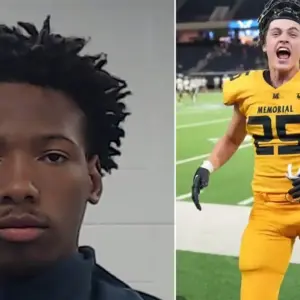
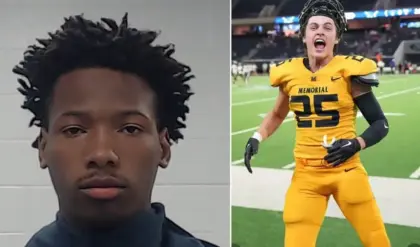
THE MOMENT THE CASE CHANGED: According to prosecutors, a five-word statement allegedly made before the confrontation with Austin Metcalf became a turning point in the courtroom battle… 👇👇
By U.S. Crime Desk Five words may become one of the most important pieces of the Karmelo Anthony murder trial. “Touch me and see what happens.” The sentence, allegedly spoken moments before 17-year-old Austin Metcalf was fatally stabbed at a…
AUSTIN METCALF’S FAMILY REACTS IN ANGER: New testimony in the Karmelo Anthony has focused on five words prosecutors
By U.S. Crime Desk Five words may become one of the most important pieces of the Karmelo Anthony murder trial. “Touch me and see what happens.” The sentence, allegedly spoken moments before 17-year-old Austin Metcalf was fatally stabbed at a…
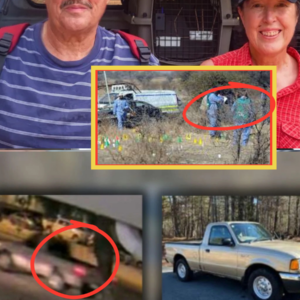
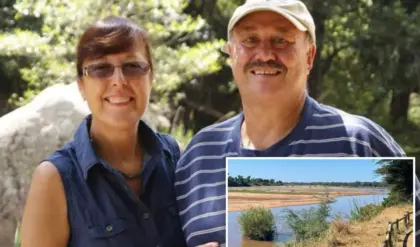
THE ROAD LOCALS FEARED MOST: Before Ernst and Dina Marais disappeared, a driver reportedly warned them about a risky route near Pafuri
By Africa Crime Desk At the time, it was only a casual warning. The kind of thing locals say to tourists near Pafuri every day: take care on that road, avoid the quieter route too late, don’t assume the bush…
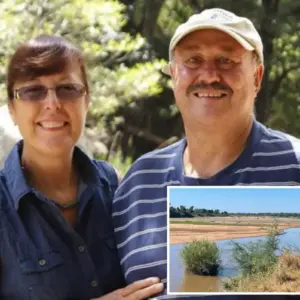
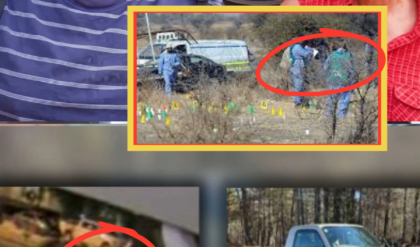
THE GATE CAMERA MAY HOLD THE ANSWER: Newly recovered security footage is reportedly helping investigators reconstruct the final hours before Ernst and Dina Marais vanished into the Kruger mystery…
The killers may have thought the river would hide everything. The bodies.The vehicle.The route.The reason Ernst and Dina Marais were targeted in one of the most shocking crimes in Kruger National Park’s history. But the case may not have ended…
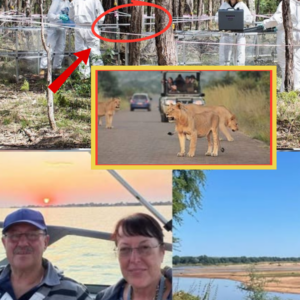
THE DOGS DIDN’T FAIL — THE TRAIL CHANGED: At the riverbank in Kruger, the scent vanished near the water
The dogs followed the scent until the river took it away. That is the chilling claim now circulating around the murder of Ernst and Dina Marais, the retired Mossel Bay couple found dead near Crooks Corner in Kruger National Park….
The sniffer dogs stopped at the water’s surface” at the location where Ernst and Dina’s bodies were found in Kruger National Park During the search
The dogs followed the scent until the river took it away. That is the chilling claim now circulating around the murder of Ernst and Dina Marais, the retired Mossel Bay couple found dead near Crooks Corner in Kruger National Park….
End of content
No more pages to load