When I was sixteen, I learned that some people can look straight at a hungry kid and decide he is already halfway invisible.
The night I got kicked out, the sky over western Montana was the color of dirty steel, and the air had that knife-edge cold that slips through denim, skin, and bone like it belongs there. My foster father, Wayne Delaney, stood on the porch in his hunting jacket with both hands jammed into his pockets like he was waiting for a bus instead of throwing a boy into the dark.
“You’re strong enough to work,” he said. “You’re strong enough to figure it out.”
He tossed my duffel bag down the steps. It hit the frozen dirt with a dull thud. Everything I owned was inside it: two T-shirts, one flannel shirt with a tear in the sleeve, a flashlight that only worked when you smacked it, a paperback copy of The Call of the Wild, and a photo of my mother that had gone soft and gray around the edges from being handled too much.
I looked past him into the house. The kitchen light was on. Mrs. Delaney didn’t come to the door. She never did when something ugly was happening. She believed in letting ugliness finish its work.
“I didn’t steal from you,” I said.
Wayne shrugged. “Money’s gone. You’re gone. Life gets simple.”
“I told you Travis took it.”
“Then Travis can stay because he’s blood.”
That was the end of the hearing. No jury. No appeal. Just the sentence.
The door shut.
I stood there for a full minute with my duffel at my feet, listening to the heater hum inside that house, listening to my own breath steam into the black, and realized there is a particular kind of silence that only comes when nobody is coming back for you.
My name is Caleb Mercer. Back then, I was six feet tall, underfed, stubborn, and meaner than I looked when I had to be. I had been moved through enough homes to know the difference between temporary anger and permanent exile. Wayne’s voice had the weight of finality in it.
So I picked up my bag and started walking.
By midnight I was in the town of Dry Creek, a place that had a feed store, a diner, a gas station with one broken pump, and a main street that looked like it had been designed by someone who believed hope should always come with dust. I slept behind Miller’s Hardware under a stack of old cardboard and woke before sunrise with my fingers so numb I couldn’t unzip my bag.
The next three days taught me the mechanics of being homeless.
Where the diner dumped food and what they locked.
Which church gave out stale bread on Thursdays.
How to wash your face in a gas station sink without making eye contact with anyone.
How to sit in the library long enough to thaw out without getting asked questions.
How to smile like you were fine when you were planning your entire day around where warmth might leak from.
I did odd jobs because nobody in Dry Creek trusted a stray, but everybody trusted cheap labor. I split wood behind the diner. I hauled scrap metal for Earl Jennings, who owned the salvage yard and smelled like diesel fuel and old tobacco. I cleaned grease traps. I unloaded feed sacks. I did whatever paid cash.
At night I slept where I could. Behind the hardware store. In the bed of a wrecked truck at Earl’s yard. Once inside an abandoned irrigation shed so cold I woke up with frost on my eyebrows.
On the fifth day, Earl watched me dragging a rusted washing machine carcass across his lot and said, “You planning on dying in my truck bed all winter?”
“No,” I said, because pride makes liars out of boys.
He spat into the dirt. “Then you need a place.”
“Places cost money.”
“Everything costs money.”
He stared at me a second longer, then jerked his chin toward the far corner of the yard where old farming junk and collapsed tin roofing lay in drifts of snow.
“There’s an old mineral claim shack out past Miller Ridge,” he said. “Technically sits on land nobody’s cared about in twenty years. Roof’s half gone. Walls are rotten. Last owner drank himself dead. I bought a box of his papers in an estate lot. Shack deed’s in there somewhere, if it means anything anymore.”
He squinted at me like he was annoyed by his own conscience.
“I’ll sell you the papers for fifteen dollars.”
I laughed. I couldn’t help it. “Fifteen dollars for a dead man’s broken shack?”
“You want charity, go ask a church.”
“I didn’t say I wanted charity.”
“No,” he said. “You look like the kind that never does.”
That afternoon I counted my money three times behind the gas station. Seventeen dollars and eighty cents. Nearly a week of labor. Nearly all I had in the world.
I bought the shack.
Earl handed me a brittle envelope tied with string. Inside was a handwritten bill of sale from 1978, a crude map, and a notarized deed so old the paper crackled when I unfolded it.
“You’re serious,” he said.
“I am.”
He studied me for another second, then added, “Take the red sled by the fence. Broken handle, but it’ll drag. And if you’re hauling from my scrap pile, don’t take copper or anything I can still sell.”
That was Earl’s version of kindness. He always dressed it up like a warning so nobody would accuse him of being soft.
I found the shack the next morning after a three-mile hike through pine and scrub, following the map over frozen ruts and an old logging road. The first sight of it nearly sent me back.
It was smaller than I’d imagined—more a box than a cabin—leaning sideways on a patch of rocky ground above a narrow creek. Corrugated metal had been nailed over part of the exterior at some point, but most of it had rusted into curled orange scales. One window was shattered. The door hung crooked. Snow had drifted halfway inside. The roof sagged so badly in the middle it looked like the whole thing had simply given up.
But it was mine.
Or as close to mine as anything had ever been.
When I pushed the door open, it made a sound like an animal groaning in pain. Inside was one room, maybe twelve by sixteen feet, with a rusted cast-iron stove, a broken chair, a rotted counter, and a loft platform that looked one sneeze away from collapse. The floorboards were warped. Daylight shone through gaps in the walls.
It was terrible.
It was beautiful.
Because nobody could throw me out of it.
I dropped my duffel on the floor and stood in the center of that freezing room, listening to the creek, listening to the wind through the broken window, and for the first time since Wayne shut that door in my face, I felt something other than panic.
I felt ownership.
That same day I started turning ruin into shelter.
I nailed flattened sheet metal over the broken window using bent spikes I pulled from old pallets. I stuffed gaps in the walls with burlap, newspaper, and scraps of insulation scavenged from a demolition pile behind the feed store. I hauled two-arm loads of firewood from deadfall nearby until my shoulders trembled. I patched the roof with whatever I could drag up there—corrugated tin, tar paper, and even sections of a road sign Earl let me take once the reflective coating had peeled off.
Every scrap mattered.
Every nail mattered.
Every inch of wind I blocked felt like I was winning a fight against the world itself.
For two weeks I worked mornings in town, then hauled supplies back to the shack on the red sled until after dark. Earl let me take mismatched hinges, bent brackets, and a cracked toolbox with two good screwdrivers inside. Mrs. Alvarez from the diner caught me pocketing leftover biscuits one night and said, without looking at me, “Next time use the back door. Pride doesn’t keep you warm.” After that, there was always something wrapped in wax paper near the trash cans—meatloaf, mashed potatoes, half a pie, once even chili still warm enough to steam in the cold.
I never thanked her properly. She knew anyway.
By December, the shack had stopped looking abandoned and started looking defensive.
That mattered.
I reinforced the door with cross-braced planks and a sliding steel bar made from a tractor linkage rod. I built shutters from pallet wood that locked from the inside. I lined one wall with salvaged shelving and stacked canned food, jugs of water, and bundles of dry tinder on it. I cleaned the stove pipe and patched the joints with furnace cement I found in Earl’s junk bins. I built a raised sleeping platform in the loft with insulation packed underneath, then stitched together blankets and old sleeping bags into something thick enough to hold heat.
The shack became a machine for staying alive.
And because I had spent too many nights at the mercy of strangers, I made sure it could withstand more than weather.
People in town liked to talk. Once word spread that “the foster kid” was living in a shack on Miller Ridge, I became a local story people could shape however they liked.
Some said I was feral.
Some said I was dealing stolen tools.
Some said I’d freeze by Christmas.
Travis Delaney drove out twice with his friends, likely hoping to scare me for sport. The first time, they pounded on the door after midnight and shouted that county deputies were coming to drag me off. I stayed silent. When one of them tried the handle, he found the steel bar set in place.
“You in there, Mercer?” Travis yelled. “This dump gonna save you?”
“No,” I shouted back. “But it’ll outlast your truck.”
They laughed, but there was an edge in it.
Then one of them circled to the rear window and tried to pry at the shutter.
That was the night I decided shelter wasn’t enough. I needed defenses.
The next week I rigged simple alarms from fishing line and tin cans. I mounted mirrors to watch the blind side of the shack. I dug a narrow trench to channel runoff away from the foundation. I built a wood rack under the eaves and a second dry cache beneath the floorboards in case someone robbed the visible shelves. I repaired an old battery-powered weather radio I bought for three dollars at a rummage sale. I packed a first-aid box with bandages, antiseptic, aspirin, and a tourniquet I learned to improvise from a forestry manual in the library.
Then I did the thing that changed everything: I started keeping records.
Wind direction.
Temperature drops.
Snow depth.
How fast the creek rose after warm rain.
Where drifts formed along the ridge road.
How long it took to hike from the shack to town in good weather and bad.
Maybe that sounds obsessive. Maybe it was. But when you’re sixteen and alone, information feels like armor. Nobody had taught me how to build a home, but I had learned something else from surviving foster homes, school fights, and long nights without backup:
You don’t survive chaos by hoping.
You survive it by preparing until hope becomes unnecessary.
In January, the county social worker finally found me.
Her name was Dana Holt. She drove an SUV that looked too clean for Dry Creek and wore boots that had never seen real mud.
She stood in my doorway with her clipboard tucked under one arm and looked around the shack with a face that kept trying to arrange itself into professional calm.
“You can’t stay here,” she said.
“I am staying here.”
“You’re sixteen.”
“I know how old I am.”
“Caleb, this is unsafe.”
I almost laughed. Unsafe. As if safety had been an option anyone had offered me before.
“Compared to what?” I asked. “Wayne? His son? Sleeping behind dumpsters?”
She looked at the patched walls, the stacked firewood, the water jugs, the stove, the bunk, the neatly arranged shelves.
“You did all this?”
“Yes.”
She lowered the clipboard slightly. “On your own?”
“Yes.”
For the first time, she really looked at me—not as a file, not as a placement issue, not as a problem to be processed. Just as a boy standing inside something he’d built with his own hands.
“I can place you with another family,” she said.
“No.”
“You should think about it.”
“I already did.”
“Not every home is the Delaneys.”
“Enough of them are.”
She didn’t answer.
Outside, the wind scraped through the pines. Inside, the stove ticked and settled.
Finally she said, “At least let me bring supplies.”
“I don’t need charity.”
That made her mouth tighten. “Food isn’t charity when a kid needs to eat.”
I didn’t say yes. I didn’t say no. She took that as permission.
Dana came back three days later with canned soup, socks, hand warmers, and a thicker sleeping bag. She also brought books on wilderness first aid and emergency shelter construction.
“I figured,” she said, awkwardly setting them down, “if you’re going to ignore every adult recommendation I make, you may as well ignore them more safely.”
That almost made me smile.
By February, the shack had a name.
Not one I gave it. One Dry Creek gave it after a snowmobiler got lost near Miller Ridge and wandered to my place half-frozen after dark. I dragged him inside, warmed him slowly, got dry socks on him, and kept him awake until his speech stopped slurring. When Earl heard about it, he told people at the diner, “That kid’s turned that wreck into a damn survival fortress.”
The name stuck.
At first people said it like a joke.
Then they stopped joking.
I built more.
A snow fence from scavenged lattice and fence wire to break drifts near the door.
A second chimney brace.
A hand pump over a shallow filtered barrel system fed from the creek.
A root pit lined with stone.
A narrow crawl space under the floor where supplies stayed above freezing.
A signal pole with an old orange survey flag at the top.
A rooftop vent cap I bent from stove scrap so smoke didn’t backdraft in storms.
I learned by failing. The first water barrel cracked. The first shutter hinge tore loose. The first stack of seasoned wood wicked moisture from the ground and molded. I fixed everything I got wrong.
And all winter, people kept underestimating me.
That was their mistake.
By March, the snowpack in the hills was deeper than anyone in town liked to admit. Then spring came hard and ugly. Warm rain hammered the mountains for three days straight. The creek below my shack swelled dark and fast, carrying branches, foam, and whole sections of bank downstream. I checked my trench lines, cleared the runoff, and moved my emergency stores higher.
In town, men at the diner muttered about mudslides and washouts. Deputy Frank Loomis, who had a stomach like a keg and treated most warnings like personal insults, said, “Creek’s been there a hundred years. Water goes where it goes.”
I didn’t argue. Adults hate weather reports from kids.
But I watched.
And because I watched, I noticed what they didn’t: the old county bridge west of Dry Creek had started to list on its eastern support. The water chewing at the embankment had turned brown and violent around the base. I mentioned it to Deputy Loomis while dropping off scrap at Earl’s.
He took a sip of coffee and said, “You a bridge inspector now?”
“No. I just have eyes.”
Earl hid a smile behind his hand.
Nothing was done.
Then spring gave way to a dry, brutal summer.
That year the heat came early and stayed angry. The grass on the hills crisped gold in June. By July the creek had shrunk to a clear ribbon between hot stones, and every pine needle on Miller Ridge seemed ready to catch from one bad spark. The mountains looked beautiful in the way dangerous things often do—too still, too bright, too brittle.
I adapted the fortress again.
I cleared brush in a wide ring around the shack.
I covered the roof patches with salvaged sheet metal wherever I could.
I filled every container I owned with water.
I dug a shallow firebreak beyond the treeline nearest the structure.
I packed wet burlap sacks in a lidded bin.
I made a ventilation system with adjustable dampers so smoke could be controlled if I had to seal the place.
I even reinforced the crawl space so it could hold people in an emergency if the main room got too hot.
Dana saw the changes one afternoon and asked, “What are you preparing for?”
“Fire,” I said.
She looked around at the mountain, the pines, the sun-hardened brush. “You really think it could get that bad?”
“Yes.”
“Should I tell someone?”
“You can. But they won’t listen.”
I was right about that too.
In late August, lightning hit the north slope above Dry Creek during a storm that brought almost no rain. Smoke appeared the next morning like a gray thumbprint over the ridge. The Forest Service sent crews. Folks in town talked tough about having seen worse.
By the second day, the wind shifted.
By the third, ash was falling on Main Street.
That afternoon I hiked into town for nails and kerosene and saw the change in everyone’s faces. The fire was no longer a story happening somewhere else. It was in the timber west of Miller Ridge, moving faster than predicted. The diner windows glowed orange around the edges from reflected haze. Sirens wailed once, then stopped. People loaded trucks. Horses screamed from a trailer lot behind the feed store.
Still, many waited too long.
That is another thing I learned young: people trust normalcy until the last possible second. They will stand in a burning world and call it inconvenience if panic feels more embarrassing.
I bought what I needed, then cut across town to leave. Dana spotted me outside the post office.
“Where are you going?” she shouted over the wind.
“Back to the shack.”
“Don’t be insane. Evacuation may start any minute.”
“That’s exactly why.”
“Caleb!”
I stopped.
Ash skittered across the pavement between us.
“If you go up there,” she said, trying to keep her voice steady, “and that fire jumps the ridge, you could die.”
“If it jumps the ridge,” I said, “people are going to need somewhere to go.”
She stared at me. I could see her deciding whether I was brave or stupid. Most brave things look stupid up close.
Then she said, “How many can your place hold?”
I hadn’t expected the question.
“If I seal the loft and use the crawl space for storage instead of gear… maybe ten. Tight, but ten.”
Dana swallowed. “Then I’m coming with you.”
“No.”
“I have a four-wheel-drive SUV, extra water, and an emergency medical bag.”
I hesitated.
She stepped closer. “This is not me asking your permission as your social worker. This is me telling you I’m more useful beside you than arguing in a parking lot.”
I hated when she was right.
“Fine,” I said. “But once we get there, you do what I say.”
To her credit, she nodded immediately. “Deal.”
We drove back to Miller Ridge under a sky turning the color of old blood. On the way, we passed cars headed the opposite direction— families, livestock trailers, pickup beds stacked with blankets and coolers. Smoke thickened with every mile. By the time the shack came into view, the sun had become a dim orange disc behind a wall of haze.
The next six hours turned my shack into exactly what I had built it to be.
Dana and I moved with the focused silence of people who understand time has become physical. We soaked burlap, sealed cracks, set water buckets at every corner, covered the exterior steps with packed dirt, wet down the cleared perimeter, and moved all flammables away from the walls. I shuttered the windows and tested the crossbar. Dana inventoried the first-aid supplies and laid them out by type. We filled every pot, jug, and bottle with water.
At five-thirty, Earl Jennings arrived in his flatbed with a woman from town named Ruth Bell and her grandson, Micah.
“I figured your fortress might not be a joke after all,” Earl said, climbing down with a cough roughened by smoke.
Ruth was seventy if she was a day and carried herself like she’d spent her whole life surviving men, winters, and disappointment. Micah looked about eight, eyes wide and face gray with soot.
“Bridge washed out east,” Earl said. “Main road’s clogged. Sheriff’s directing folks south, but the fire’s already cutting across the ravine. We need a holdout spot.”
“You can stay,” I said.
That made four.
At six-fifteen, a minivan came grinding up the logging road with one tire nearly flat. Inside were a couple from out of town—Ben and Laura Whitaker—their teenage daughter Sadie, and Laura’s father, Mr. Nolan Pierce, who needed oxygen but had run out half an hour before. They’d tried to evacuate through a forest service road their GPS swore existed. It no longer did.
That made eight.
At six-forty, Deputy Frank Loomis stumbled in on foot with half his left sleeve burned away and a gash over one eye. He had a little girl with him named Emma Voss, maybe six years old, wrapped in his soot-blackened jacket. He had found her beside a wrecked SUV where a falling pine had crushed the hood. Her mother had been taken by another deputy toward the south line, but Emma got separated when the smoke turned everything to chaos.
That made ten.
Exactly ten.
Exactly what I had told Dana.
Frank looked at me once, long and silent, before saying, “Mercer.”
“Deputy.”
He glanced at the shack, then at the wall of smoke moving through the trees behind us. “Never thought I’d be relieved to see this place.”
“Lots of surprises today.”
No one laughed.
Inside, I assigned places fast because fear expands to fill empty space.
Earl and Frank at the door rotation and exterior checks.
Dana on medical.
Ruth with Micah and Emma in the loft corner, where the air would stay calmer for the kids until conditions worsened.
Ben and Sadie on water transfer and blanket dampening.
Laura with her father near the best airflow until I decided whether to seal the stove vent fully.
The shack felt smaller with every breath. Ten people in twelve by sixteen feet turns human presence into weather. Heat climbed. Sweat mixed with smoke grime and anxiety. Every face carried the same question: Was this enough?
I didn’t answer it because I didn’t know.
At seven-twelve, the first ember storm hit.
They came skittering through the dusk like a thousand fireflies from hell, landing on the roof, hissing in the dirt, tapping at the shutters. The sound was wrong—soft, quick, relentless. Dana and I moved outside in wet jackets and beat sparks from the wall with soaked burlap. Frank joined us despite the burn on his arm. The trees beyond the firebreak glowed between trunks.
“Too close,” he said hoarsely.
“I know.”
“You should’ve left.”
I slapped out a smoking tuft in the grass with my boot. “A little late for that advice.”
He didn’t argue.
When the wind shifted again, it brought the fire uphill with a roar like freight trains colliding in the sky. The pines west of the shack ignited one after another, crowns flashing alive in savage orange bursts. Heat rolled over us in waves so fierce my exposed skin felt flayed.
“Inside!” I shouted.
We sealed the door.
Then the world became noise.
The shack shook under gusts and impact. Smoke leaked through seams despite every patch I had made. Children cried. Mr. Pierce wheezed in shallow, terrifying pulls. Someone started praying under their breath; someone else told them to stop. Dana tore strips from a spare shirt, soaked them, and handed them out as masks. I adjusted the dampers so the stove pipe drew just enough to keep interior air moving without feeding outside flames.
The temperature rose. Then rose again.
I crawled under the bunk and checked the crawl space. Still cooler. Still viable. I moved extra water there and told Ruth to be ready.
Ben Whitaker stared at me through smoke-reddened eyes. “Kid,” he said, voice shaking, “is this thing gonna hold?”
I looked at the metal-lined walls, the patched roof, the braced door, the barrels, the shelves, the beams I had replaced by lantern light with blistered hands and not enough tools. Every piece of that place contained hours no one had seen and labor no one had valued until this moment.
“It has to,” I said.
The first direct flame hit the outer wall at 7:39 p.m.
We heard the thump and the immediate crackle. Earl and I shoved the door open six inches against the draft while Frank dumped a water bucket through the gap. Steam exploded inward. I slammed it shut again and reset the bar.
“South wall caught brush,” Earl coughed.
“Firebreak?” I asked.
“Bought us a minute. Maybe two.”
Dana was kneeling by Mr. Pierce now, counting breaths, jaw clenched. Sadie Whitaker held one of the wet cloths over Emma’s face while Micah buried his head against Ruth’s shoulder. Laura kept whispering to her father, “Stay with me, Dad, stay with me,” like she was throwing a rope into a storm.
At 7:47, part of the roof began to smoke from an ember pocket under one of the tin patches.
I knew because I had built access to it.
“Frank!” I yelled. “Inside ladder, left wall.”
He found it. Earl and I shoved the table beneath the loft hatch. I climbed with a bucket in one hand and a pry bar in the other. Heat gathered above like a living thing. When I shoved the hatch up, smoke punched me in the face so hard I nearly fell backward.
The attic void wasn’t a real attic, just dead space under the patched roof. That was where I had packed extra insulation and built a narrow access channel in case of exactly this problem.
Exactly this problem.
I crawled forward on my elbows, found the glowing seam, pried up a hot nail edge, and dumped water straight into the smoking cavity. A hiss like a snake filled the dark. Sparks flared, then died.
Below me, someone screamed.
I dropped back through the hatch and found Mr. Pierce convulsing, Laura panicking, Dana trying to stabilize his airway, and Emma crying because the shouting had frightened her.
“We need lower heat,” Dana snapped.
“Crawl space,” I said.
I moved first, ripping open the hatch under the bunk and kicking the storage crates aside. One by one we shifted the most vulnerable down—Emma, Micah, Mr. Pierce, Ruth to supervise, Laura to help her father, and Sadie because she stayed calm under pressure. The crawl space wasn’t comfortable, but it was insulated earth on three sides and precious degrees cooler.
That left Earl, Frank, Dana, Ben, and me in the main room.
Five upright bodies, five sets of lungs, five pairs of eyes waiting for the structure to decide whether it loved us enough to stand.
Then came the moment I still dream about.
At 8:03 p.m., something massive crashed outside—tree, maybe part of the ridge-side fence, I never knew—and the whole shack lurched. One roof beam gave a deep cracking groan.
Ben went pale. “Oh God.”
Dana looked up.
I did the fast math in my head. Load shift. Weight point. Temporary brace.
I grabbed the spare jack post I had built from a cut lodgepole and iron plate, shoved one end under the sagging beam beside the stove wall, and hammered the base into position with the back of the pry bar until it bit against the floor brace I’d installed months earlier.
Back then, while building, I had asked myself a question no one else would have bothered asking:
What if the roof starts to come down, and I am alone?
So I had planned for it.
The brace held.
The beam stopped moving.
Earl looked at me through sweat and soot and said, with wonder roughening every syllable, “You built for everything, didn’t you?”
“No,” I said, listening to the fire rage beyond the walls. “Just every bad thing I could imagine.”
It raged for two more hours.
The noise never became normal, but we adjusted to it the way people adjust to terror when terror refuses to leave. We rationed water. We checked seals. We rotated by the door. Twice more we fought spot fires at the threshold. Frank’s burn worsened. Dana dressed it as best she could with shaking hands. Once, through a crack in the shutter, I saw the forest itself turn and fall in sheets of sparks.
At some point Emma stopped crying below us and fell asleep. That tiny mercy nearly broke me.
News

THE MOMENT THE CASE CHANGED: According to prosecutors, a five-word statement allegedly made before the confrontation with Austin Metcalf became a turning point in the courtroom battle… 👇👇
By U.S. Crime Desk Five words may become one of the most important pieces of the Karmelo Anthony murder trial. “Touch me and see what happens.” The sentence, allegedly spoken moments before 17-year-old Austin Metcalf was fatally stabbed at a…
AUSTIN METCALF’S FAMILY REACTS IN ANGER: New testimony in the Karmelo Anthony has focused on five words prosecutors
By U.S. Crime Desk Five words may become one of the most important pieces of the Karmelo Anthony murder trial. “Touch me and see what happens.” The sentence, allegedly spoken moments before 17-year-old Austin Metcalf was fatally stabbed at a…
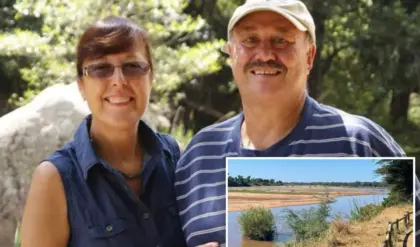
THE ROAD LOCALS FEARED MOST: Before Ernst and Dina Marais disappeared, a driver reportedly warned them about a risky route near Pafuri
By Africa Crime Desk At the time, it was only a casual warning. The kind of thing locals say to tourists near Pafuri every day: take care on that road, avoid the quieter route too late, don’t assume the bush…
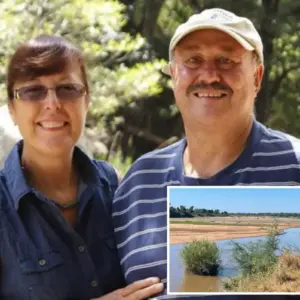
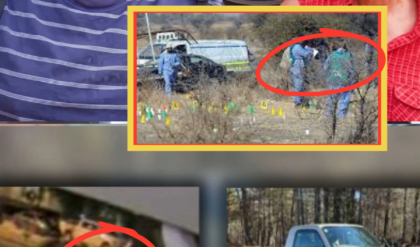
THE GATE CAMERA MAY HOLD THE ANSWER: Newly recovered security footage is reportedly helping investigators reconstruct the final hours before Ernst and Dina Marais vanished into the Kruger mystery…
The killers may have thought the river would hide everything. The bodies.The vehicle.The route.The reason Ernst and Dina Marais were targeted in one of the most shocking crimes in Kruger National Park’s history. But the case may not have ended…
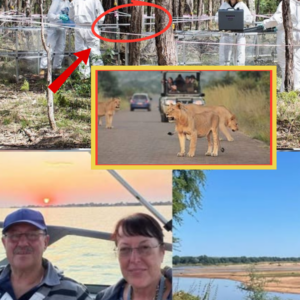
THE DOGS DIDN’T FAIL — THE TRAIL CHANGED: At the riverbank in Kruger, the scent vanished near the water
The dogs followed the scent until the river took it away. That is the chilling claim now circulating around the murder of Ernst and Dina Marais, the retired Mossel Bay couple found dead near Crooks Corner in Kruger National Park….
The sniffer dogs stopped at the water’s surface” at the location where Ernst and Dina’s bodies were found in Kruger National Park During the search
The dogs followed the scent until the river took it away. That is the chilling claim now circulating around the murder of Ernst and Dina Marais, the retired Mossel Bay couple found dead near Crooks Corner in Kruger National Park….
End of content
No more pages to load