He regretted his bride on their wedding night. Then the mountains took away his choice. I married the wrong woman.
The thought came to him before dawn, before guilt could soften it, before the mountains decided to make it permanent. By morning, he planned to be gone. The cabin still smelled faintly of pine sap, smoke, and wedding food gone cold.
Someone, her, he reminded himself, had swept the floor after the guests left, even though her hands must have been shaking. Even though her life had just changed forever, Elias Crow sat on the edge of the narrow bed, boots still on, elbows braced against his knees. Behind him, the woman he had married only hours ago lay stiff beneath the quilt, turned carefully away from him, as if even her breathing was afraid of crossing a line.
They hadn’t touched, not once. The silence between them was thick enough to choke on. This was not how it was supposed to feel.
The marriage had made sense on paper. Her father’s land bordered his. The valley was unforgiving.
Winters killed men who tried to live alone. A wife meant stability. A household.
A future that didn’t hinge on luck. But now, now that the door was shut and the witnesses gone, Elias felt like a man who had signed his name to a stranger’s life without knowing how to read it. He stood quietly, careful not to wake her, and crossed to the small window.
Outside, the mountains rose dark and massive under the moonlight, snow clinging to their shoulders like a warning. He had planned to leave before she woke at West put distance between himself and this mistake. He rested his hand on the cold glass.
Elias. Her voice was soft, not accusing. Just there.
He closed his eyes briefly before turning. Yes. She had pushed herself up.
The quilt pulled to her chest. Her dark hair lay loose over one shoulder, braided earlier for the wedding and now partially undone. She looked smaller without the guests, without the noise, without protection.
I didn’t mean to wake you, she said quickly. I just You were moving. Something twisted low in his chest.
I was going to check the horses. He lied. She nodded at once.
Too quickly, like she’d learned not to question what men said they were doing. All right, pause. Then, because silence had always been kinder to her than expectation, she added, “I’ll make coffee if you want it.” There was again offering accommodating.
Careful. He forced himself to meet her eyes. Lena, he said, trying the name like it might settle differently if he spoke it aloud.
You don’t have to. I know. A small smile appeared.
Polite, guarded. But I like to keep busy. Of course you do, he thought.
Because idle hands invite disappointment. He nodded once. Thank you.
She slid from the bed and wrapped her shawl around herself, moving with the quiet competence of someone used to taking up as little space as possible. As she passed him, she hesitated. “I hope I don’t get in your way,” she said gently.
“I know this house has always been yours.” “There it was, the imbalance.” He swallowed. “It’s your house, too, now.” She smiled again, but this time it didn’t reach her eyes. The storm hit before sunrise.
It didn’t announce itself. didn’t give the courtesy of distance. One moment Elias was tightening the saddle straps, breath fogging the air, mind already mapping his escape route through the western pass, and the next the sky cracked open.
Wind slammed into the valley with a force that knocked him sideways. Snow followed, thick and blinding, swallowing the mountains whole. Damn it.
One of the horses reared, screaming in panic. Another slipped on the frozen ground. Then came the sound that turned Elias’s blood to ice.
A sharp crack would splintering. A terrified Winnie cut short. No.
He ran, fighting the wind. But it was already too late. By the time he reached the hitching post, one horse lay broken beneath it, neck twisted at an impossible angle.
The other had torn free and vanished into the storm, gone, dead or dying somewhere in the white. The pass was invisible now. The mountains had erased it like it had never existed.
Elias stood there, chest heaving, snow plastering his coat, and understood something with sickening clarity. He wasn’t going anywhere. Inside the cabin, Lena was already awake, shoving blankets against the door as snow began to force its way through the cracks.
“The roof’s shaking,” she said when she saw his face. “I think the wind shifted.” “The horses are gone,” he said flatly. She froze.
“Gone. One’s dead. The other,” he shook his head.
“The pass is buried.” She pressed her lips together, fear flickering briefly in her eyes before she pushed it down. How long? Days, maybe weeks.
Silence fell. Not panic, not accusation. Just the quiet understanding of someone who had survived enough to know when fate had spoken.
She nodded once. All right, that was it. No tears, no blame, just acceptance.
And somehow that unsettled him more than anger would have. The first day passed a near silence. They moved around each other carefully like strangers sharing borrowed space.
She rationed the food without being asked. He checked the roof, reinforced the shutters, stacked firewood until his arms burned. By nightfall, the cabin felt smaller.
The fire crackled low. Shadows danced on the walls. Lena sat at the table, mending a tear in his shirt he hadn’t noticed.
“You don’t have to do that,” he said. She glanced up. It was already torn.
Still, a small shrug. Idle hands,” she said again, almost joking this time. He watched her fingers move quick, precise, practiced.
“You learned young,” he said. She smiled faintly. “I had to.” Something in her tone stopped him from asking more.
They ate in silence. Then unexpectedly, “You don’t have to stay,” she said. He looked up sharply.
“What? When the pass clears,” she continued, eyes fixed on her plate. “If you still want to go west, I won’t stop you.” There it was.
The permission he hadn’t known how to ask for instead of relief. It felt like a blow. I He hesitated.
Why would you say that? She met his gaze then. Really met it.
Because you looked like a man already halfway gone before the storm came. The honesty landed hard. You didn’t deny it.
She nodded as if that was answer enough. Then well survive the winter, she said quietly. After that, well see.
That night the temperature dropped dangerously low. The fire struggled would dwindled. Without a word, Elias added another blanket to the bed, leaving space between them.
When the wind howled, Lena startled awake, fingers clutching the quilt. “It’s all right,” he said instinctively. “The walls will hold.” She exhaled slowly.
“I know. I just The sound reminds me of being small.” “You didn’t ask, didn’t push, just lay there staring at the ceiling, listening to her breathing gradually even out. Somewhere in the dark, a thought crept in uninvited.
Leaving her might be easier than staying, but staying might cost him more. If you are liking this story, then please subscribe our channel. Your support literally means a lot to us.
The second morning didn’t begin with light. It began with cold, the kind that seeps into bone and refuses to leave, no matter how close you sit to the fire. Elias woke with his jaw clenched and his shoulders stiff, breath fogging faintly in the air.
The fire had burned down to embers sometime in the night, leaving the cabin wrapped in a thin, biting chill. Across the room, Lena was already awake. He could tell by the way she sat perfectly still at the table, Shawl pulled tight, hands wrapped around a tin cup that no longer steamed.
“You should have woken me,” he said, voice rough with sleep. She glanced up startled. “I didn’t want to waste the heat.” “There isn’t heat to waste,” he replied, pushing himself up.
We’re going to need to be careful. She nodded. I know that phrase again.
I know. I endure. I don’t complain.
It scraped at something in him. He crossed the room and added wood to the stove, coaxing the flames back to life. When warmth finally began to spread, Lena released a quiet breath she probably hadn’t realized she was holding.
“You don’t like the cold?” he observed. She gave a soft, humorless huff. “I don’t like feeling unnecessary.” That caught him.
He turned slowly. Cold makes you feel unnecessary. No, she said depending on someone does.
The words settled between them heavy. He didn’t know what to say to that. So, he did what he knew how to do.
He focused on survival. By midday, the storm hadn’t eased. Snow packed itself against the cabin walls like it meant to bury them alive.
News

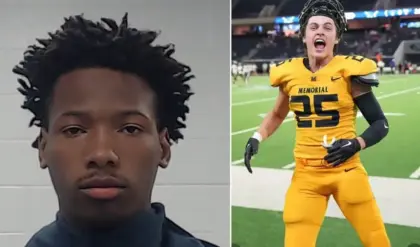
THE MOMENT THE CASE CHANGED: According to prosecutors, a five-word statement allegedly made before the confrontation with Austin Metcalf became a turning point in the courtroom battle… 👇👇
By U.S. Crime Desk Five words may become one of the most important pieces of the Karmelo Anthony murder trial. “Touch me and see what happens.” The sentence, allegedly spoken moments before 17-year-old Austin Metcalf was fatally stabbed at a…
AUSTIN METCALF’S FAMILY REACTS IN ANGER: New testimony in the Karmelo Anthony has focused on five words prosecutors
By U.S. Crime Desk Five words may become one of the most important pieces of the Karmelo Anthony murder trial. “Touch me and see what happens.” The sentence, allegedly spoken moments before 17-year-old Austin Metcalf was fatally stabbed at a…
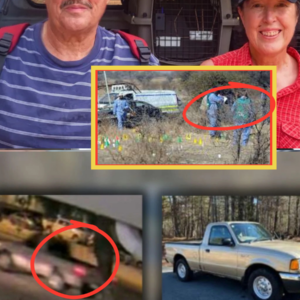
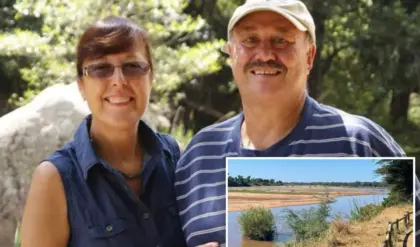
THE ROAD LOCALS FEARED MOST: Before Ernst and Dina Marais disappeared, a driver reportedly warned them about a risky route near Pafuri
By Africa Crime Desk At the time, it was only a casual warning. The kind of thing locals say to tourists near Pafuri every day: take care on that road, avoid the quieter route too late, don’t assume the bush…
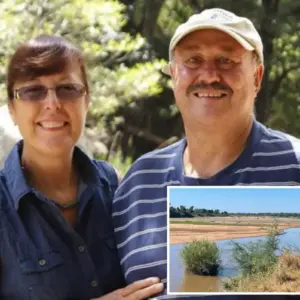
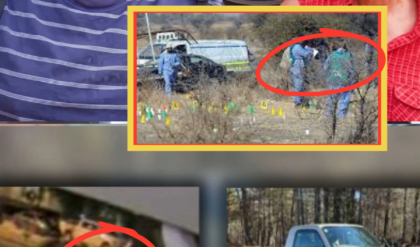
THE GATE CAMERA MAY HOLD THE ANSWER: Newly recovered security footage is reportedly helping investigators reconstruct the final hours before Ernst and Dina Marais vanished into the Kruger mystery…
The killers may have thought the river would hide everything. The bodies.The vehicle.The route.The reason Ernst and Dina Marais were targeted in one of the most shocking crimes in Kruger National Park’s history. But the case may not have ended…
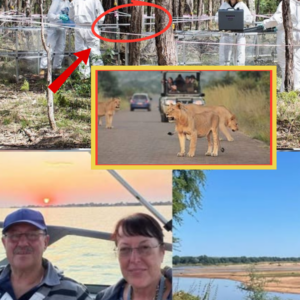
THE DOGS DIDN’T FAIL — THE TRAIL CHANGED: At the riverbank in Kruger, the scent vanished near the water
The dogs followed the scent until the river took it away. That is the chilling claim now circulating around the murder of Ernst and Dina Marais, the retired Mossel Bay couple found dead near Crooks Corner in Kruger National Park….
The sniffer dogs stopped at the water’s surface” at the location where Ernst and Dina’s bodies were found in Kruger National Park During the search
The dogs followed the scent until the river took it away. That is the chilling claim now circulating around the murder of Ernst and Dina Marais, the retired Mossel Bay couple found dead near Crooks Corner in Kruger National Park….
End of content
No more pages to load