The most frightening danger inside the Maldives sea cave may not have been the darkness, the depth, or even the narrow walls.
It may have been something the divers could not see.
Investigators are now examining whether a “silent killer” linked to depth, gas exposure, and cave conditions may have overwhelmed five Italian divers who died during an expedition near Vaavu Atoll, in what has been described as the deadliest diving disaster in Maldives history. The bodies of four victims were located in the third and largest section of the cave, at a depth of roughly 50 meters, while the body of a fifth diver had earlier been found outside the cave system.
Authorities have not issued a final cause of death. But the emerging focus of the investigation is clear: whether the group went deeper than permitted, whether the dive was properly disclosed as a cave dive, and whether their breathing equipment was suitable for the conditions. Reuters reported that Maldivian authorities are looking into the possibility that the divers used standard compressed air at depths where specialized technical diving procedures may have been required.
At depths of 50 to 60 meters, the risks multiply quickly.
Experts say divers can face nitrogen narcosis, a condition that can cloud judgment and cause confusion. They may also face oxygen toxicity if the partial pressure of oxygen becomes too high, which can trigger sudden symptoms underwater. In a cave, where there is no direct path to the surface, even a brief loss of control can become fatal.
That is why the discovery of the bodies inside the cave’s third chamber has raised such difficult questions.
Did the divers know they were in trouble?
Did they try to turn back?
Or were they overcome so quickly that escape was no longer possible?
The recovery operation itself showed how dangerous the site remained. A Maldivian military diver involved in the search died from decompression sickness, and authorities were forced to pause the mission before Finnish technical divers were brought in. Those specialists used advanced closed-circuit rebreathers to reach the bodies in the cave’s deepest section.
The victims included marine ecologist Monica Montefalcone of the University of Genoa, her daughter Giorgia Sommacal, researcher Muriel Oddenino, marine biology graduate Federico Gualtieri, and diving operator Gianluca Benedetti. The group had been connected to marine research in the area, including work related to soft corals, according to Reuters.
But the cave has now become the center of a much darker investigation.
Maldivian officials are reportedly examining whether the dive exceeded the country’s recreational diving limit of 30 meters, whether the expedition had the correct permits, and whether the boat operator was authorized for the type of dive being conducted.
For families, those technical questions may feel impossibly cold. But they could determine whether the tragedy was caused by a sudden physiological event, a planning failure, unsuitable equipment, or a chain of small decisions that became deadly once the group entered the cave.
The term “Vault No. 3” may sound like something from a thriller. In reality, it refers to the third and largest section of an underwater cave system where time, depth, and gas supply leave almost no room for error.
There may have been no explosion.
No visible predator.
No dramatic sign of danger.
Just a silent force inside the cave, acting faster than anyone on the surface could see.
And by the time rescuers reached the bottom of the Maldives, the question was no longer whether the divers had died.
It was what invisible danger had taken them so quickly.
News

THE MOMENT THE CASE CHANGED: According to prosecutors, a five-word statement allegedly made before the confrontation with Austin Metcalf became a turning point in the courtroom battle… 👇👇
By U.S. Crime Desk Five words may become one of the most important pieces of the Karmelo Anthony murder trial. “Touch me and see what happens.” The sentence, allegedly spoken moments before 17-year-old Austin Metcalf was fatally stabbed at a…
AUSTIN METCALF’S FAMILY REACTS IN ANGER: New testimony in the Karmelo Anthony has focused on five words prosecutors
By U.S. Crime Desk Five words may become one of the most important pieces of the Karmelo Anthony murder trial. “Touch me and see what happens.” The sentence, allegedly spoken moments before 17-year-old Austin Metcalf was fatally stabbed at a…
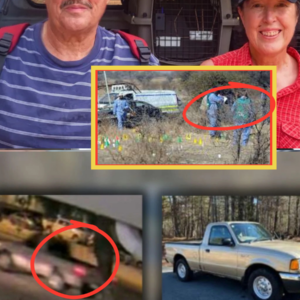
THE ROAD LOCALS FEARED MOST: Before Ernst and Dina Marais disappeared, a driver reportedly warned them about a risky route near Pafuri
By Africa Crime Desk At the time, it was only a casual warning. The kind of thing locals say to tourists near Pafuri every day: take care on that road, avoid the quieter route too late, don’t assume the bush…
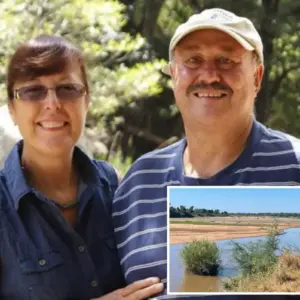
THE GATE CAMERA MAY HOLD THE ANSWER: Newly recovered security footage is reportedly helping investigators reconstruct the final hours before Ernst and Dina Marais vanished into the Kruger mystery…
The killers may have thought the river would hide everything. The bodies.The vehicle.The route.The reason Ernst and Dina Marais were targeted in one of the most shocking crimes in Kruger National Park’s history. But the case may not have ended…
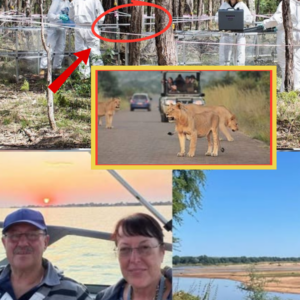
THE DOGS DIDN’T FAIL — THE TRAIL CHANGED: At the riverbank in Kruger, the scent vanished near the water
The dogs followed the scent until the river took it away. That is the chilling claim now circulating around the murder of Ernst and Dina Marais, the retired Mossel Bay couple found dead near Crooks Corner in Kruger National Park….
The sniffer dogs stopped at the water’s surface” at the location where Ernst and Dina’s bodies were found in Kruger National Park During the search
The dogs followed the scent until the river took it away. That is the chilling claim now circulating around the murder of Ernst and Dina Marais, the retired Mossel Bay couple found dead near Crooks Corner in Kruger National Park….
End of content
No more pages to load