The correction softened something in the older woman’s face.
“Meals go outside his door three times a day. Two knocks. Leave immediately. No waiting. No listening.”
“And the dog?”
“His name is Brutus.”
“Is that what he answers to?”
Evelyn frowned. “That’s what Roman calls him.”
It was a small answer, but Sadie noticed the space inside it.
Evelyn stopped walking and turned to face her.
“Listen carefully. Roman Vale is not the kind of man who enjoys cruelty. Plenty of people in this city would disagree with me, and some of them would be right for good reasons. But inside this house, what happens in that room is not pleasure. It’s damage. Every couple of months, something in him breaks open, and the dog…” She glanced toward the closed bedroom door at the end of the hall. “The dog feels it. Carries it. Makes it worse. Most people hear what comes through that door and run for their lives.”
Sadie met her eyes. “I didn’t come here to run.”
That answer followed Evelyn all the way back down the hall.
On the fourth day, Sadie heard the dog before she saw him.
A growl rolled under the den door while she changed out the white roses in the north hall. It was such a deep sound that it seemed to come from the floor itself. Most people would have stepped back.
Sadie crouched.
From her apron pocket she drew a strip of dried turkey she had bought in town and doctored with chamomile and a hint of valerian. She laid it on the floor near the gap under the door and rested on the balls of her feet, quiet and patient.
The growl stopped.
Then came the sniffing, wet and deliberate. Friend. Stranger. Risk. Memory.
She waited.
A heavy body settled against the other side of the door with a thump that made the frame shiver.
“Hey there,” she whispered.
Not in a foreign language this time. In the low, easy cadence of East Tennessee. In the tone men used on porches and in barns, the kind that made frightened animals feel as if the world had narrowed down to one safe voice and a patch of warm ground.
“You don’t sound mean,” she murmured. “You sound lonely.”
She sat there nearly twenty minutes. When she stood to leave, the turkey strip was gone.
She told no one.
Two days later, Roman Vale came home.
The house felt him before she saw him. Tires on gravel. Radio chatter sharpening in security earpieces. The nearly invisible straightening that passed through every member of staff when power crossed a threshold.
Head of security Hank Mercer appeared in the service pantry while Sadie built a dinner tray.
“Boss is back,” he said.
Hank looked like a former linebacker who had lost patience with civilization. In a week, he had spoken maybe fifteen words to her total.
“Does he eat in his room the first night?” Sadie asked.
“He always eats in his room.”
“Any preferences?”
“Black coffee. No onions.”
She nodded and carried the tray down the long hall herself.
At Roman’s bedroom door, she paused.
Inside, a man’s voice spoke low and rough, the way people speak to something they trust more than most human beings. A deeper rumble answered.
She knocked twice and set the tray down.
She should have walked away.
Evelyn’s instructions could not have been clearer.
Instead she stayed.
The lock clicked.
The door opened four inches.
Two sets of eyes found her.
The first were the dog’s, amber and level in a black face broad as a truck tire. He lay just inside the doorway, massive and still, fur swallowing the hall light. A thin line of white scar tissue cut through one eyebrow. He looked less like a pet than like a living verdict.
The second pair belonged to Roman Vale.
He stood behind the door in a white shirt with the sleeves rolled up, dark hair slightly too long for a man in his position, as if control in him was always fighting with neglect and never quite winning. He was lean, not bulky, but the kind of lean that suggested efficiency instead of restraint. Thin scars crossed one forearm in pale ropes. His face was harder than the photographs ever captured, not because it was cruel but because it was exhausted in expensive ways.
The dog growled.
Then, impossibly, the growl died.
His nostrils flared.
His head tilted.
And from a creature everyone in the house talked about the way people talk about land mines came a soft, confused little whine.
Roman’s hand froze on the door.
The dog took one step forward and sniffed the air between them.
Sadie did not move.
Roman’s gaze flicked from the animal to her face. “Who are you?”
“Sadie Quinn. The new maid.”
“You’ve been here how long?”
“Six days.”
He looked down at the dog again. “Brutus doesn’t like strangers.”
“I can see that.”
“He especially doesn’t like people who stare.”
“Then he and I already have something in common.”
That should have offended him. Instead something almost amused passed through his expression and vanished before it became a smile.
“You’re not afraid of him,” Roman said.
“No.”
“Why?”
Sadie looked at the dog, at the old hurt in his eyes that had nothing to do with savagery and everything to do with memory.
“Because I know what abandoned loyalty looks like,” she said.
A silence settled that felt built, not empty.
Then Roman bent, picked up the tray, and stepped back.
The door closed.
Sadie stood there, pulse beating hard in her throat. She had come to the house with a purpose sharpened over three years. She had memorized a fake history, built a fake résumé, crossed state lines with a dead man’s unfinished business tucked inside a leather roll beneath her clothes.
She had also expected Roman Vale to be easier to hate.
That was the first real problem.
Over the next week, she learned the mansion the way some people learned weather. She tracked staff rhythms, camera rotations, Hank’s patrol routes, the kitchen schedule, the exact stretch of hall where an older camera glitched half a beat every forty minutes. She noticed that Chef Leo oversalted sauces when he was worried, and that Evelyn prayed under her breath while polishing silver, not because silver required prayer but because the north wing did.
She also noticed Roman watching.
Twice she found the den door cracked open. Twice Brutus accepted treats from her hand. On the third occasion, he pushed his nose into her palm and licked once, quick and rough and startlingly gentle for an animal that could have taken off her wrist without much trouble.
“Well,” she whispered, scratching under his jaw, “there you are.”
“Interesting.”
She rose too quickly.
Roman stood at the far end of the hall in a charcoal suit, tie loosened, the late-evening lake light cutting silver across one side of his face.
“He touched me,” Sadie said.
“There is a difference,” Roman replied.
He walked closer. Brutus kept his head near Sadie’s hip, watching both of them.
“What did you say to him?”
“Told him he was a good boy.”
“You use a whistle with him.” Roman’s eyes narrowed. “Not random. Patterned.”
Sadie held his gaze. “My dad trained dogs.”
“What kind?”
“The giant difficult kind.”
“That isn’t a breed.”
“It’s a lifestyle.”
Again, that near-smile, gone almost before it formed.
Then his expression flattened.
“The bad days start soon,” he said. “Every woman who’s worked this wing has left before or during them. If you’re smart, you’ll leave before he gets attached.”
Sadie glanced at the dog. “Doesn’t handle people leaving?”
Roman’s voice dropped. “No. Neither do I.”
The honesty of it landed harder than any threat could have.
Fifty miles south, in a private room above a restaurant near Cicero, the men planning violence were eating well.
Wes Calder sat at the head of the table with a bourbon untouched beside his hand. He was not old, but he had perfected the stillness of men who never needed to raise their voices. He dealt in freight, protection, cash businesses, and anything else that moved better in the dark. Three years earlier, he had decided a rural breeding operation in Tennessee contained assets worth stealing. The owner had disagreed. The fire had settled the argument.
Across from him, a broker named Lyle Duncan was sweating into a tailored suit.
“The girl’s inside Vale’s house,” Lyle said. “Working under the name Sadie Quinn.”
Wes rotated his glass once. “And?”
“And she’s alive. If she identifies the dog, she can connect the kennel theft to your buyers.”
Wes looked bored, which on him was worse than rage.
“Then the dog goes missing.”
“Vale keeps it close.”
“Not during the episodes.” Wes finally lifted the bourbon. “That’s why I waited. Roman Vale turns inward, his people pull tighter around the room and looser around the grounds. Same mistake every man makes when he thinks the danger lives only where he can hear it breathing.”
Back at the mansion, the mood changed by the hour as the bad days approached.
Chef Leo found Sadie at the counter one night cutting more strips of turkey for the dog.
“They’re betting on you,” he said.
She did not look up. “That seems rude.”
“It’s organized,” Leo said. “Hank says you’ll quit before midnight. Evelyn says dawn. One of the groundskeepers says you’ll last exactly long enough to hear Roman throw a lamp.”
“And you?”
Leo leaned on the counter, considering her. He had known Roman since Roman was young enough to mistake relentless ambition for armor.
“I think every person who came before you was trying to survive that dog,” he said at last. “You’re trying to understand what made him need teeth.”
She stopped cutting.
Leo reached into his apron and slid over a photograph. It showed a nineteen-year-old Roman on the steps of a brick bungalow in Bridgeport with a mutt sprawled across his knees. Roman was laughing, full and careless and so visibly alive that the picture felt almost private.
“My God,” Sadie said softly. “He used to smile.”
Leo snorted. “He had a mother once. A sister too. Then men with money and grudges happened.” His face darkened. “He’s not afraid of what hits him in that room. He’s afraid of what it takes from the rest of us while it does.”
The bad spell began at 4:17 the next morning.
Sadie woke before the first sound, as if some pressure in the house had changed. She dressed in black, braided her hair tight, and opened the leather roll hidden in her dresser.
Inside were seven items: a folding knife, paracord, a penlight, a compact trauma kit, a flash drive, the photograph from under her pillow, and a worn leather collar with a brass tag.
The tag did not say Brutus.
It said Huck.
She tucked the roll beneath her overshirt and stepped into the hall.
The first sound came from Roman’s room.
Not the dog.
Roman.
A low, torn groan that made the back of her neck rise.
Then the dog answered, not with anger but with distress so deep it shook the vase on the side table.
Sadie carried a straight-backed chair into the corridor and set it halfway between Roman’s door and the den. She put a thermos of coffee on the floor and laid five strips of turkey along the carpet like a trail leading away from the bedroom.
Then she sat.
The first hour brought pacing. Nails on hardwood. A man cursing under his breath. Something heavy striking a wall.
The third hour brought a scream.
It did not sound violent. That was what undid every story she had told herself to prepare.
The sound from the room was grief. Raw, unhidden grief. The kind that dragged memory behind it like broken glass. She could hear smoke in it. Hear loss. Hear a person going back to the worst moment of his life and finding it waiting, patient as ever.
The dog howled in answer.
Not threatening. Mourning.
That was the secret, and once she heard it, the whole house changed shape in her mind. Brutus was not a beast feeding Roman’s darkness. He was a sentry with nowhere to put the pain he had been trained to detect. So he matched it. Reflected it. Multiplied it.
Sadie wiped her face and realized only then that she was crying too.
She slid the first turkey strip to the crack beneath the door and began to speak.
Not loudly. Not like a command.
Like remembrance.
She told him about red clay and winter hay. About the little kennel outside Knoxville where he was born. About her father’s boots on the barn floor and the radio always playing old country songs too soft to make out. She told him about the storm the night he came into the world, about how he had been the smallest of the litter and not breathing for three terrible seconds.
Behind the door, the scratching stopped.
The howling quieted.
A heavy shadow moved toward the crack and settled there to listen.
Sadie took a breath that shook on the way out.
“Your name wasn’t what they call you now,” she said softly. “You know that, don’t you? Your name was Huck. My daddy named you because you kept climbing out of every box he put you in.”
The silence on the other side sharpened.
She kept going. She told him about the pond behind the house, about the first time he toppled into it and came out offended. About her father calling him stubborn and smart in the same breath. About how he always hated thunder but loved being sung to.
Evelyn brought fresh coffee at noon and found Sadie still in the chair, still talking to the closed door in a voice that sounded steadier than she felt.
“You need rest,” Evelyn whispered.
“If I leave now,” Sadie said, eyes on the door, “he’ll think I’m gone.”
Evelyn stared at her, then at Roman’s room, then at the line of untouched trays outside the hall.
For the first time in years, she did not argue with fate. She only nodded and went to get more coffee.
At the same hour, groundskeeper Neil Turner stood in his cottage at the edge of the property with a burner phone pressed to his ear.
“Hank pulled two men off the south wall to cover the north interior,” he whispered. “If you’re coming, do it now.”
In a black SUV parked down a service road, four men checked weapons and masks.
In the kitchen, Leo glanced toward the groundskeeper’s cottage through the back window and frowned. Neil was supposed to be off until evening. Leo set down a carving knife and went in search of Hank.
By the ninth hour, Roman’s door opened.
Not dramatically. Simply under the weight of the dog leaning through it.
Brutus, Huck, filled the frame.
He was even bigger on his feet, chest like a barrel, black coat thick as winter. Behind him, Roman’s room looked as if a storm had been trapped inside it. One lamp lay shattered. A chair had been overturned. A mirror was cracked through the center.
Roman sat on the floor against the side of the bed, shirt torn open at the collar, knuckles bloodied, face gray with exhaustion.
The dog crossed the hall and put his head straight into Sadie’s lap.
All that muscle, all that force, and he leaned on her like something finally allowed to be tired.
Sadie buried both hands in his fur. “Hey, Huck.”
Roman’s head lifted.
“What did you call him?”
She looked up, tears drying cold on her skin.
“His real name.”
The hall went still.
She took the old collar from her overshirt and held it out. The brass tag caught the low light.
“Huck,” she said again. “I was there when he was born.”
Roman stared at the collar, then at her face, and something in his expression shifted from suspicion to calculation to understanding so fast it was frightening.
“Sadie Quinn,” he said slowly, “isn’t your name.”
“No.”
“Who are you?”
She swallowed.
“My name is Nora Whitaker.”
The dog’s ears twitched.
“My father raised him. Samuel Whitaker. Outside Knoxville. Three years ago our kennels burned, and my father died in that fire. I spent three years believing you ordered it.”
Roman closed his eyes for one brief second.
“I didn’t.”
“I know that now.”
“You know.”
“You bought him from a broker in Indianapolis eighteen months later,” Nora said. “I tracked the sale. I thought you bought stolen bloodstock to turn into weapons.”
Roman laughed once, without humor. “I bought a dog everyone else wanted euthanized.”
“He bit people because he was terrified.”
“That was my reading too.”
Before either could say more, gunfire snapped from the south grounds.
Two fast shots, then a third.
The dog surged up, every line of him transformed. Roman was on his feet in the same instant, reaching into the nightstand for a handgun.
The intercom on the wall crackled with Hank’s voice.
“South perimeter breach. Four men. Two down. One wounded. One ran for the tree line.”
Roman hit the talk button. “Who sent them?”
Hank answered without hesitation. “Wes Calder. They came for the dog.”
Roman looked at Nora. She was already pulling the flash drive from beneath her shirt.
“He can’t let Huck stay alive,” she said. “That dog ties him to the theft network, the buyers, the fire. My testimony matters, but Huck is the last living thing that can put me at that kennel.”
Roman’s eyes dropped to the drive in her hand. Then he crossed to his desk, unlocked the bottom drawer, and took out one of his own.
For a beat, they simply stared at each other.
“You’ve been building the same case,” Nora said.
Roman’s mouth tightened. “From opposite ends.”
Hank appeared in the doorway seconds later, breathing hard, weapon drawn.
“Neil was the leak,” he said. “Leo spotted the cottage light. We got him.”
Roman nodded once. “Lock the grounds. Nobody leaves alive unless I say so.”
Hank’s gaze moved from Roman to Nora to the dog standing between them like a witness with teeth.
Then he was gone.
The room fell quiet again, but it was a different quiet now. Not helpless. Braced.
Roman looked at Nora as if seeing the entire shape of her at last. “You came here to expose me.”
“I came here to find the truth.”
“And if the truth destroyed me?”
Her answer was immediate. “Then it would have.”
He nodded once, accepting that.
“Fair enough,” he said.
The final move came six days later in a private room at a casino hotel in Gary, Indiana, where men with expensive watches and public charities met to discuss things they would never put in writing.
Wes Calder was already at the table when Roman entered with Nora beside him.
The room reacted before the men did. A slight pause. The repositioning of attention. That old predator instinct that always knew when the weather had turned.
Wes’s face barely changed, but Nora saw recognition hit him like a slap beneath the surface.
“This is irregular,” said one of the older men at the table.
“She isn’t here as company,” Roman said. “She’s here as a witness.”
Wes leaned back in his chair. “A witness to what? A story she polished while playing maid in your house?”
Nora turned toward him.
“To my father’s murder,” she said.
Roman set two flash drives on the table. Then a folder. Wire records. Shell-company documents. Freight logs. Photos. Time-stamped transfers. Names linked to buyers, handlers, arsonists, transport brokers, warehouse leases, cash drops. The architecture of the crime laid out piece by piece until denial had nowhere left to stand.
Nora spoke next.
She did not rush. She did not dramatize. She simply told the truth so clearly that the room had to make room for it. She named the men who came to the kennel. Named the trucks. Named the buyer codes. Then Roman put up the financial trail on the screen and connected Wes to every step after the fire.
Wes smiled the way men smile when they think contempt can do the job evidence has already done.
“She lied about who she was,” he said. “She infiltrated Vale’s house under a fake name. You’re going to trust her?”
“I used a fake name to stay alive,” Nora said. “You used fake companies to burn alive men who got in your way.”
The room held.
Wes made his mistake a minute later.
“All this,” he said, looking from Nora to Roman with tired disgust, “for one damn dog?”
Nora stepped closer to the table.
“My father spent his last hours writing care instructions for an animal he knew might outlive him,” she said. “Feeding notes. Storm notes. How to soothe him when fear made him forget himself. You burned a man’s life to the ground, and his last act was still love. So no, Mr. Calder. Not for a dog. For the proof that even after everything you did, love lived longer than your fire.”
No one spoke.
It was that kind of silence, the one that already knows what it is.
Protections were withdrawn. Accounts were frozen. Men who had laughed with Wes two hours earlier suddenly found their schedules elsewhere. Roman did not raise his voice once. He did not need to. By the time the meeting ended, Wes Calder was a man walking out of a room without shelter, and everyone there knew what the weather would do to him next.
On the drive back, Nora stared out at the industrial lights sliding past the windows and felt exhaustion beginning to replace adrenaline.
Roman drove one-handed. The other rested on the center console between them, not touching, not retreating.
Finally he said, “There was something in Huck’s crate when I bought him.”
She turned.
“A letter. Sewn into the lining.”
Her breath caught.
“I had it opened and copied. I kept the original.”
“Why didn’t you tell me?”
Roman watched the road. “Until that night in the hall, I couldn’t tell whether you were here to ruin me, use me, or save something from me.”
“And now?”
Now he looked at her.
“Now I think those things were never as separate as I wanted them to be.”
When they reached the house, Huck was waiting at the top of the front steps.
The moment Nora got out of the car, his tail started thumping. Not the tentative flicker from the hall. A full, honest, ridiculous wag that made him look, for one impossible second, less like a legend and more like the puppy from the photograph.
Roman came around the car holding a small box.
Inside was a new collar, dark leather, hand-stitched, with a brass tag engraved simply: HUCK.
Nora looked from the collar to Roman. “You had this made.”
“I thought he’d earned his own name back.”
That nearly broke her.
She knelt and unfastened the old collar with the wrong name on it. Huck stood very still while she buckled the new one into place. The tag clicked softly against his chest.
Then Roman handed her the letter.
Samuel Whitaker’s handwriting leaned across the page in the same disciplined slant she remembered from feed invoices, church notes, and birthday cards. There were pages of instructions. Diet. Touch points. Warning signs for storms and fear. Then the final paragraph.
If my girl is alive, she’ll come looking. Tell her I saw the mountains before the smoke got thick, and they were beautiful. Tell her I was not afraid at the end. Tell her Huck was born to find his way home. Tell her she was too.
Nora cried then, not the hard bitter crying she had done in motel bathrooms and truck stops and the front seat of old cars, but the kind that hurts clean and leaves room for breath afterward.
Roman stepped close enough for her to move away if she wanted.
She didn’t.
He pulled her into him carefully, like a man who had broken enough things to understand the value of gentleness. Huck leaned against both of them with a satisfied groan, as if some long private assignment had finally been completed.
In the months that followed, the house changed.
Not all at once. Not like a miracle. More like a wound learning it was allowed to close.
Huck started leaving the north wing by choice. First the library, then the courtyard, then the terraced lawn above the lake. Chef Leo began setting aside scraps for him and pretending he was not sentimental. Hank started giving Nora security updates as if this arrangement had always existed. Evelyn, who had outlived three mayors and two federal raids, developed the expression of a woman who had been right about everything and planned to enjoy it in silence.
Roman changed too, though more carefully.
He still had bad days. Trauma did not disappear because truth had finally shown its face. But the next spell lasted eighteen hours instead of three days, and Nora spent it in the room with him, Huck pressed against Roman’s side, the dog no longer amplifying grief but grounding it. Roman still shook. He still went somewhere dark. The difference was that he did not go there alone.
At dawn, after the worst of it passed, he looked up at her from the floor beside the bed.
“Stay,” he said.
Not as an order.
As a request so honest it seemed to surprise him.
Nora smoothed his hair back from his forehead and smiled through the tiredness in her eyes.
“I’ve been staying,” she said. “The question was whether you were ready to stop surviving long enough to notice.”
He kissed her then, slowly at first, with the caution of a man crossing thin ice, and then with the kind of certainty that comes only after grief stops being the only language you trust.
Officially, Nora remained on payroll as a maid for another three months because Evelyn found the paperwork hilarious and refused to update it right away.
Unofficially, she became the center of gravity in a house that had spent too long orbiting pain.
One spring evening, nearly a year after she first walked through the gates under a false name, she sat on the fountain edge in the courtyard with a book in her lap and Huck’s head resting across her knees. Roman came out carrying two mugs of coffee.
“The next spell starts in a few days,” he said.
“I know.”
“I still hate that it comes.”
She took the mug from him. “You don’t have to like your storms to outlive them.”
He sat beside her and looked toward the lake where the sunset had turned the water copper.
“I still don’t know how to be a man who hasn’t broken things,” he said quietly.
Nora took his hand.
“The point,” she said, “isn’t that you never broke. It’s that broken isn’t the same as finished.”
He was silent for a long moment, turning that over.
From inside the house came Leo’s voice arguing with a pot. Somewhere on the drive, Hank laughed at something on his phone. Evelyn crossed the upstairs landing with a vase of fresh white roses, still keeping certain rituals exactly where they belonged.
Home, Nora thought, had nothing to do with perfection.
It was not a clean past.
It was not a life without fear.
It was this.
A house that had learned to unlock one room at a time. A man who had discovered that strength without tenderness was only another kind of damage. A giant black dog once renamed into a monster, now sleeping under his true name with the evening wind moving through his fur.
When darkness came to the north wing now, it came to an occupied room.
To a woman who had crossed fire, lies, and half the country to finish her father’s story.
To a man who had saved what he did not yet understand because some stubborn piece of mercy in him had survived everything meant to kill it.
To a dog born to find his way home, and to lead lost people there with him.
And if you stood in the hall at night and listened carefully, you could still hear the sound that once terrified the whole house.
Not growling.
Not howling.
Just the soft, steady thump of Huck’s tail against the floor.
News
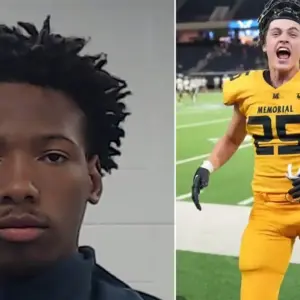
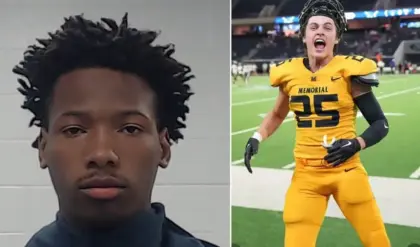
THE MOMENT THE CASE CHANGED: According to prosecutors, a five-word statement allegedly made before the confrontation with Austin Metcalf became a turning point in the courtroom battle… 👇👇
By U.S. Crime Desk Five words may become one of the most important pieces of the Karmelo Anthony murder trial. “Touch me and see what happens.” The sentence, allegedly spoken moments before 17-year-old Austin Metcalf was fatally stabbed at a…
AUSTIN METCALF’S FAMILY REACTS IN ANGER: New testimony in the Karmelo Anthony has focused on five words prosecutors
By U.S. Crime Desk Five words may become one of the most important pieces of the Karmelo Anthony murder trial. “Touch me and see what happens.” The sentence, allegedly spoken moments before 17-year-old Austin Metcalf was fatally stabbed at a…
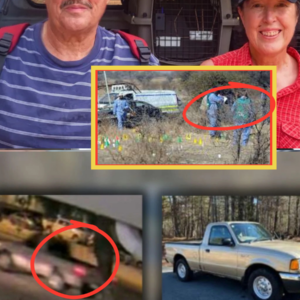
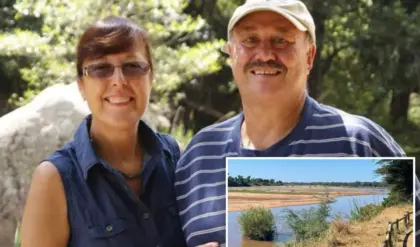
THE ROAD LOCALS FEARED MOST: Before Ernst and Dina Marais disappeared, a driver reportedly warned them about a risky route near Pafuri
By Africa Crime Desk At the time, it was only a casual warning. The kind of thing locals say to tourists near Pafuri every day: take care on that road, avoid the quieter route too late, don’t assume the bush…
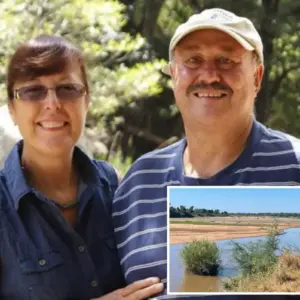
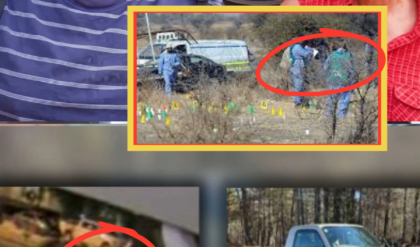
THE GATE CAMERA MAY HOLD THE ANSWER: Newly recovered security footage is reportedly helping investigators reconstruct the final hours before Ernst and Dina Marais vanished into the Kruger mystery…
The killers may have thought the river would hide everything. The bodies.The vehicle.The route.The reason Ernst and Dina Marais were targeted in one of the most shocking crimes in Kruger National Park’s history. But the case may not have ended…
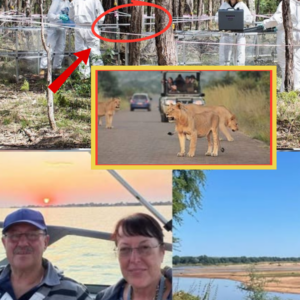
THE DOGS DIDN’T FAIL — THE TRAIL CHANGED: At the riverbank in Kruger, the scent vanished near the water
The dogs followed the scent until the river took it away. That is the chilling claim now circulating around the murder of Ernst and Dina Marais, the retired Mossel Bay couple found dead near Crooks Corner in Kruger National Park….
The sniffer dogs stopped at the water’s surface” at the location where Ernst and Dina’s bodies were found in Kruger National Park During the search
The dogs followed the scent until the river took it away. That is the chilling claim now circulating around the murder of Ernst and Dina Marais, the retired Mossel Bay couple found dead near Crooks Corner in Kruger National Park….
End of content
No more pages to load