I Opened My Grandfather’s Dry Well to Save My Horses… Then It Started Breathing Back
My name is Caleb Mercer. I run a fourth-generation horse ranch out in the dust-choked plains of eastern Montana. Two weeks ago, the heatwave hit 110 degrees and refused to drop. Then, the creeks dried up. Then, the municipal lines failed.
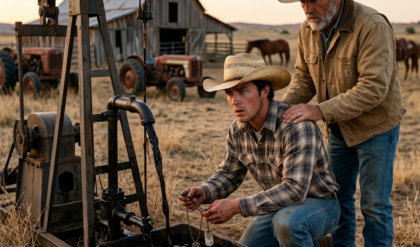
When drought strangles your land, you don’t just watch your livelihood vanish—you watch your family members suffer. I had forty head of horses out in those pastures, their ribs starting to show, their tongues thick and gray, standing in the sparse shade of dead cottonwoods. I was losing them. The water trucks I ordered were delayed by a week due to state-wide shortages. I didn’t have a week. I had maybe forty-eight hours before my pregnant mares started dropping.
That was when I looked toward the north ridge. Towards the Widow’s Mouth.
It was an old stone well sitting on a patch of dead earth that nothing ever grew on. It had been sealed shut with a massive, iron-banded concrete slab since before I was born. My grandfather was the one who capped it. When I was a kid, playing too close to the ridge, my dad would drag me back by the collar. He’d point a trembling finger at the concrete slab and say, “The water down there ain’t for the living, Caleb. You never touch that stone. You hear me?”
I always thought it was just poisoned groundwater. Heavy metals, maybe arsenic. But desperate times make a man do reckless things. I figured if I could just pump whatever was down there through a makeshift filtration system, I could keep the herd alive until the water trucks arrived.
I fired up my John Deere skid steer, grabbed the heaviest tow chains I owned, and drove up the ridge.
I should have listened to my father.
PART 1: The Lungs of the Earth
The concrete lid had to weigh close to a ton. It was overgrown with brittle weeds, the iron bands rusted into jagged, orange flakes. I wrapped the heavy steel chains around the base of the slab, hooked them to the tractor’s bucket, and threw the machine into reverse.
The diesel engine roared, belching black smoke into the sweltering Montana sky. The tires spun, kicking up clouds of dry dirt. For a solid minute, nothing happened. The seal was absolute. Then, with a deafening CRACK that echoed across the empty valley, the mortar gave way.
I lifted the slab and dragged it three feet to the left.
I killed the engine and jumped down from the cab, grabbing a heavy-duty Maglite and a coil of rope from the flatbed. I expected the immediate, damp smell of stagnant water. I expected the stench of sulfur or dead animals.
Instead, I was hit by a sound.
It wasn’t a splash. It wasn’t the shifting of loose rocks. It was a long, deep, rattling inhalation.
I froze. The hairs on my arms stood straight up, defying the blistering heat of the afternoon sun. I stepped closer to the jagged edge of the opening and peered over.
A blast of air hit my face. It wasn’t just cold; it was freezing. It smelled like ozone, rust, and something sterile—like the harsh antiseptics they use in hospital corridors. The air rushed up past my ears, howling softly, before suddenly stopping. A second later, the well inhaled again, sucking the hot summer air down into the darkness.
It was breathing.
My mind raced to find a logical explanation. Barometric pressure? An underground cave system equalizing air temperature? I gripped my flashlight, my palms sweating, and clicked it on. The high-lumen beam sliced through the darkness, illuminating the ancient, hand-laid cobblestones of the well’s interior.
About forty feet down, the stonework stopped. It didn’t open up into a cavern, and it didn’t hit water.
It hit steel.
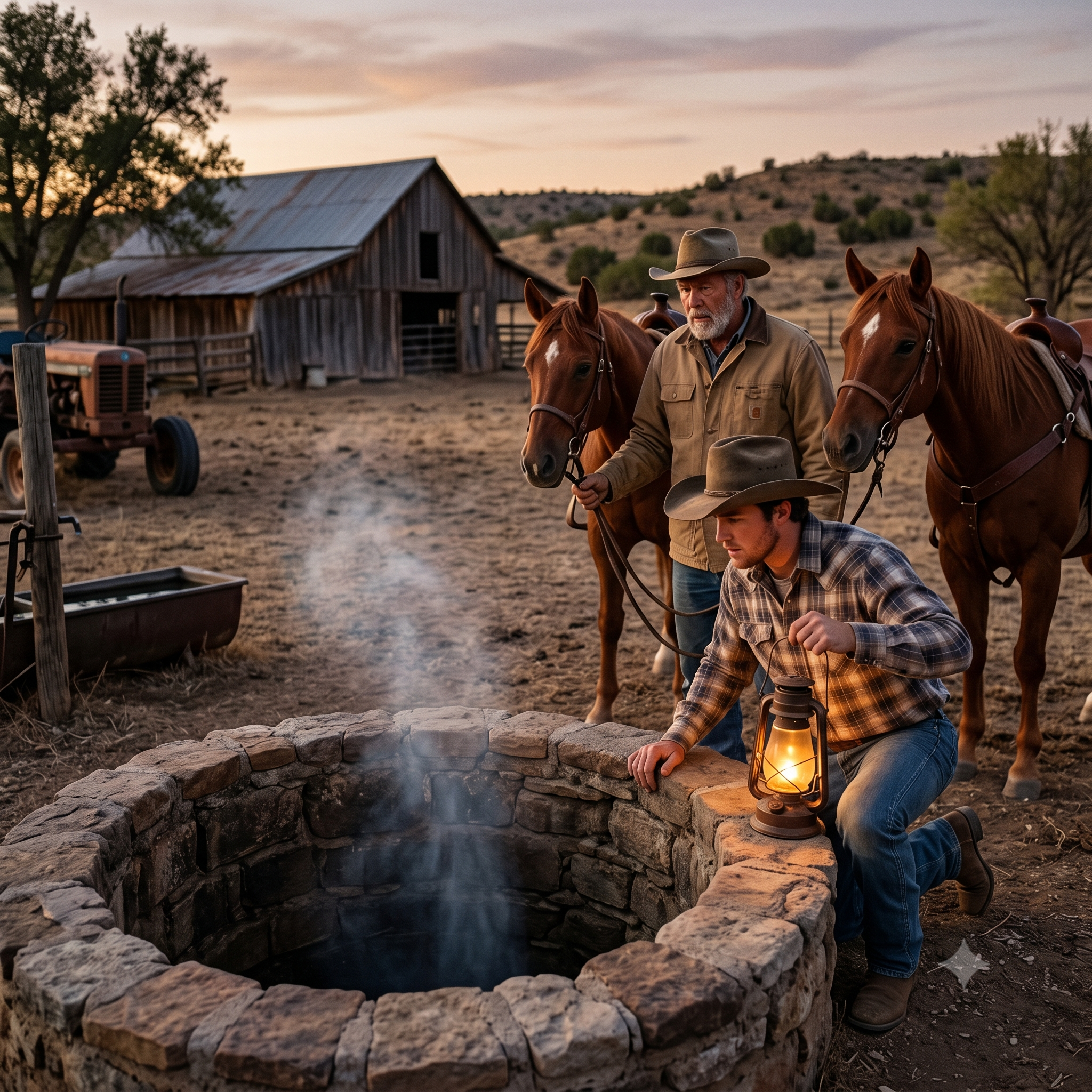
The beam of my flashlight reflected off a massive, heavy-duty circular steel door set horizontally into the shaft. It looked like the hatch of a nuclear submarine. Right in the center, barely visible beneath a layer of dust, was a faded white star—an old, mid-century US military insignia.
My heart hammered against my ribs. This wasn’t a well. It had never been a well.
I needed to know how deep the drop was to that hatch, and if there was any structural integrity to the stones. I uncoiled my thick nylon ranch rope, tied a heavy iron wrench to the bottom for weight, and began lowering it down the shaft.
Fifteen feet. Twenty feet. Thirty feet.
The wrench clinked softly against the stone walls. I leaned over the edge, squinting into the abyss. The rope dangled about three feet above the steel hatch.
Then, the rope went taut.
I almost lost my footing. The nylon cord ripped through my calloused hands, burning my palms. Something had grabbed the wrench.
“Hey!” I yelled down the shaft, my voice cracking. “Who’s down there?”
The only answer was a violent, jerking yank on the rope that nearly pulled me over the edge. I let go, and the rope zipped down into the darkness, disappearing completely. I scrambled back, falling onto the dead grass, gasping for air.
My hands were shaking uncontrollably. I crawled back to the edge on my hands and knees, shining the flashlight wildly down the shaft, trying to see where the rope had gone. The steel hatch hadn’t opened. There was no visible gap. How the hell did something pull the rope through solid steel?
As I swept the beam along the interior walls of the well, the light caught something etched into the stone, about five feet below the surface.
It wasn’t a random scratch. It was carved deeply and deliberately into the rock, probably with a hunting knife.
I leaned in, my breath catching in my throat as I read the letters illuminated in the harsh white light.
EVELYN MERCER. 1994.
I stared at the carving until my eyes watered. Evelyn Mercer was my mother.
According to her death certificate, she died of a sudden, aggressive brain aneurysm in a hospital in Billings in 1994. I was only four years old at the time. I grew up visiting her grave in the local cemetery.
But my mother had never been near this well. My grandfather had sealed it in the late 1970s.
So how was her name carved on the inside of a sealed, concrete-capped shaft?
PART 2: Project Blackpine
I didn’t sleep that night. I couldn’t. I left the tractor parked over the ridge to block anyone from getting close to the hole, and I ran back to the ranch house.
The house was completely silent, save for the hum of the old refrigerator and the distant, agonizing whinnies of my dehydrated horses. But my mind was drowning in a deafening roar of questions. The water ain’t for the living. My father’s warning echoed in my skull. Did he know? Did my grandfather know?
I tore into my grandfather’s old study. It was a room I rarely used, practically a museum of taxidermy and dusty ledger books. I went straight for the heavy iron safe hidden behind the oak desk. I knew the combination—it was the year the ranch was founded. 1-9-0-4.
The heavy door swung open. Inside were property deeds, old silver coins, and stacks of tax returns. I pulled everything out, dumping it onto the Persian rug. I was looking for anything related to 1994, or anything involving the military.
At the very bottom of the safe, underneath a false floor panel made of cheap plywood, I found a manila envelope sealed with wax.
My hands trembled as I ripped it open. A stack of yellowed, typewritten documents slid out. The letterhead made my blood run cold.
DEPARTMENT OF DEFENSE. SPECIAL PROJECTS DIVISION.
I read through the documents, my horror mounting with every paragraph. Twist after twist unraveled the entire foundation of my life.
The “Widow’s Mouth” was not a well. It was an air-intake and ventilation shaft for a massive, subterranean structural complex that spanned miles beneath our property. In 1978, my grandfather—facing bankruptcy and foreclosure—had signed a 99-year blind lease with the government. He allowed them to build beneath our land in exchange for a sum of money large enough to save the ranch three times over.
The documents referred to it as Project Blackpine.
It wasn’t a missile silo. It was a holding facility. The papers were heavily redacted, but the visible words painted a terrifying picture: Acoustic suppression. Cognitive isolation. Permanent containment of anomalous test subjects. The government had been using the space beneath my home to hide people—or things—after some kind of catastrophic experiment gone wrong.
But it was the handwritten journal tucked into the back of the envelope that finally broke me. It was my father’s handwriting.
“October 12th, 1994. Evie found the access hatch in the old barn. She went down. She saw what they are keeping down there. She saw the faces of those people. I told her to keep her mouth shut, but she’s threatening to go to the press. She says it’s inhumane. She says they’re barely human anymore. The suits showed up today. They told me I have a choice: I keep the ranch and keep my son, or we all disappear. They took her. God forgive me, they took my wife down the shaft. The hospital will issue the paperwork tomorrow. I am a coward.”
I dropped the journal. The room spun.
My mother didn’t die in a hospital bed. She didn’t have an aneurysm. She found out what my grandfather and the government were hiding, and my father let them bury her alive to keep the ranch.
She was put down there because she knew too much. And she had carved her name into the stone as they lowered her into the dark.
I grabbed my grandfather’s Winchester rifle from the gun cabinet, loaded it with shaking hands, and grabbed a heavy tactical flashlight. I didn’t care about the danger. I didn’t care about the government. I sprinted out of the house, practically flying up the dirt path toward the north ridge.
The moon was completely obscured by clouds. The ranch was swallowed in pitch black. As I approached the well, the rhythmic, heavy breathing of the shaft was louder now. Inhale… Exhale… It sounded like a massive, mechanical lung struggling for air.
I knelt by the edge of the jagged opening. The freezing air blasted my face, smelling even stronger of ozone and old blood.
“Mom?” I whispered into the void, the word feeling foreign on my tongue.
The breathing stopped.
The silence that followed was heavier than the concrete slab I had moved. I clicked on my tactical light and shined it straight down.
The steel hatch at the bottom was no longer sealed shut. It was cracked open, just an inch.
And from that crack, my nylon rope was pulled tight, leading down into the bowels of the bunker.
I leaned over, my finger resting on the trigger of the Winchester. My heart was pounding so hard I thought my chest would crack open.
“Is anyone down there?” I called out, my voice echoing off the ancient stones.
For a long moment, nothing. Then, a sound drifted up from the suffocating darkness beneath the earth. It was a voice. A woman’s voice. It was hoarse, raspy, and sounded like it hadn’t spoken in decades, strained through the vocal cords of someone who had forgotten the feeling of sunlight.
“Caleb…” the voice wheezed, echoing up the wet stone walls. “Don’t… trust… my death certificate.”
News
I Restarted the Abandoned Pumpjack to Save My Ranch… Then Black Water Came Out With My Brother’s Dog Tags
Part 1: The Nodding Donkey I am Elias Boone, and I am watching my legacy turn to dust in the West Texas sun. If you’ve never lived through a true Texas drought, you don’t know what silence sounds like. It’s…
Copycat or Wrongfully Convicted? The 20-Year-Old Lie Haunting Netflix’s Next Masterpiece.
A Stolen Son, An Estranged Father, and a Deadly Secret: Inside Netflix’s Most Anticipated Thriller, ‘The Whisper Man’ By The Entertainment Desk | Releasing August 28, 2026 on Netflix There is a specific kind of terror that comes not from…

“HOLD YOUR HEAD HIGH”: Why The Anthony Family’s Delusion Is Becoming Dangerous…
THE ULTIMATE GRIFT: A $634K Mystery, A “Penniless” M*rderer, and the Tone-Deaf “Sweet Boy” Delusion Outraging a Nation If the Frisco community thought the 35-year prison sentence handed down to 19-year-old Karmelo Anthony would bring an end to the psychological…
THE PR STUNT BACKFIRES: Did The Girlfriend’s Post Just Ruin His “Penniless” Appeal?
THE ULTIMATE GRIFT: A $634K Mystery, A “Penniless” M*rderer, and the Tone-Deaf “Sweet Boy” Delusion Outraging a Nation If the Frisco community thought the 35-year prison sentence handed down to 19-year-old Karmelo Anthony would bring an end to the psychological…
AUSTIN DESERVES BETTER Why We Cannot Let The Mob Rewrite This Tragedy…
THE SICKEST TWIST YET: A Grieving Family Hunted, Death Threats, and the Toxic Mob Trying to Rewrite Austin Metcalf’s M*rder The Collin County justice system handed down a 35-year prison sentence to 19-year-old Karmelo Anthony, officially convicting him of the…
THE ULTIMATE BETRAYAL OF JUSTICE 🚨 Why Karmelo’s Supporters Are Dehumanizing The Victim!
THE SICKEST TWIST YET: A Grieving Family Hunted, Death Threats, and the Toxic Mob Trying to Rewrite Austin Metcalf’s M*rder The Collin County justice system handed down a 35-year prison sentence to 19-year-old Karmelo Anthony, officially convicting him of the…
End of content
No more pages to load