The Last Time Her Family Saw Her, It Was Thanksgiving. She Was Pregnant. She Said She Was Starting Over In California.
That was 1975.
They never heard from her again.
Her name was Pepper Reed. She was young, hopeful, in love — the kind of woman who believed that if you just got in the car and drove west, life would meet you halfway.
The man she drove west with had other plans.
Ten years later, a hunter in the New Hampshire woods found a rusted barrel tipped on its side in the undergrowth.
Inside were two people — a woman and a little girl — with no names, no records, nothing to tell the world who they were or where they had come from.
Police searched for years.

Nothing.
In 2000, investigators returned to those same woods.
Three hundred feet from the first barrel — a distance you could walk in two minutes — they found another one.
Two more little girls.
Four people in total, hidden in the same stretch of forest. The woman was identified years later as Marlyse Honeychurch — a California mother who had disappeared with her daughters around Thanksgiving 1978, after leaving with a boyfriend her family didn’t trust.
Three of the four eventually had their names returned to them.
But one little girl — the youngest, the one who didn’t biologically belong to Marlyse — remained a mystery.
She had no photographs. No missing persons file. No one searching for her.
Investigators quietly built a family tree of 25,000 people — chasing a single DNA thread across generations — looking for a woman who had simply vanished from American records sometime in the 1970s.
Eighteen months of searching.
Then, buried inside a 2005 obituary for a woman in Texas, they found a name listed among the survivors: Pepper Reed.
Within thirty minutes, they had the child.
A birth certificate from Orange County, California. 1976.
Her name was Rea Rasmussen.
Her father was the man Pepper Reed had driven to California with — a man who spent his life moving across America under different names, different faces, different lives, leaving silence behind him everywhere he went.
He had looked at his own daughter, not yet five years old, and chosen to put her in that barrel.
He died in prison in 2010. Peacefully. In his sleep. Never once charged for what happened in those New Hampshire woods.
But here’s what has stayed with investigators ever since.
Rea’s mother — Pepper Reed — has never been found.
Her brother gave his DNA to confirm his niece’s identity. He now knows what happened to a little girl he never met.
He still doesn’t know where his sister is.
And the people who spent eighteen months finding Rea in thirty minutes say they’re not done.
They believe Pepper is out there.
Somewhere along the highways of the American West, in the years when a man with four names was still moving freely — there is a place they haven’t looked yet.
In the history of criminal investigations in the United States, there are cases that not only span decades but also intertwine forgotten lives, erased identities, and questions that have never been fully answered. The case of Pepper Reed is one such story—beginning with a seemingly ordinary farewell during Thanksgiving in 1975, and culminating in a decades-long quest for the truth.
According to compiled documents from various international news sources, the last time her family saw Pepper Reed, she was pregnant and preparing to start a new life in California. In the context of American society in the 1970s, the image of a young person leaving their homeland to “go West” was not uncommon. It was a time when the dream of personal rebirth, of starting life anew, still held a powerful allure.
However, that trip became the starting point for a series of events that remain largely unexplained to this day. After leaving with a man—who later became known by multiple identities—Pepper Reed vanished from all official records. No contact, no trace, no information indicating her continued existence in the civil system.
It wasn’t until a decade later, around the mid-1980s, that a chance discovery in New Hampshire opened a completely different line of investigation. A hunter in a remote forest found an abandoned metal container containing the bodies of two people: a woman and a young girl. Without identification papers, without any clear identifying marks—they became the anonymous “Jane Doe” in forensic records.
The case initially yielded little progress. For years, authorities tried to cross-reference missing person reports nationwide, but without success. The bodies didn’t seem to belong to any recorded story, creating a worrying gap in the database.
In 2000, investigators decided to return to the area to continue their search. Just 300 feet from the original location—a distance that could be walked in a few minutes—they discovered another metal container. Inside were two more girls. In total, four victims were found in the same woods, all hidden for years without being discovered.
This event completely changed the way the case was viewed. From an isolated incident, it became a systematic chain of crimes. Investigators began to suspect that this wasn’t a spontaneous act, but the result of a calculated process that had lasted for years.
Thanks to advancements in DNA technology, the identities of some of the victims were gradually determined. The woman in one of the barrels was identified as Marlyse Honeychurch, a mother from California who disappeared with her daughters in the late 1970s after leaving with a boyfriend—a man her family did not trust.
Three of the four victims were eventually identified. However, one girl—the youngest of the victims—remained a mystery for a long time. No missing person records, no photographs, no one searched for her. Her existence seemed to have never been recorded in the social system.
Investigators undertook one of the most complex tracing efforts, constructing a family tree of over 25,000 people based on DNA data. This process lasted months, even years, to track down a single remaining “genetic trace.”
The breakthrough came from an unexpected source: an obituary posted in 2005 in Texas. Among the names of living people mentioned, investigators discovered the name Pepper Reed. From there, they traced a family connection and quickly identified the unnamed girl.
That girl was Rea Rasmussen, born in 1976 in California. Her father was the man who had taken Pepper Reed away from his hometown—a man who lived under multiple identities, moving across America and leaving behind unfillable voids.
According to investigative records, he lived a life of disguise, changing names and identities to avoid detection. He died in prison in 2010 without ever being directly charged with what happened in the New Hampshire forest.
However, what most troubled investigators and the victim’s family was not just what had been solved, but what remained unanswered. Pepper Reed—the woman who started this story—has yet to be found. No body, no evidence confirming her final fate.
Pepper Reed’s brother provided DNA to help confirm his niece’s identity. Thanks to this, at least part of the story has been clarified. But for him, the biggest question remains: what happened to his sister?
From an investigative perspective, this case illustrates the complexity of long-standing missing person cases spanning multiple generations.
This case is particularly relevant in the 20th century, especially when it involves individuals using multiple identities and interstate travel. It also reflects the growing importance of DNA technology in deciphering seemingly unsolvable mysteries.
At the same time, the story raises deeper social issues: how a person can “disappear” from the system without anyone noticing, the gaps in individual protection, and the limitations of justice when so much time has passed.
While much of the case has been clarified, the search for Pepper Reed is far from over. Investigators believe there are still unchecked locations, unexplored clues—particularly along the routes the suspect traveled during the 1970s.
In this context, the case is not just a story of crime, but also a reminder of the perseverance of those seeking the truth. Even if it takes decades, each piece of the puzzle can still be found — and each recovered identity is not only a victory for science, but also a restoration of dignity to those who were once forgotten.
And perhaps it is this belief that “the story is not over” that keeps the investigators moving forward — until the name Pepper Reed is no longer on the list of those indefinitely missing.
News
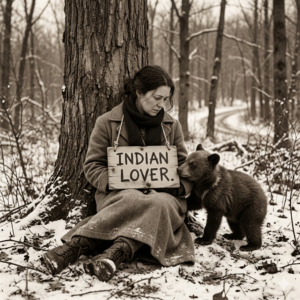
As my eyelids grew heavy and prepared to close forever, as my heart beat its last slow beats before stopping… a strange sound emerged from the thick snow in the bushes ahead.
They Left Her Hanging From a Tree With a Sign That Said “Indian Lover”—A Bear Cub She’d Raised Found Her Before She Froze Chapter 1: The Judgment at the Edge of the Forest A blizzard swept through Blackwood Valley late…

Part 2 Alone at 18, She Bought a Dying Sunflower Farm — The Secret Beneath the Soil Changed Everything
Alone at 18, She Bought a Dying Sunflower Farm — The Secret Beneath the Soil Changed Everything ### Chapter 1: The Stranger’s Will and the Dead Land The autumn of 2025 swept through Willow Creek with dry winds, gathering withered…

My Parents Laughed. My Sister Lives There For Free. I Said: “Then Leave This House Within 24 Hours.”
I Drove 7 Hours Home For A Family Reunion. When I Asked My Parents If I Could Stay The Night, They Said: “Sure. Sleep On The Floor With The Dog And Pay $600 For Accommodation.” My Parents Laughed. My Sister…
“Transaction successful. Thank you, Mrs. Vance,” the receptionist smiled politely, handing me the bill.
The night I paid the entire bill for my in-laws’ lavish vacation, they laughed and called me their personal walking bank before leaving me alone in the Ocean Crest Resort lobby. I said nothing… Chapter 1: Fog at Ocean Crest…

I stood at the edge of the stage, a glass of sparkling champagne in hand, feeling like a misshapen ghost in an overly retouched family photo.
They Erased Me at My Sister’s “Perfect” Napa Wedding—Then My Mother Demanded One Invitation to My Own. Two Years Later, I Returned the Favor Publicly. Chapter 1: The Ghost in Napa Valley Napa Valley in June was as beautiful as…
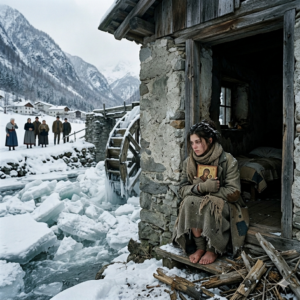
Part 2 “Get out of my house! You mother-killing monster!”
Driven out of her home by her father in the middle of winter, the young girl lived for months in an abandoned mill; when the river froze over and then broke open, the villagers finally understood why she never left….
End of content
No more pages to load