The case surrounding the death of Preston Davey in Blackpool has shocked the British public not only because of the severity of the allegations, but also because of a question that has troubled many: how could a 13-month-old child, in the process of being adopted by two adults and having gone through multiple rounds of evaluation, become the center of a criminal case with details that even prosecutors described as particularly cold-blooded.
At the heart of the case is Jamie Varley, a former high school teacher, who is accused of sending a text message to his partner, John McGowan-Fazakerley, while the child was being rushed to the hospital. The content of the message, according to court documents, was shocking due to its bluntness and ambiguity: “Your son is in the hospital. I strangled him. Just kidding. Call me back when you’re done.” The phrase “just kidding” became the focal point of analysis, as it raised the question of whether it was a careless joke or an attempt to conceal a serious truth.
In criminal cases, language often carries value far beyond the surface meaning. A message like this, sent in an emergency context, cannot be considered a standalone statement. Prosecutors argued that it needed to be placed within the overall chain of events—including the child’s health, previously documented injuries, and other exchanges between the defendant and colleagues. It is this combination that creates a picture that the prosecution believes reflects a deliberate state of awareness and behavior.
Preston Davey was placed in the couple’s care in April 2023 as part of the adoption process. This phase typically involves supervision from social services, periodic assessments, and follow-up reports to ensure a safe environment for the child. Therefore, the fact that a serious incident occurred just about four months after the child was placed in care raised serious questions about the effectiveness of the monitoring system during the transition period.
According to evidence presented in court, during those short months, the child had several hospital visits. One notable incident was a broken elbow, requiring a cast in early July. There were also hospitalizations related to breathing difficulties and unexplained bruising. In a normal context, each individual incident could be explained as a domestic accident. But when placed together, they formed a pattern that particularly concerned medical professionals and investigators.
The autopsy results were a key factor. Forensic experts determined the cause of death to be acute upper airway obstruction—a condition consistent with gag use or an object being lodged in the airway. Simultaneously, the child’s body was found to have approximately 40 internal and external injuries, many of which were deemed inexplicable by ordinary accidents. In pediatric forensic science, the number and distribution of injuries are particularly important in distinguishing between accidents and abuse.

However, what made the case particularly complex were the messages allegedly sent by Jamie Varley to a colleague beforehand. According to testimony in court, some messages mentioned “harmful thoughts” about the child, including images of drowning or suffocation. In other exchanges, the phrase “dead meat” was used in a way the defendant claimed was joking. Legally, such statements do not automatically prove a crime, but they can be considered indicators of mental state, especially if they match physical evidence.
The defense, as is often the case in serious legal matters, argued that the interpretation of these messages required extreme caution. They argued that sarcastic or joking remarks, however inappropriate, could not automatically be considered confessions. This is a crucial point of legal debate: the line between thoughtless talk and evidence reflecting genuine intent.
Besides the charges against Jamie Varley, the role of John McGowan-Fazakerley is also under scrutiny. His prosecution for “causing or facilitating the death of a child” reflects a key legal principle in English law: liability is not limited to the person directly responsible for the harm, but can extend to those with a caregiving duty who failed to act to prevent the danger.
This raises a broader question about the concept of responsibility within the family or caregiving environment. When two people share the role of foster parent, determining who knew what, when, and how they reacted becomes crucial. Text messages, communication history, medical records, and witness testimony can all play a role in reconstructing that picture.
The case also sparked debate about the adoption system in the United Kingdom. Adoption processes are typically rigorously designed, including psychological assessments, background checks, interviews, and follow-up. But no system is entirely immune to error. When…
When a tragedy like this occurs, the question arises not only whether warnings were ignored, but also whether structural flaws prevented certain signs from being properly recognized.
Another aspect that makes the case particularly noteworthy is the contrast between the defendant’s social image and the charges. Jamie Varley was a high school teacher—a profession associated with educational and caregiving responsibilities. This contrast is particularly difficult for the public to accept, as it breaks common assumptions about the link between occupation and personality.
On a societal level, Preston Davey’s death rekindles concerns about child safety within foster care systems. It serves as a reminder that administrative procedures, however stringent, cannot replace continuous monitoring and a rapid response to unusual circumstances. Previous hospitalizations, in retrospect, become data points that lead many to question whether there was a chance for earlier intervention.
In cases involving young children, justice is not just about determining criminal responsibility. It also includes learning from failure to improve the system. If trials stop at conviction or acquittal without implementing reforms, the painful lessons are easily forgotten.
Ultimately, what makes this story haunting is not just the content of the messages or the severity of the accusations, but the fragility of trust. A child was placed in the arms of the system with the expectation of protection, but instead became the victim of a case where every detail makes one wonder: how many warning signs were present, and why did no one notice them early enough?
As the trial continues, the final answer will ultimately rest with the jury and the justice system. But regardless of the verdict, Preston Davey’s death has become a profound warning about the responsibility, oversight, and limits of what society deems sufficient to protect the most vulnerable.
News

As my eyelids grew heavy and prepared to close forever, as my heart beat its last slow beats before stopping… a strange sound emerged from the thick snow in the bushes ahead.
They Left Her Hanging From a Tree With a Sign That Said “Indian Lover”—A Bear Cub She’d Raised Found Her Before She Froze Chapter 1: The Judgment at the Edge of the Forest A blizzard swept through Blackwood Valley late…

Part 2 Alone at 18, She Bought a Dying Sunflower Farm — The Secret Beneath the Soil Changed Everything
Alone at 18, She Bought a Dying Sunflower Farm — The Secret Beneath the Soil Changed Everything ### Chapter 1: The Stranger’s Will and the Dead Land The autumn of 2025 swept through Willow Creek with dry winds, gathering withered…

My Parents Laughed. My Sister Lives There For Free. I Said: “Then Leave This House Within 24 Hours.”
I Drove 7 Hours Home For A Family Reunion. When I Asked My Parents If I Could Stay The Night, They Said: “Sure. Sleep On The Floor With The Dog And Pay $600 For Accommodation.” My Parents Laughed. My Sister…

“Transaction successful. Thank you, Mrs. Vance,” the receptionist smiled politely, handing me the bill.
The night I paid the entire bill for my in-laws’ lavish vacation, they laughed and called me their personal walking bank before leaving me alone in the Ocean Crest Resort lobby. I said nothing… Chapter 1: Fog at Ocean Crest…

I stood at the edge of the stage, a glass of sparkling champagne in hand, feeling like a misshapen ghost in an overly retouched family photo.
They Erased Me at My Sister’s “Perfect” Napa Wedding—Then My Mother Demanded One Invitation to My Own. Two Years Later, I Returned the Favor Publicly. Chapter 1: The Ghost in Napa Valley Napa Valley in June was as beautiful as…
Part 2 “Get out of my house! You mother-killing monster!”
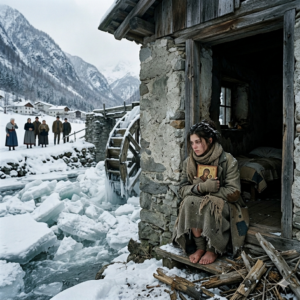
Driven out of her home by her father in the middle of winter, the young girl lived for months in an abandoned mill; when the river froze over and then broke open, the villagers finally understood why she never left….
End of content
No more pages to load